Maine Central
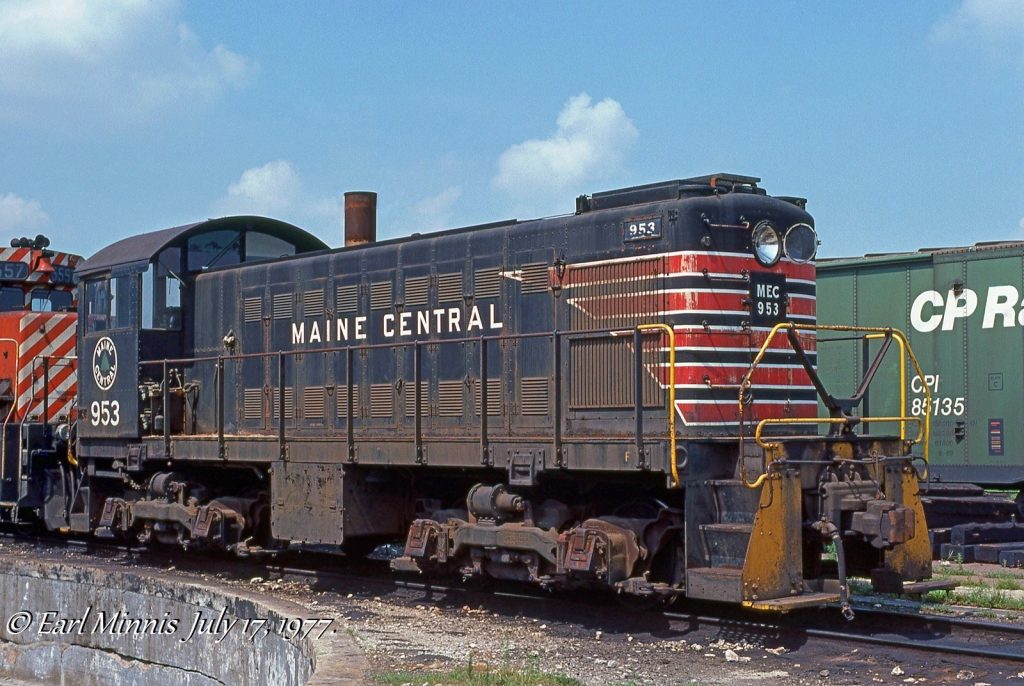
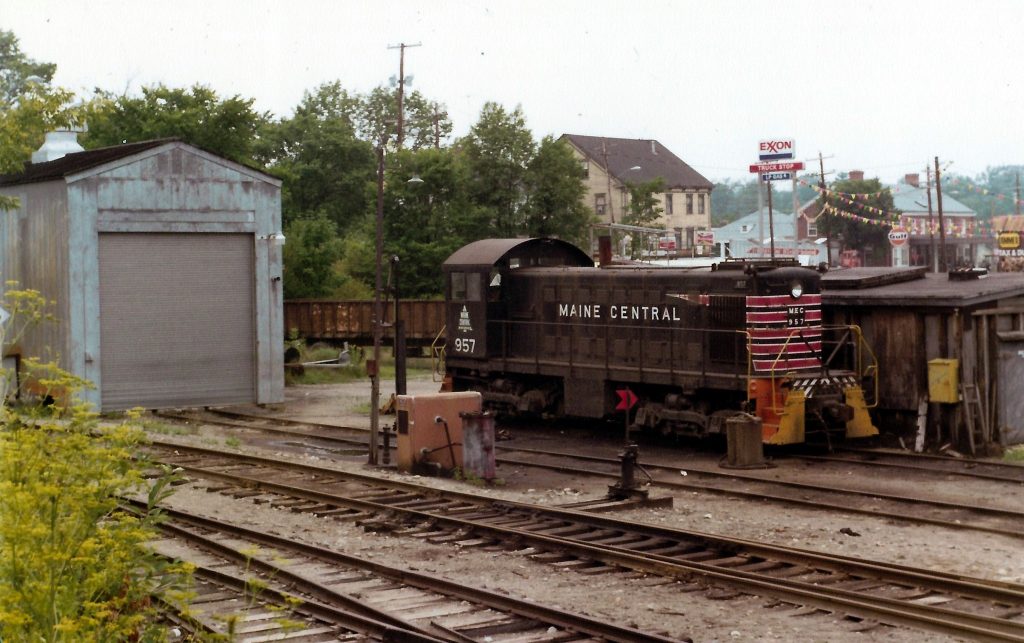
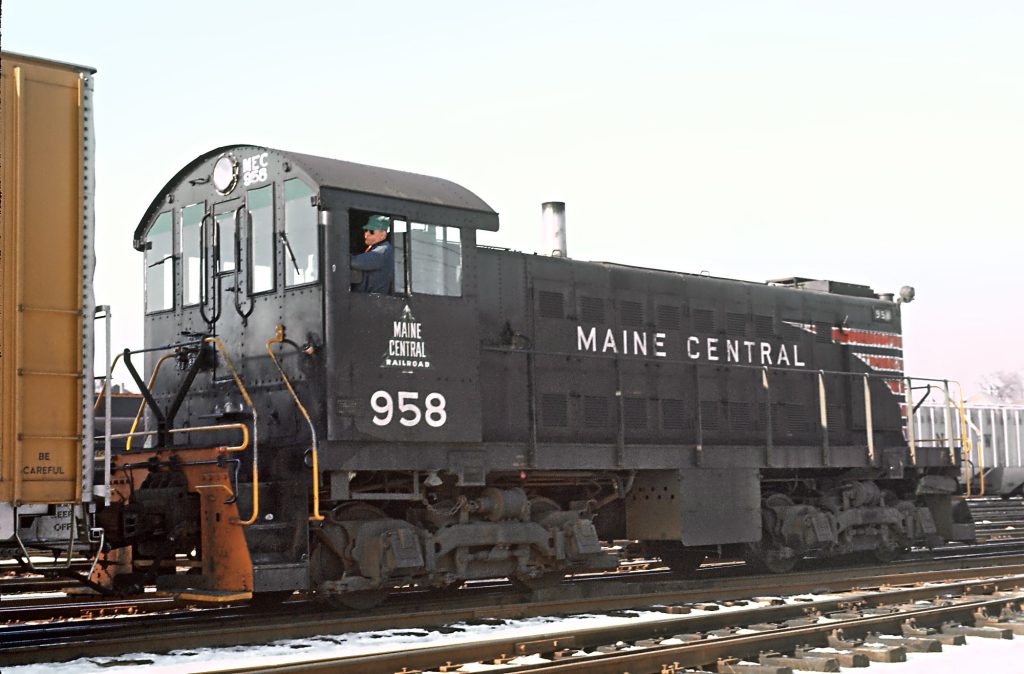
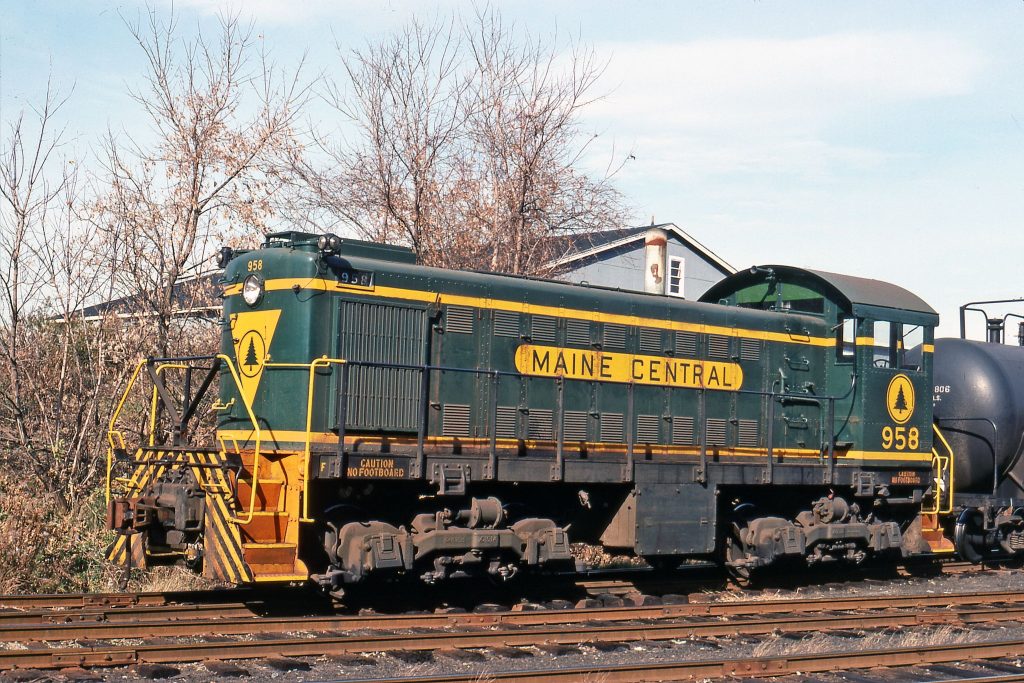
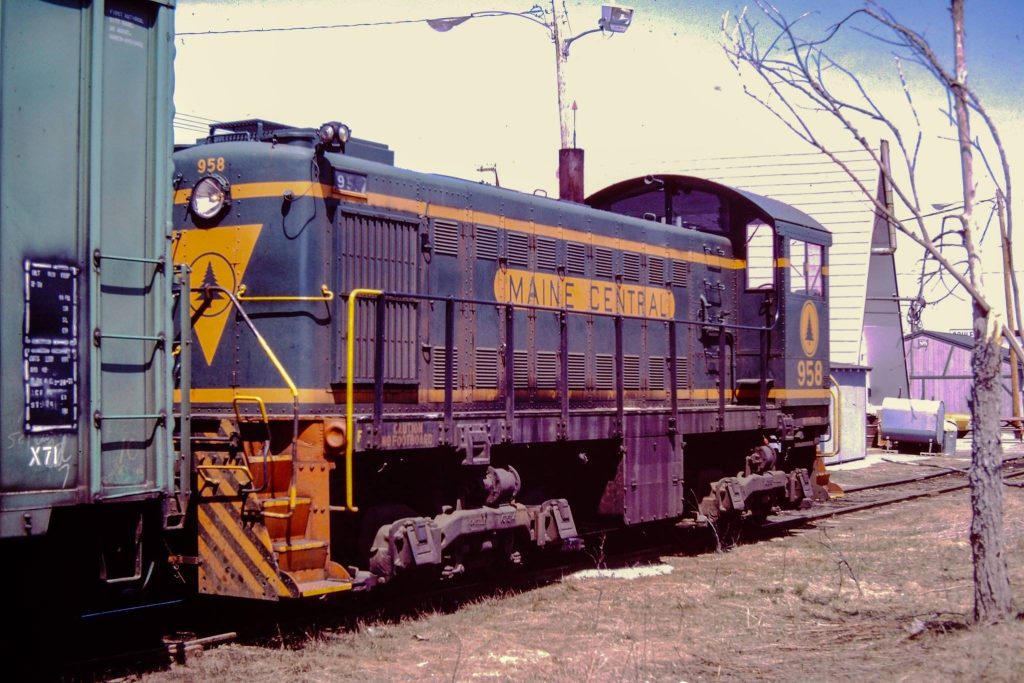
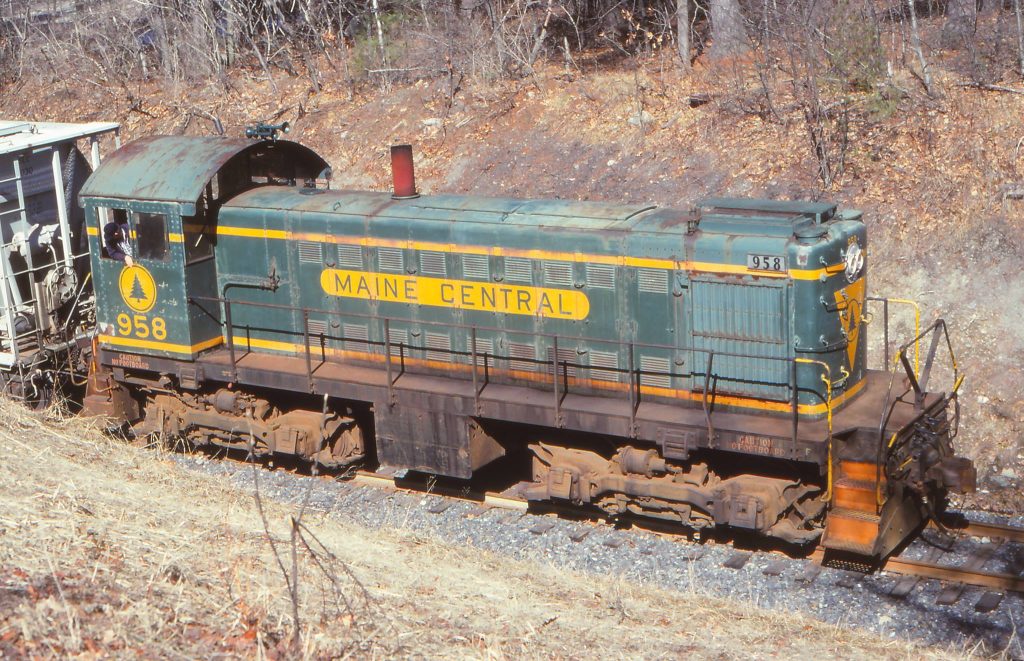
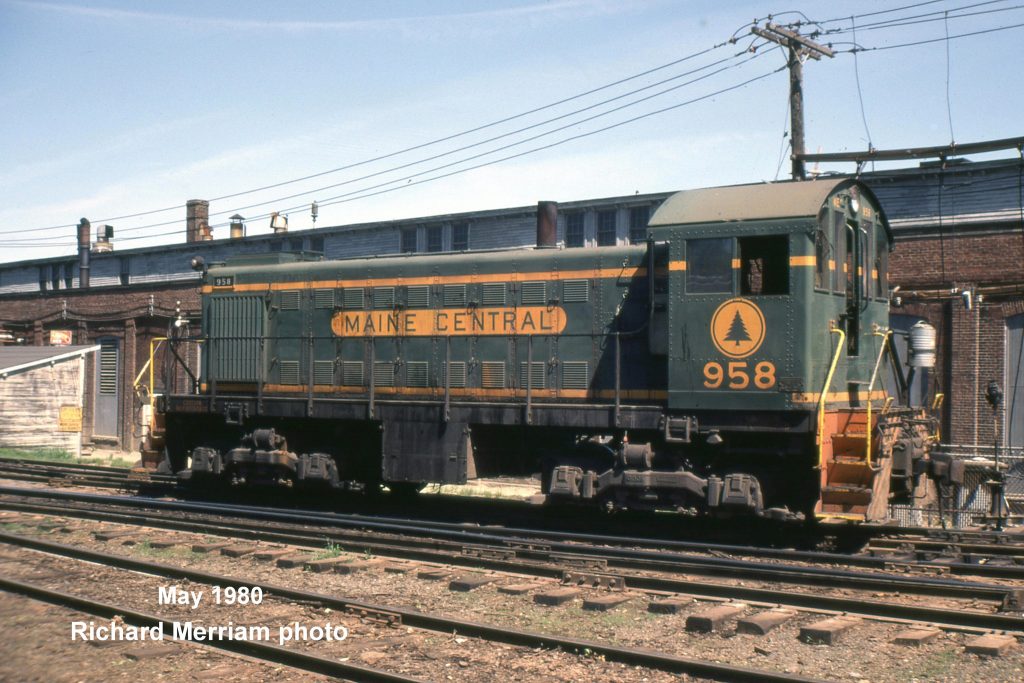
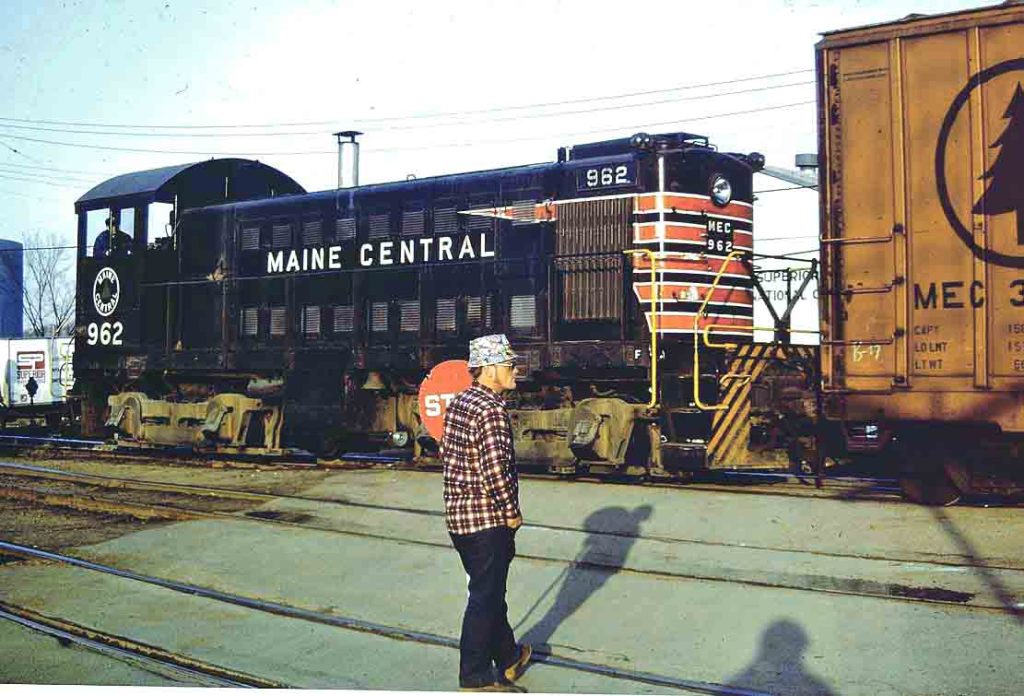
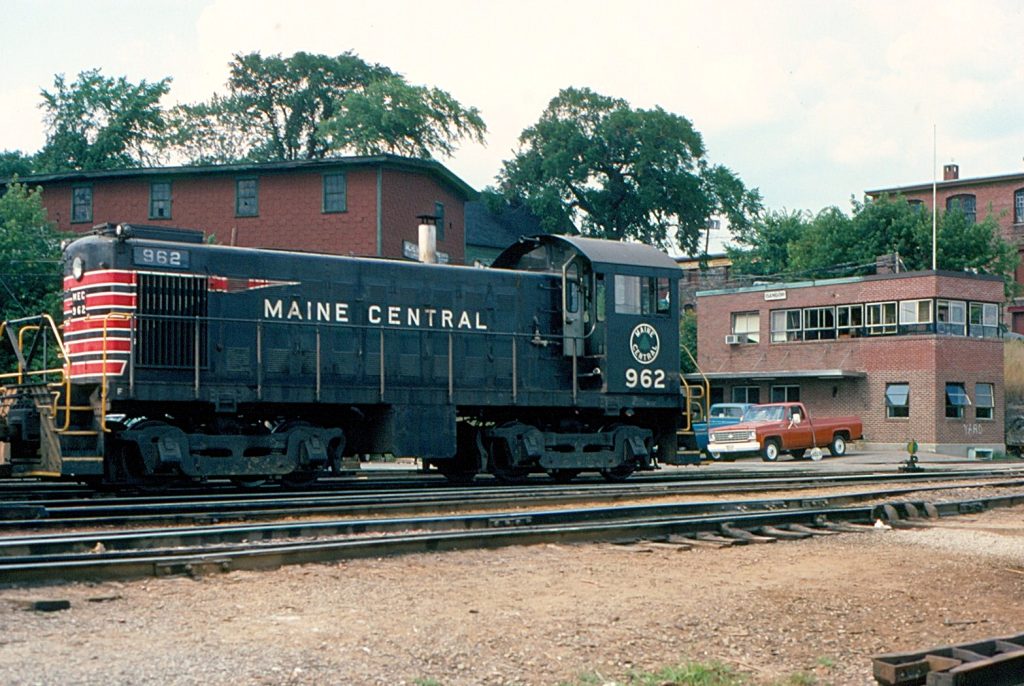
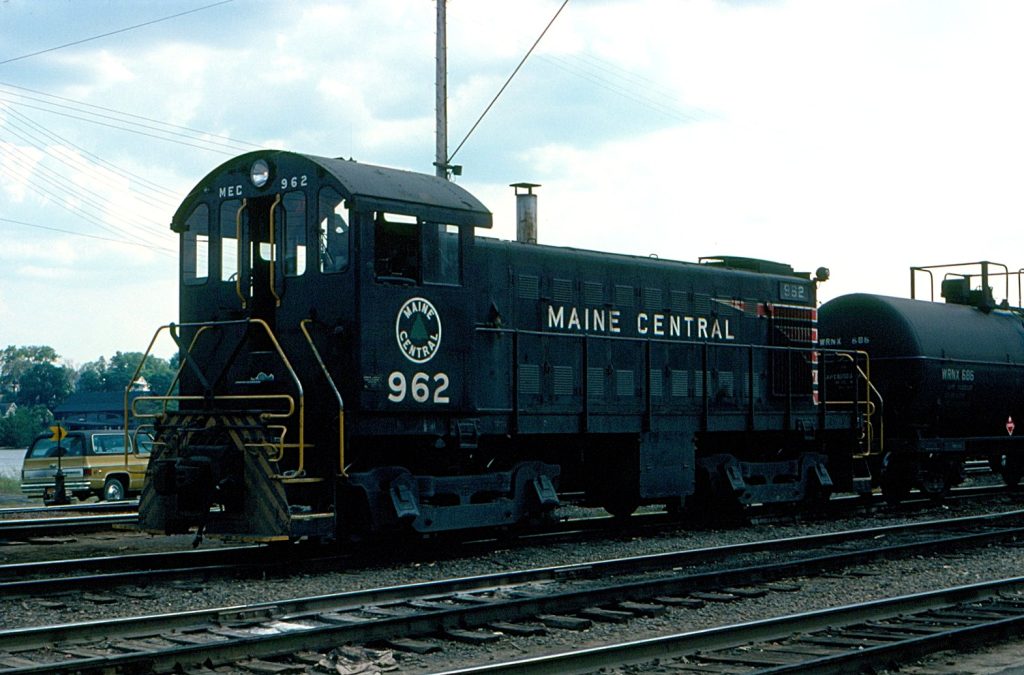
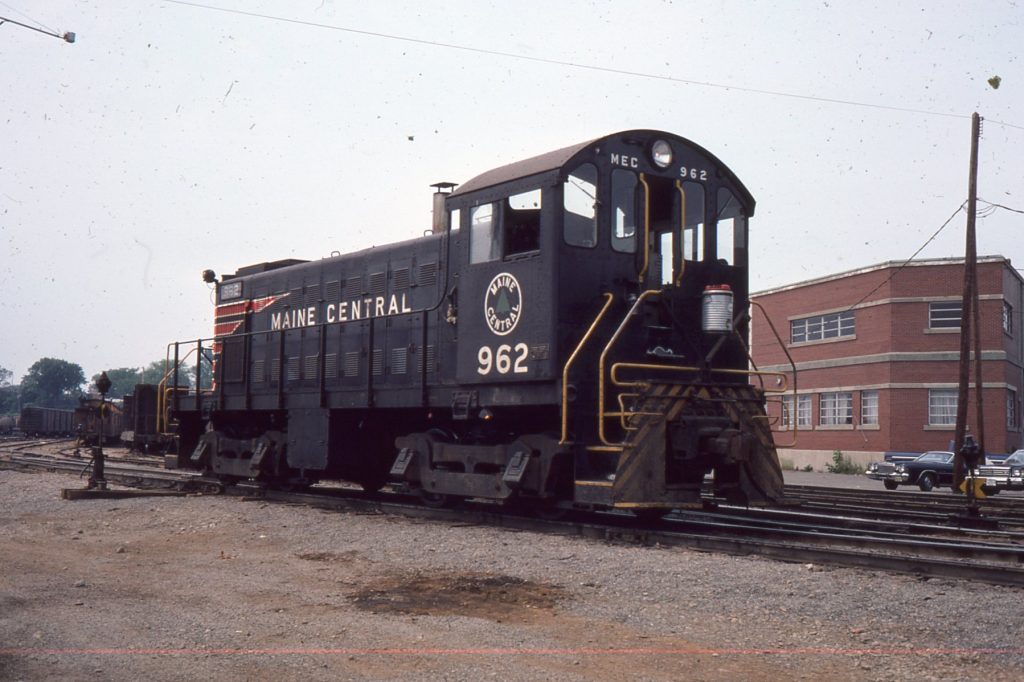
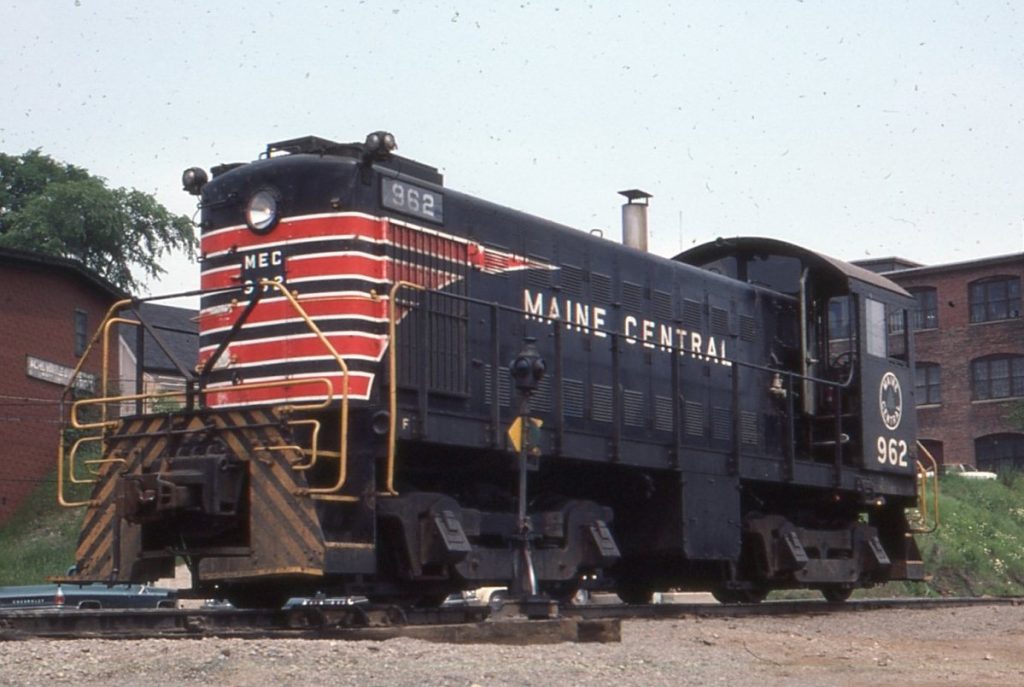
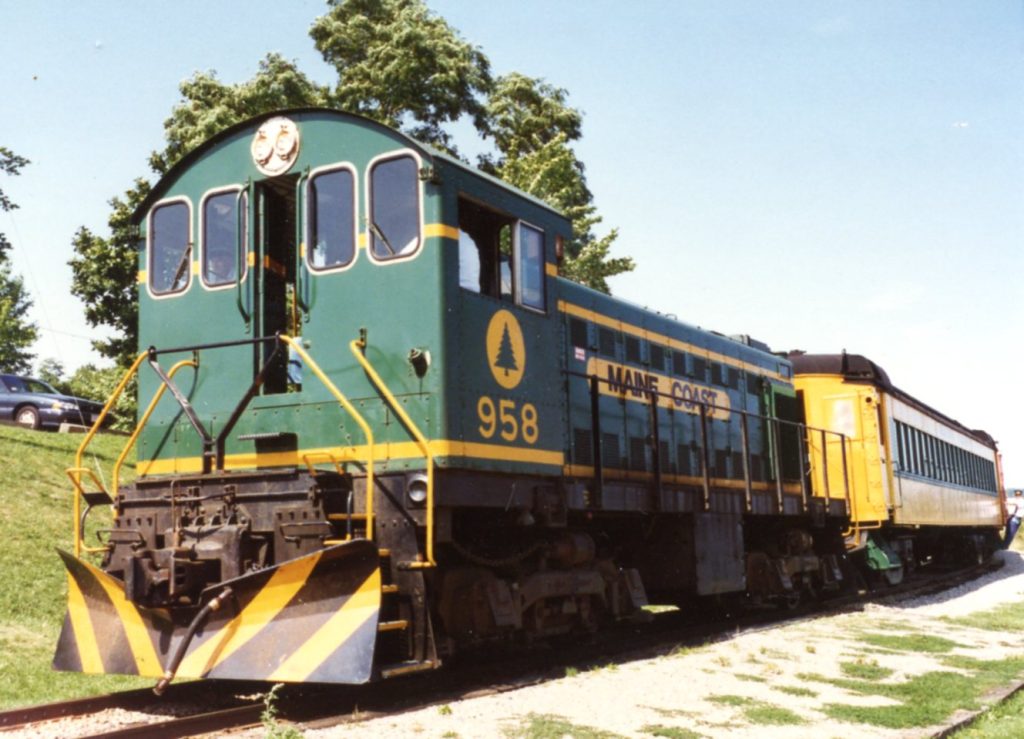
Maine Central S1 953 (serial number 69411, built January 1941) at the CP yard in Windsor, Ontario, on 17 July 1977, while en route to GE after being sold. © Earl Minnis Maine Central ALCO S1 No. 957 at Calais, Maine, photographed in August 1980 during a trip to the Brunswick Air Show. © Barrie MacLeod Maine Central ALCO S1 958, built in October 1949, at Waterville Yard, Maine, on 7 February 1970. © Roger Puta Maine Central ALCO S1 No. 958 heads towards the waterfront at Rockland, Maine, on 17 August 1974. The veteran switcher was responsible for serving local customers around Rockland while a pair of GP7s handled the daily road freight between Rockland and Brunswick. A crew member rides the front platform as the locomotive trundles along the branch in Maine Central’s classic Pine Green and yellow livery. © Doug Lilly Maine Central Alco S-1 No. 958 stands at Lewiston, Maine, on 1 November 1975. The locomotive carries the classic pine tree livery, typical of MEC switchers working yard and local freight duties across the system. © Phil Faudi Maine Central EMD SW9 No. 958 stands with a freight car in June 1978, wearing the railroad’s green and gold scheme. The locomotive shows typical signs of heavy yard service, with weathering along the hood and trucks, reflecting its role in everyday switching duties. © Fred’s Slides Maine Central Alco S-1 No. 958 works a freight on the Rockland Branch in Maine, likely in the late 1970s. The well-worn pine tree livery and visible weathering reflect the hard daily use typical of MEC switchers in branch line service during this period. © Jean-Claude Ballieux Maine Central Alco S-1 No. 958 stands at Waterville, Maine, on 30 May 1980. © Richard Merriam Maine Central ALCO S3 No. 962 rests inside the Bangor roundhouse. The warm glow of the engine house lights highlights the locomotive’s black-and-white switcher livery against the brick walls and servicing pits of one of Maine Central’s busiest locomotive facilities. © Garland McKee Maine Central Alco S-3 No. 962 is seen at Bangor Yard in March 1977, carrying the earlier pine tree emblem and distinctive striped end treatment. A yard worker crosses the track in the foreground as the locomotive works past a cut of boxcars, a typical scene in MEC’s busy Bangor terminal. © Brandon Kulik Maine Central Alco S-3 No. 962 stands at Bangor Yard on 23 August 1978, alongside the yard office, still carrying the earlier pine tree emblem and striped end treatment. Scenes like this were typical of MEC’s Bangor operations, where switchers handled a steady flow of paper and forest products traffic. © Bill Rogerson Maine Central Alco S-3 No. 962 stands at Bangor, Maine, on 23 August 1978, coupled to a tank car and carrying the familiar pine tree emblem. The locomotive typifies the road’s yard power during the period, handling local switching duties amid the steady flow of forest products traffic. A 1974 Chevrolet Blazer is visible in the background. © Bill Rogerson Maine Central S3 No. 962 handling switching duties at Bangor, Maine, in June 1979. One of the railway’s dependable ALCO switchers that remained in service into the mid-1980s. © Michael Shufelt Maine Central ALCO S3 No. 962 shunts freight cars at Bangor, Maine, on 29 June 1979. Built by ALCO in February 1952, the veteran switcher wears Maine Central’s black switcher livery with white lettering and hood-end striping as it crosses the yard under the direction of a ground crew member. © Kenneth Gear Maine Central ALCO S3 No. 962 works the yard at Bangor, Maine, on 29 June 1979. Built by ALCO in February 1952, the 660 hp switcher wears Maine Central’s black switcher livery while handling freight cars in the railroad’s principal eastern terminal. © Kenneth Gear Maine Central S3 No. 962 at the waterfront yard, Bangor, Maine, July 1979. © Michael Shufelt Maine Coast
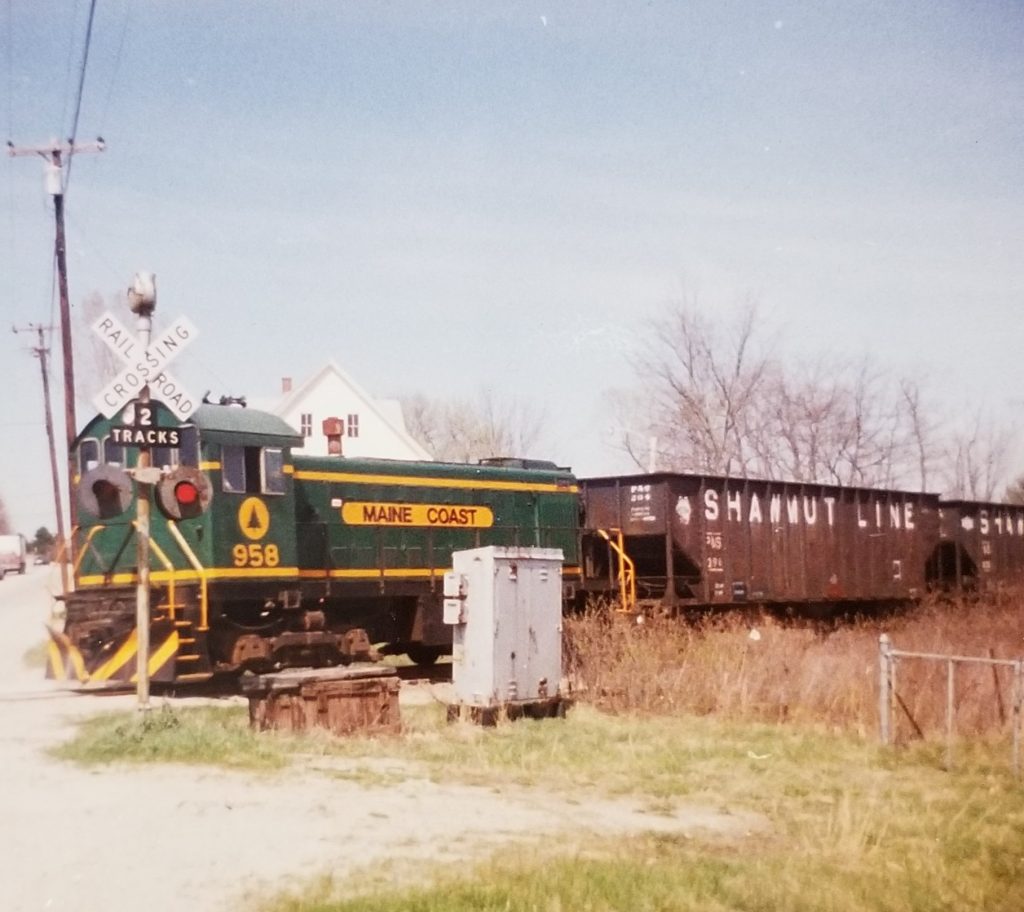
Maine Coast Alco S1 No. 958 and coal hoppers at West Bath, Maine, in 1993. During the 1990s, Dragon Cement received 30-car blocks of 3- and 4-bay hoppers at Brunswick twice a month through summer and autumn, typically hauled to the cement plant in smaller cuts. The line here had previously been operated by the Maine Central before 1990. © Bill Groder Maine Coast ALCO S1 at Wiscasset, Maine, in 1994. Ex-Maine Central No. 958. © Steven Szabo, courtesy of Andrew J. Szabo Class No. Built Serial Livery Notes Photographs Modelling S-1 958 Oct 1949 77108 RRPA
Portland Terminal
When first delivered, Portland Terminal’s early ALCO switchers were finished entirely in black with simple Roman lettering. There were no pilot stripes and no yellow accents on the handrails at this stage. Soon after, black and white pilot stripes were introduced as part of this original paint scheme.
In later years, the pilot stripes were changed to yellow and black, giving the locomotives a slightly more visible and modern appearance. Only a few of the black switchers ever received the orange stepwell treatment, and very few carried the Portland Terminal herald on the cab before the adoption of the later “new image” scheme.
Some units showed evidence of quick repainting. For example, a yellow nose might be applied directly over the original red striping, leaving the rest of the locomotive in its earlier paint and lettering. In such cases, the cab carried the locomotive number while the full railroad name appeared on the hood. Close inspection sometimes revealed traces of the earlier striping, such as a sliver of the top red stripe still visible beneath the yellow.
All MEC and Portland Terminal switchers shared several distinctive mechanical details. Each was equipped with a box cooler mounted on the rear handrail and a sheet metal cover retrofitted over the sand traps, both characteristic features of these units in service.
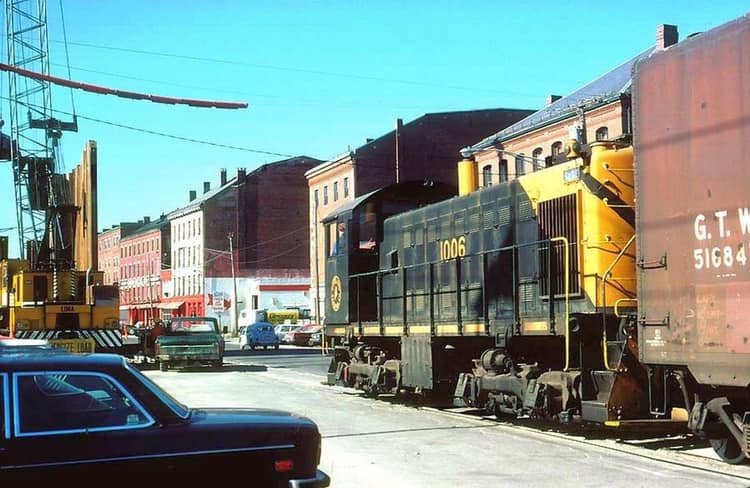
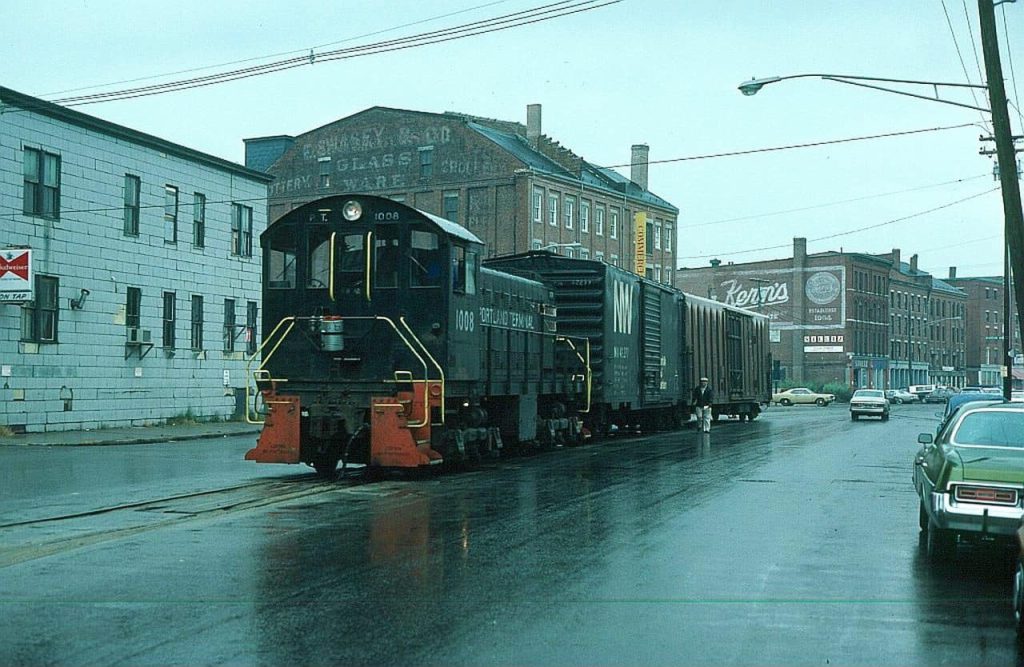
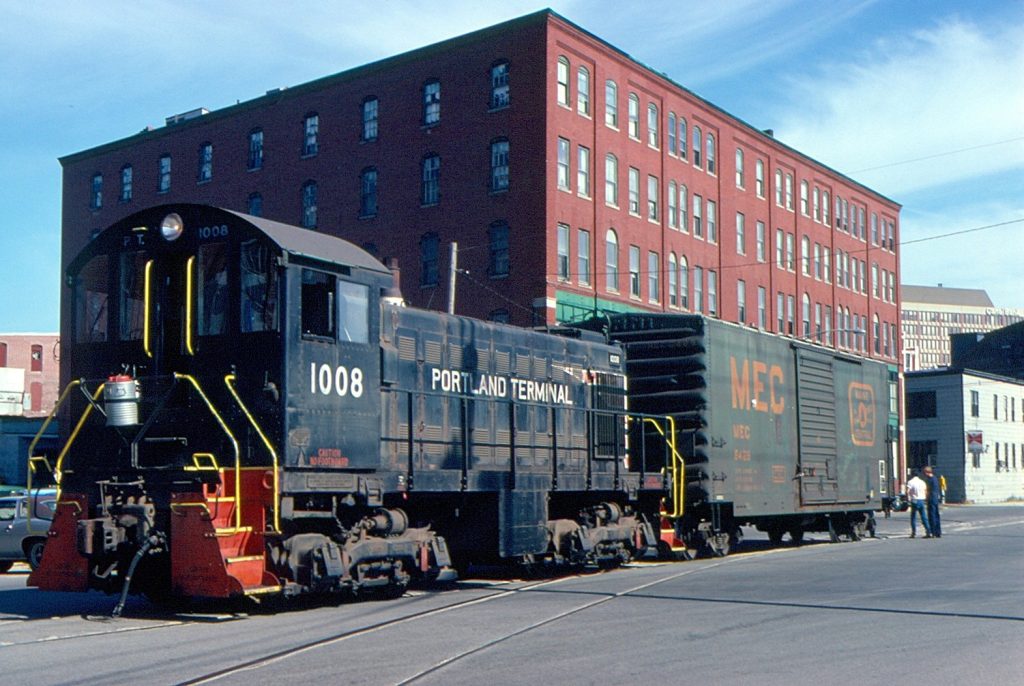
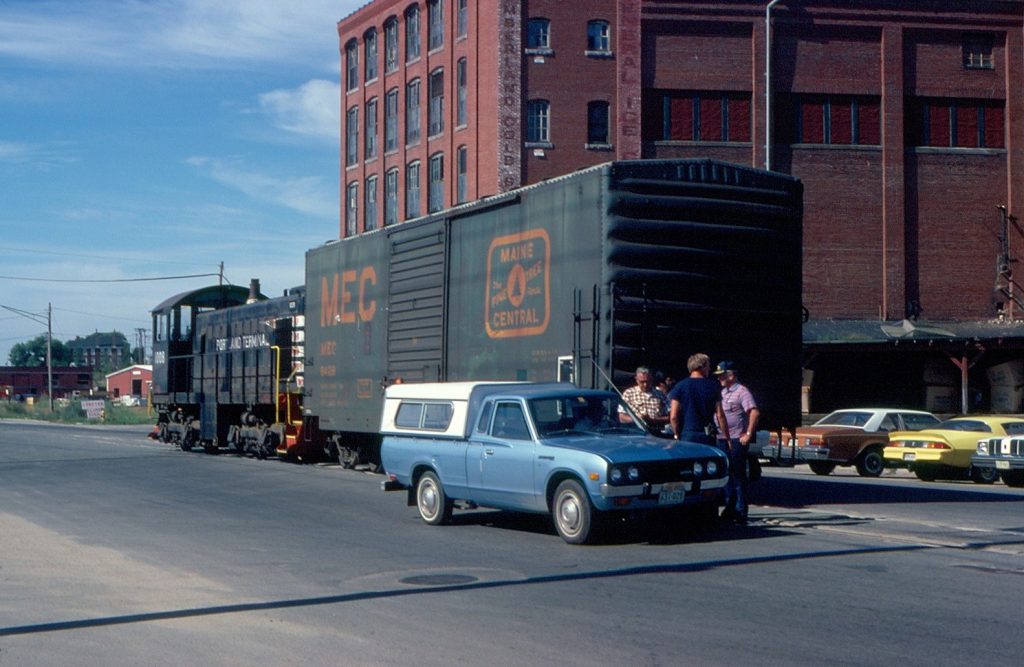
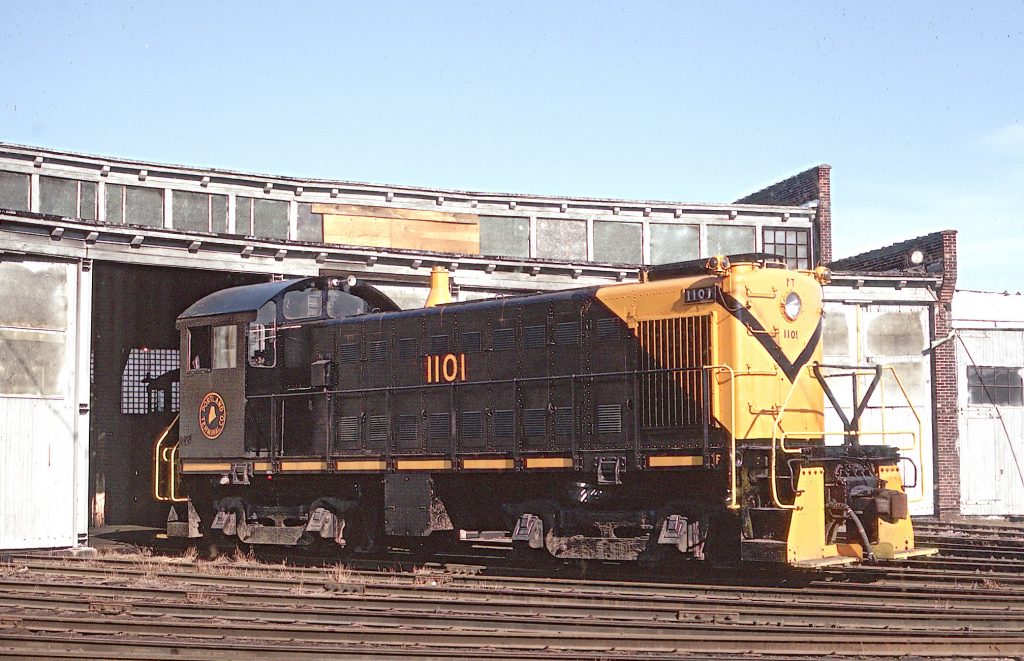
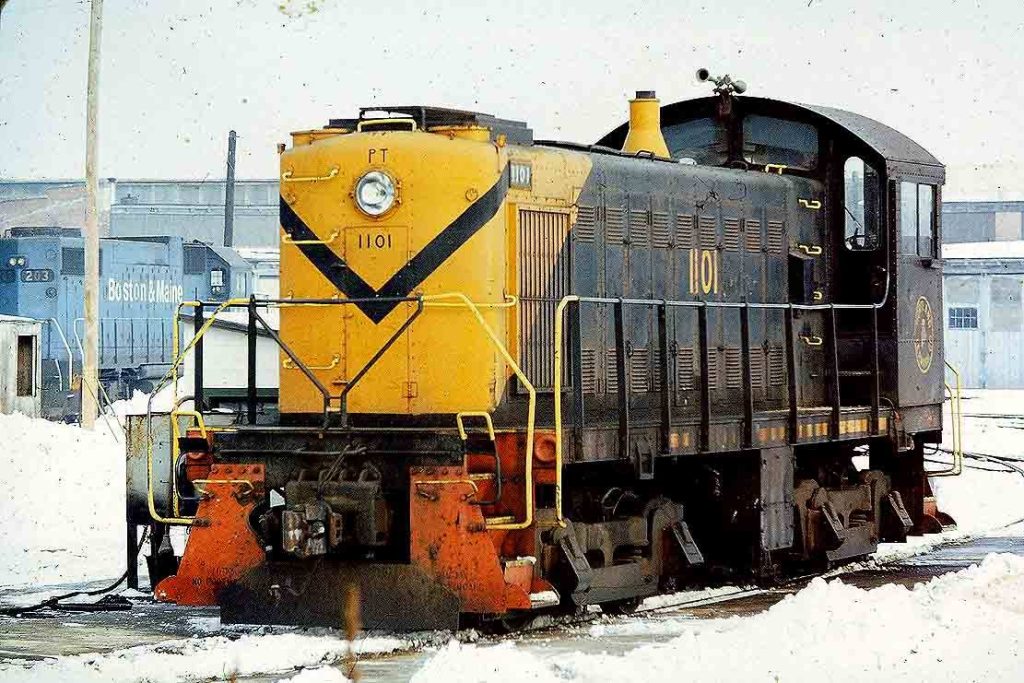
Portland Terminal ALCO switcher no. 1006 works street trackage in Portland, Maine, during the 1970s. The end-cab locomotive shuffles freight cars through the city’s waterfront industrial district amid cranes, warehouses and tightly packed brick commercial buildings, capturing a classic scene from the final years of traditional urban railroading in New England. Portland Terminal ALCO S1 no. 1008 switches freight cars along Commercial Street in Portland, Maine, on 19 August 1980. Working in the heart of the waterfront district, the locomotive shuffles a Norfolk & Western boxcar through the wet city streets amid brick warehouses, overhead utility wires and fading industrial signage, capturing the last years of traditional street running in Portland. © Bill Rogerson Portland Terminal ALCO S1 no. 1008, built in 1949, switches a Maine Central boxcar along Commercial Street in Portland, Maine, during the summer of 1980. The compact switcher was a familiar sight on the waterfront trackage serving the city’s wharves and industries. © Bill Rogerson Portland Terminal ALCO S1 no. 1008, built in 1949, works with a Maine Central boxcar along Commercial Street in Portland, Maine, during the summer of 1980. A Datsun 620 pickup with a camper shell waits beside the train as waterfront street running continued to be a distinctive feature of Portland Terminal operations into the 1980s. © Bill Rogerson Portland Terminal ALCO S3 No. 1101 stands outside the enginehouse at South Portland, Maine, on 7 April 1974. The locomotive is shown in its striking black and yellow scheme, typical of Portland Terminal switchers working the busy yard and industrial trackage in the Portland area. © Phillip C. Faudi Portland Terminal No. 1101, an ALCO S3, photographed at Rigby Yard in 1983. Formerly Greater Portland Public Development Commission No. 661, it was acquired in 1958. At the time of the photo, it was the only S3 operating on a common carrier in North America. It remained in service until 1988, the last locomotive to wear Portland Terminal paint. © Brandon Kulik Portland Terminal ALCO S3 No. 1101 stands at Portland, Maine, on 14 August 1983. Built by ALCO in 1950, the locomotive was the sole S3 on the Portland Terminal roster and spent its career switching freight cars around the busy waterfront and yard complex serving Portland. Still carrying its distinctive black-and-orange paint scheme, No. 1101 survived into the final years of ALCO operations in northern New England. © Roger Durfee Class No. Built Serial Photographs Notes S-1 PTM 1005 1941 69494 RRPA S-1 PTM 1006 1945 73083 RRPA S-1 PTM 1007 1949 77111 RRPA S-1 PTM 1008 1949 77112 RRPA S-3 PTM 1101 1950 78393 RRPA ex-Greater Portland Public Development Commission #661 acquired in 1958 and was the last locomotive to wear PTM paint when sold in 1988.
Modelling
So far, no N Scale RTR models for ALCO S-1 or S-3 have been produced.
More Information