Russell Snow Plow – CSRZ 4211
Jordan Wedge Plow – MEC 90 of 1954.
Plows
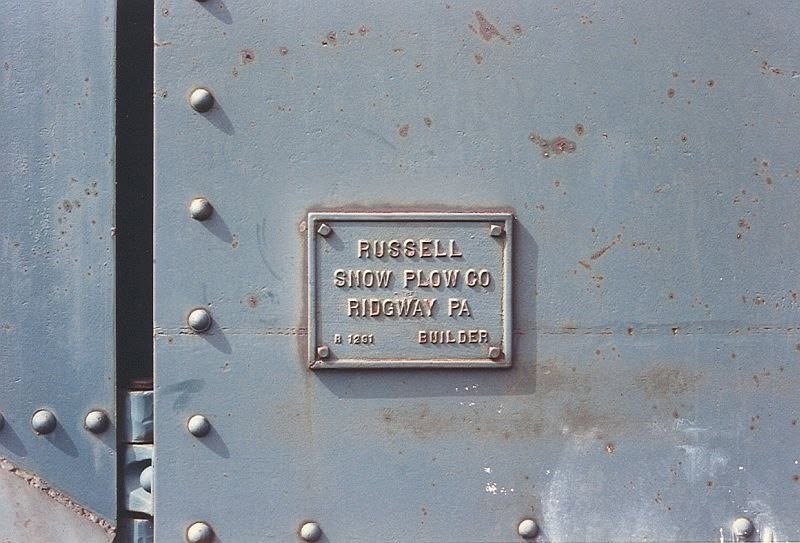
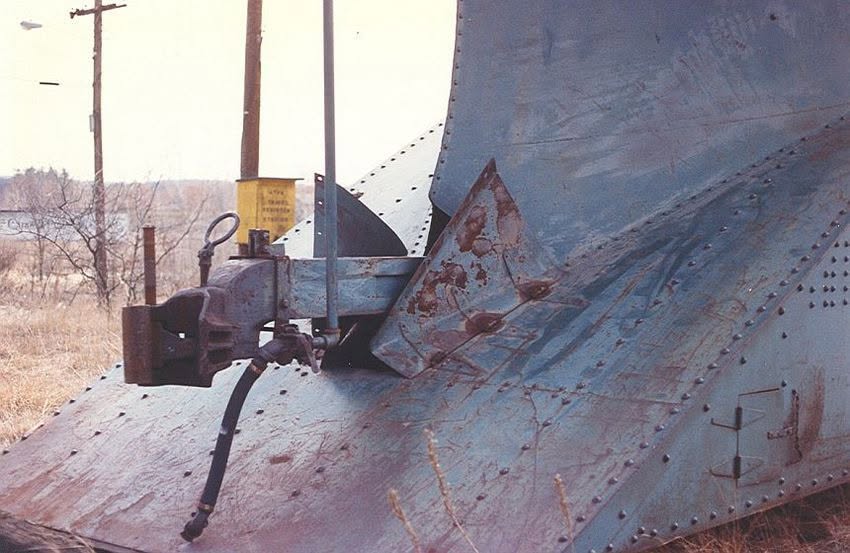
A line-up of Maine Central winter equipment and cabooses at Waterville, Maine, on 14 November 1964. MEC snowplow No. 71 dominates the centre of the scene, surrounded by other plows awaiting the coming winter, while wooden caboose No. 583 and several other cabooses stand behind. The collection gives a wonderful view of the specialised equipment once maintained by the Maine Central to keep its extensive New England network operating through severe winter weather. © Ted Houghton Maine Central Jordan wedge plow No. 73 stands outside the engine house at Calais, Maine, on 16 May 1983. The veteran snow-fighting machine was based at the eastern end of the Maine Central system and was mothballed the following year in 1984. The Calais engine facility and its remaining trackage would disappear during the 1990s. © Eric Hinkley A close look at the working end of Maine Central snow plow No. 79 while it sits out of service in the wye at Ayer, Massachusetts, on March 15, 1992. The photograph shows the plow’s heavy riveted construction, battered steelwork and operating mechanism, all carrying the scars of years spent clearing New England snow. © Mark Beebe Maine Central snow plow No. 79 sits out of service in the wye at Ayer, Massachusetts, on March 15, 1992. Its distinctive wedge-shaped body, elevated cupola and enormous plow face illustrate the purposeful design of a piece of equipment built to tackle the heavy snowfall encountered on the Maine Central system. Faded blue paint and yellow MEC lettering remain visible after years of hard service. © Mark Beebe A close look at the builder’s plate carried by Maine Central snow plow No. 79 while it sits out of service in the wye at Ayer, Massachusetts, on March 15, 1992. The plate identifies the plow as a product of the Russell Snow Plow Company of Ridgway, Pennsylvania, one of North America’s best-known manufacturers of specialist railroad snow-fighting equipment. © Mark Beebe A close look at the coupler mounting area and access doors at the working end of Maine Central snow plow No. 79 while it sits out of service in the wye at Ayer, Massachusetts, on March 15, 1992. The photograph provides an excellent detail study of how the coupler and associated equipment were accommodated within the plow’s massive riveted steel structure, with hinged doors allowing the coupler area to be enclosed when required. © Mark Beebe MEC 62 RRPA MEC 70 MEC 71 MEC 72 RRPA MEC 73 RRPA MEC 74 MEC MW 75 RRPA MEC MW 76 RRPA MEC 79 MEC 82 Built in 1952 by the Russell Snow Plow Company of Ridgway, Pennsylvania. Now at Downeast Scenic Railroad.
Portland Terminal wooden snow plow No. 68 stands ahead of Maine Central MWS No. 70 at Rigby Yard in South Portland, Maine, on July 8, 1974. The veteran Russell plow shows its timber-bodied construction beneath a weathered green finish, with steel sheathing protecting the enormous plow face, while MEC 70 provides an interesting comparison between two pieces of New England snow-fighting equipment. © Bud Bulgin Jordan Spreaders
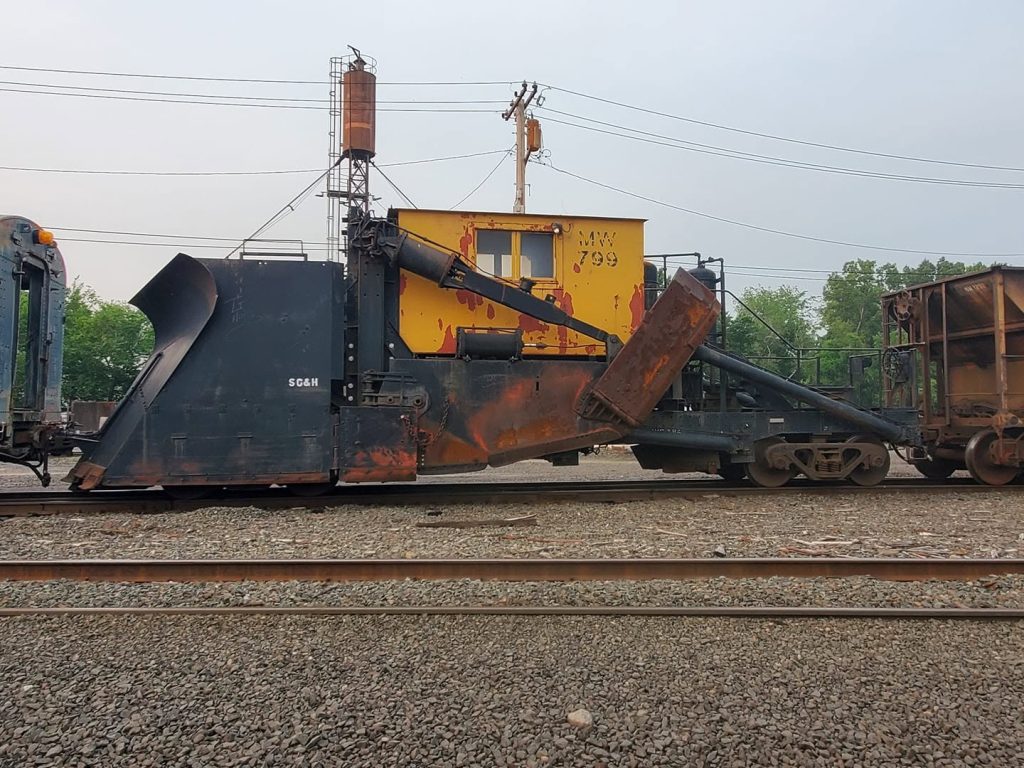
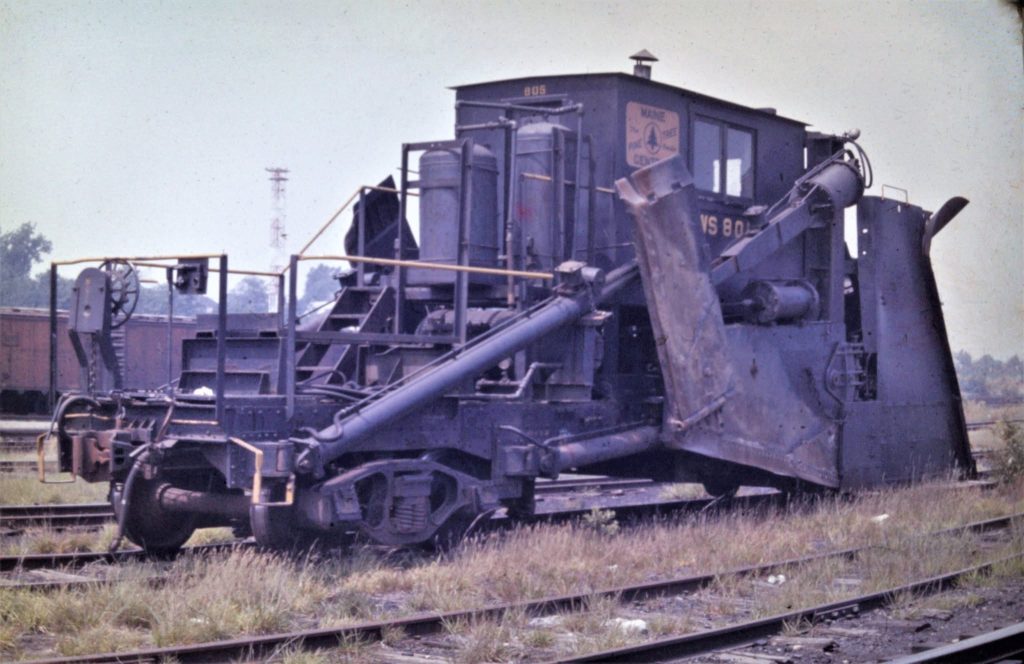
Former Maine Central Jordan spreader No. 799 is seen at East Deerfield Yard, Massachusetts, in June 2023. Originally built by the O.F. Jordan Company in 1923 as a Standard 2-200 spreader, it was modernised around 1940 and later rebuilt with a Jordan flanger mounted ahead of the rear truck, creating a versatile machine capable of both snow-fighting and year-round track maintenance. Still listed on the Pan Am Railways roster a century after it was built, No. 799 is a remarkable testament to the longevity and adaptability of Jordan spreaders. © Bradley Peterson Jr. Maine Central Jordan spreader No. 805 stands at Rigby Yard in South Portland, Maine, during July 1976. Designed for year-round maintenance work, Jordan spreaders were used to shape ballast shoulders, clear drainage ditches and distribute ballast, while also serving as formidable snow-fighting machines during New England winters. No. 805 was one of several such maintenance-of-way vehicles that helped keep the Maine Central’s extensive network open in all seasons. © Jack Bowles The imposing wing plough and adjustable nose plough of Maine Central Jordan spreader No. 805 dominate this front-quarter view at Rigby Yard, South Portland, Maine, in July 1976. When deployed, the hydraulically operated wings could cast snow and ballast well clear of the track, making the Jordan spreader one of the most versatile pieces of maintenance equipment on the Maine Central system. © Jack Bowles Nos. Photos MEC 799 1923 Std. 2-200 Modernised (from Knuckle?) 1940, still on Pan Am Roster. Rebuilt with Jordan Flanger in front of the rear truck. 799 blt 1923. RRPA MEC 799 , RRPA MEC MW 799 , RRPA MEC MWS 799 MEC 800 1920 Std. 2-200 Modernised (from Knuckle?) 1941, Rebuilt with Jordan Flanger in front of the rear truck. MEC 805 Purchased in 1920. The O.F. Jordan Company originally constructed the spreader in East Chicago, Indiana. RRPA , RRPA
https://www.etsy.com/uk/listing/703518381/n-scale-2-200-jordan-spreader
Flangers
Maintenance of Way Service flanger MWS 1133 stands at South Portland, Maine, on 3 December 1975, carrying Maine Central’s green-and-yellow Maintenance of Way livery. © Waldo H. Kingston Cranes
Yes, not snow-related… just temporarily here!
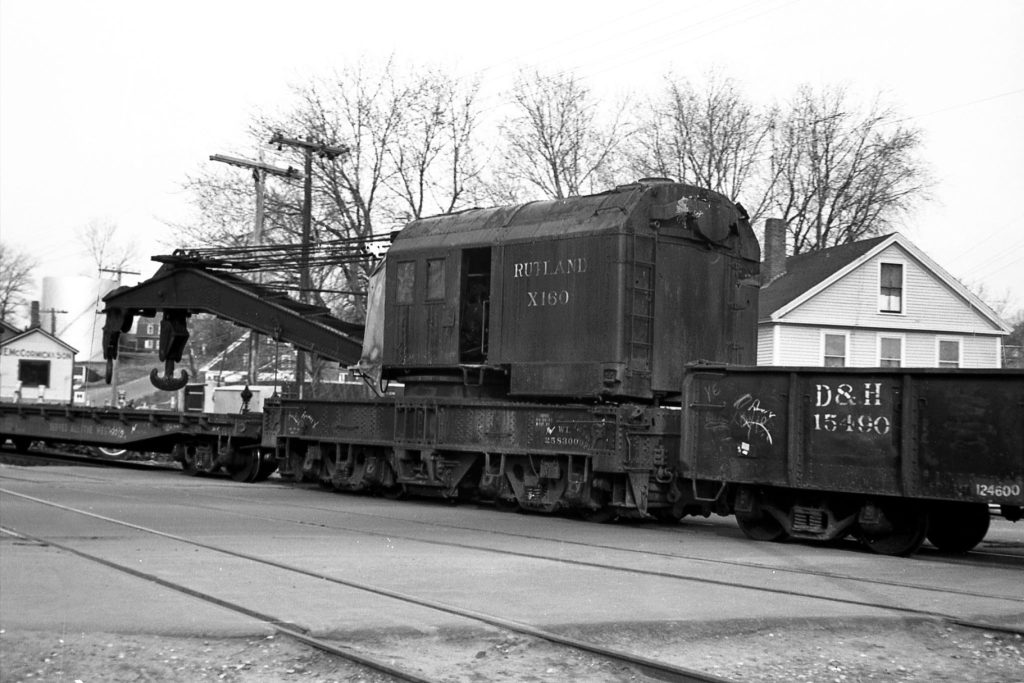
Former Rutland Railway 150-ton wreck crane X160 arrives at Waterville, Maine, following its purchase by the Maine Central in 1965, as the trustees of the bankrupt Rutland Railway disposed of the company’s remaining assets. Built by Industrial Brownhoist in 1929 as a steam-powered crane, it was rebuilt by the Maine Central with diesel power in 1966 using the engine from retired 75-ton wreck crane No. 178. After nearly four decades of service, the crane was advertised for sale by Guilford in 2004 but attracted no buyers and was subsequently scrapped at Waterville. © David S. Hutchinson Collection Maine Central’s largest wreck crane, W160, stands with boom car W524 at Waterville, Maine, on 30 May 1980. Originally built as a steam wreck crane for the Rutland Railroad, the crane was acquired by the Maine Central and rebuilt with diesel power, providing the railroad with a versatile heavy-lift machine for rerailing locomotives and freight cars, clearing derailments and bridge and maintenance-of-way work across the system. © Richard Merriam Maine Central Wreck Crane No. 160 and its matching boom car stand on the Flanagan’s spur at Ayer, Massachusetts, during 1986. Although photographed after the formation of Guilford Transportation Industries, the equipment still carries its original Maine Central green and gold livery, a reminder of the railroad’s independent identity. Wreck cranes such as No. 160 were essential pieces of maintenance-of-way equipment, used to rerail locomotives and freight cars, clear derailments and assist with heavy lifting across the system. © Ron DeFilippo Maine Central wreck crane W160 and boom car W524 stand on a siding at Ayer, Massachusetts, on 27 January 1986. Originally built as a 150-ton steam wreck crane for the Rutland Railroad, W160 was rebuilt and dieselised by the Maine Central, becoming the railroad’s principal heavy-lift crane. Following the formation of Guilford Transportation Industries, the crane continued to serve the combined Maine Central and Boston & Maine systems before eventually being scrapped. © Ron Wood Maine Central’s dieselised wreck crane W160 stands with support car W537 at Rigby Yard, South Portland, Maine, in May 1978. Originally built as a steam wreck crane for the Rutland Railroad, W160 was rebuilt by the Maine Central to provide heavy lifting capability for rerailing locomotives and freight cars, clearing derailments and supporting bridge and maintenance-of-way projects across the system. Based at Rigby Yard, the crane could be dispatched rapidly to incidents anywhere on the railroad. © Ian Clark Former Rutland Railroad steam wreck crane No. 180, rebuilt and dieselised by the Maine Central as W180, stands with its matching support car W537 at Rigby Yard in South Portland, Maine, on 21 August 1978. Based at the railroad’s principal freight terminal, the crane was used to rerail locomotives and freight cars, clear derailments and perform other heavy lifting duties across the Maine Central system. © Bill Rogerson. Maine Central maintenance-of-way crane MW 180 and support car MW 537 stand at Rigby Yard in South Portland, Maine, during the summer of 1980. Based at the railroad’s principal yard, the crane was used for rerailing locomotives and freight cars, clearing derailments and other heavy lifting duties across the Maine Central system. © Bill Rogerson Maine Central wreck crane W180 stands at Rigby Yard in South Portland, Maine, on 12 August 1982. Originally built as a steam wreck crane for the Rutland Railroad, W180 was acquired and dieselised by the Maine Central, becoming the railroad’s principal heavy-lift crane for rerailing locomotives and freight cars, clearing derailments and supporting bridge and maintenance-of-way projects. In this view, the crane is handling a set of freight car trucks, with the iconic Portland Terminal roundhouse sign visible in the background. Photo by Henry O. Preble. © Houghton’s RailImages Train RY-2, led by Maine Central GE U18Bs No. 402 and 403 with Delaware & Hudson EMD GP39-2 No. 7405, departs Portland, Maine, on the Mountain Subdivision in October 1982. Immediately behind the locomotives is a 25-ton American Crane Company crane PTM 198 and its support cars, being conveyed for maintenance-of-way work. The presence of D&H power reflects the locomotive pooling arrangements between the Maine Central, Boston & Maine and Delaware & Hudson that were in place before the formation of Guilford Rail System. © Gordon Smith