The EMD GP40-2, a notable member of General Motors Electro-Motive Division’s Dash 2 line, first rolled onto the tracks in April 1972 and continued production until December 1986. Powered by an EMD 645E3 16-cylinder engine, the GP40-2 boasted an impressive 3,000 horsepower (2.24 MW).
Production of the GP40-2 was robust, with 861 units manufactured as standard models. Of these, 817 were destined for US railroads, while 44 found their way to Mexican railroads. Additionally, General Motors Diesel (GMD) constructed 279 GP40-2s between 1974 and 1976. Three GP40P-2 variants, designed for passenger service, were also produced in 1974. In total, production of the GP40-2 and its variations reached 1,143 units.
The GP40-2 demonstrated commendable performance characteristics, with EMD rating the locomotive at 55,400 lb continuous tractive effort when equipped with 62:15 gearing, enabling a maximum speed of 65-70 mph. Some units were outfitted with the PF21 module, which reduced output below 23 mph, thereby lowering continuous speed to 11 mph.
Boston & Maine
The Boston & Maine Railroad (B&M) operated a fleet of EMD GP40-2 locomotives, which played a significant role in the railroad’s operations during the latter half of the 20th century. These locomotives were part of B&M’s efforts to modernise its motive power fleet and improve efficiency in freight transportation.
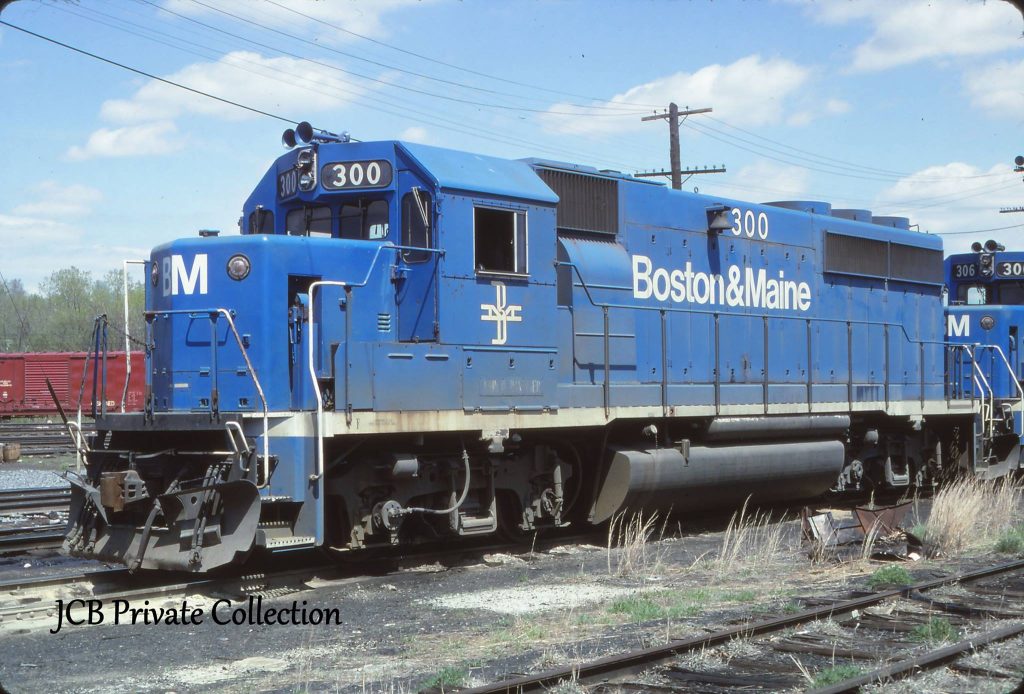
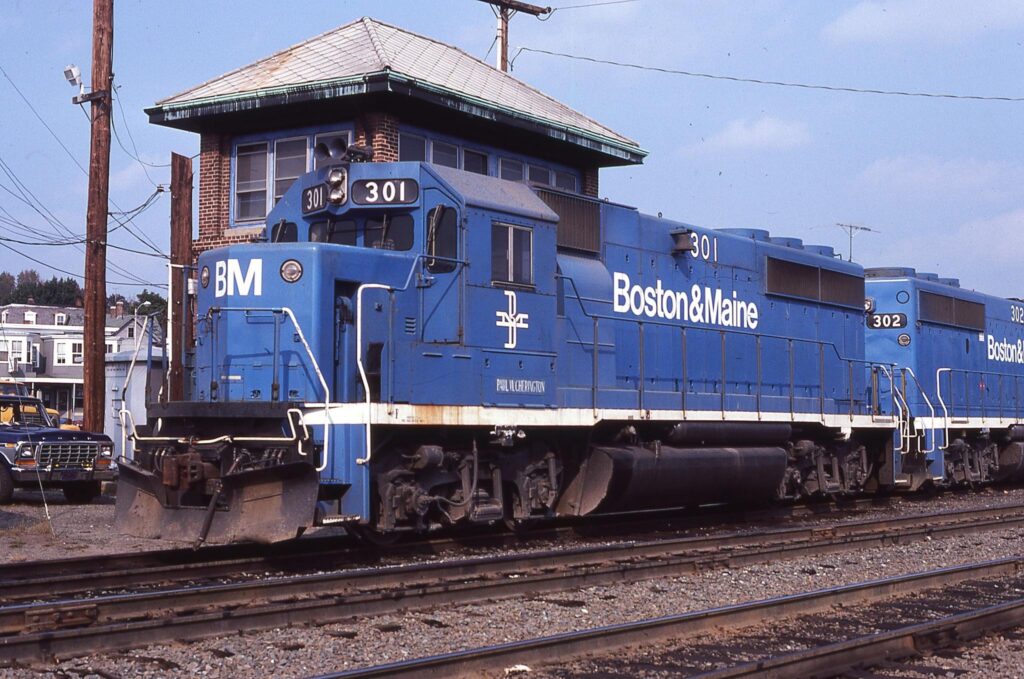
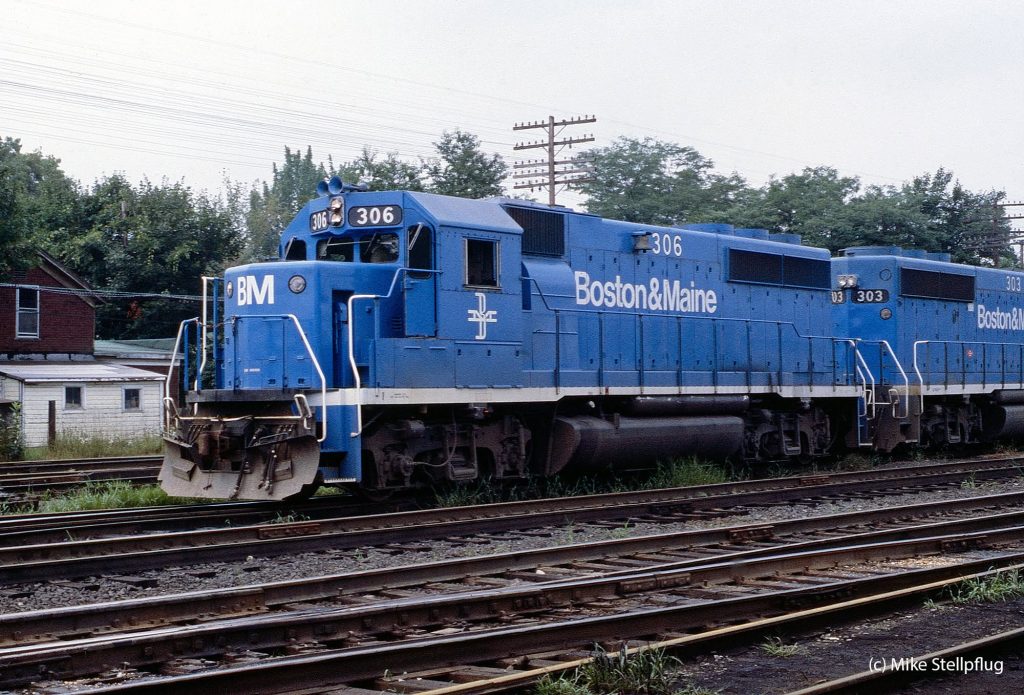
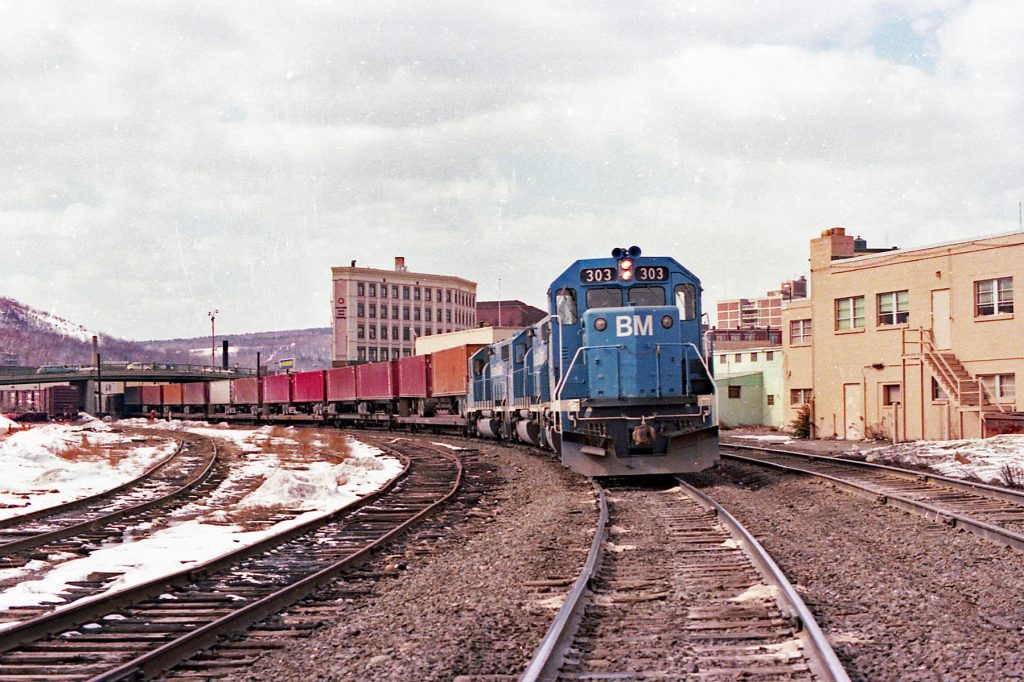
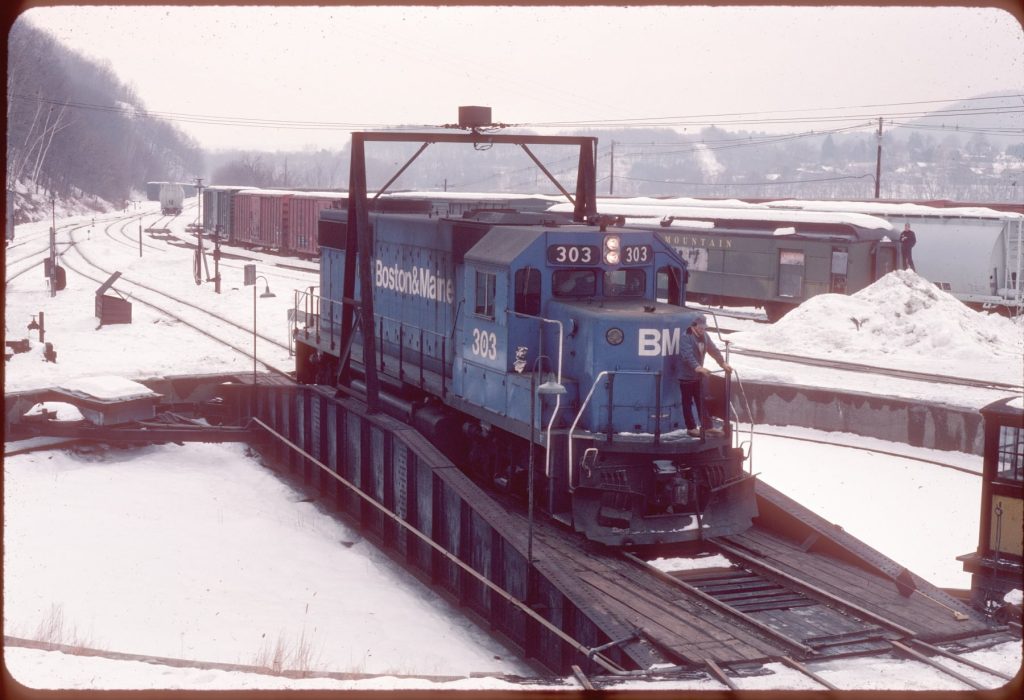
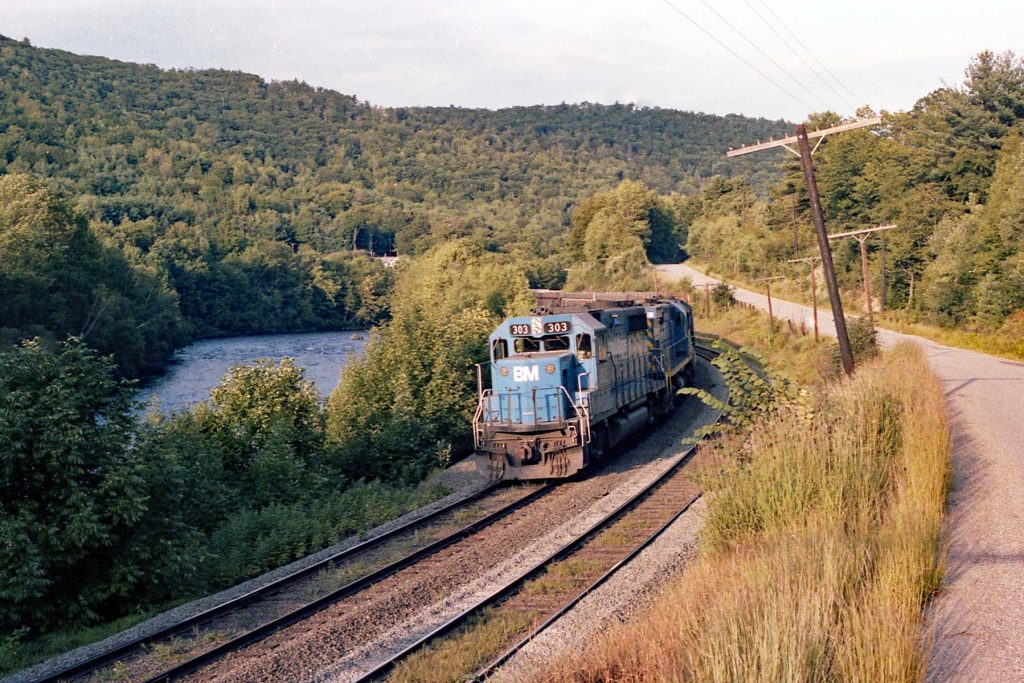
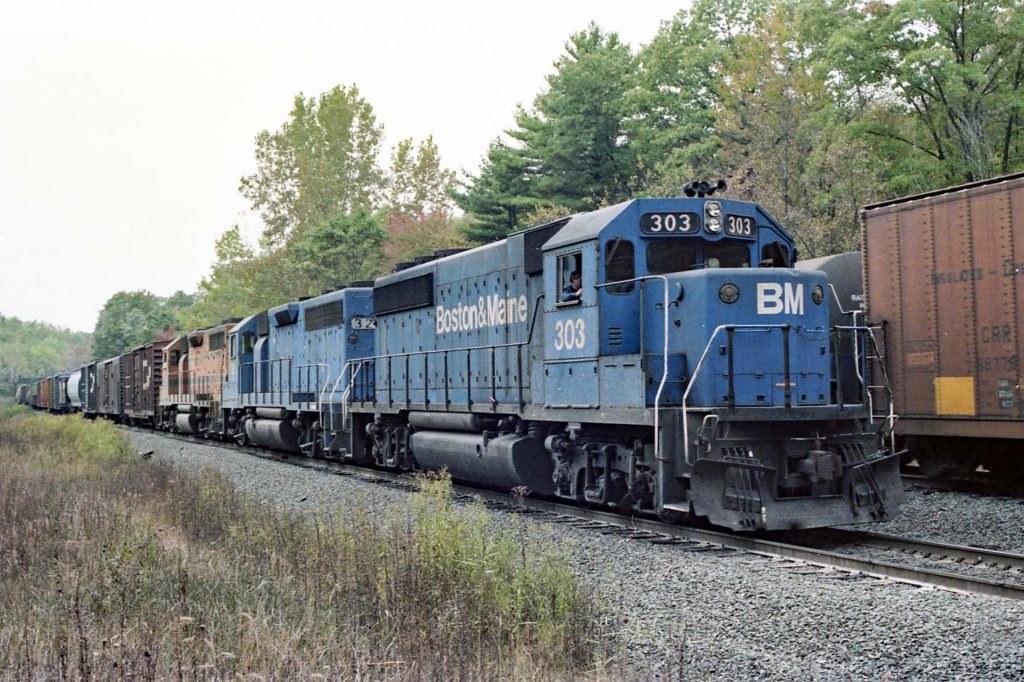
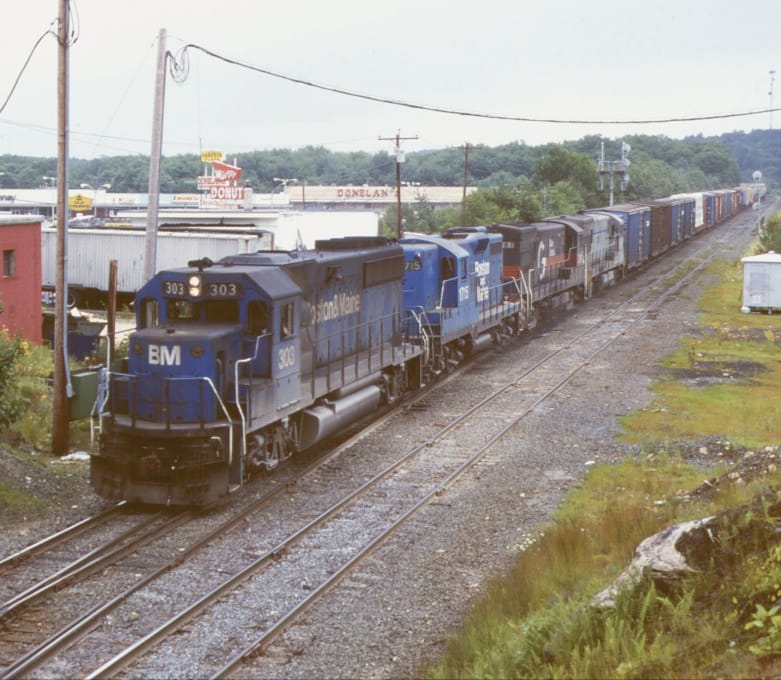
The Boston & Maine’s GP40-2 locomotives, constructed by EMD in December 1977, featured a consistent paint scheme throughout their service. Initially adorned in the “Dustin Dip” livery, these locomotives underwent subtle modifications over time. The white sill stripe was eventually removed, leading to a streamlined appearance. As the years progressed, the Boston & Maine locomotives adopted a more austere aesthetic, transitioning to the distinctive Guilford charcoal grey and orange scheme. This standardised paint scheme reflected the evolving identity of the railroad under the Guilford Transportation Industries’ ownership.
| No. | Built | Livery | Notes | Photographs | Modelling |
|---|---|---|---|---|---|
| 300 | RRPA | Atlas Standard 40 000 244, DCC 40 000 274. | |||
| 301 | Dec 1977 | Guilford Grey from at least Dec 1984. | RRPA | Guildford Atlas Silver 40 004 706, Gold 40 004 728 | |
| 302 | Dec 1977 | B&M Blue until at least Feb 1986. Guilford Grey from at least Jan 1992. | RRPA | ||
| 303 | Dec 1977 | RRPA | Atlas Standard 40 000 245, DCC 40 000 275. | ||
| 304 | Dec 1977 | Guildford grey by Feb 1991. | RRPA | Guildford Atlas Silver 40 004 707, Gold 40 004 729 | |
| 305 | RRPA | ||||
| 306 | Dec 1977 | RRPA | |||
| 307 | RRPA | ||||
| 308 | RRPA | ||||
| 309 | RRPA | ||||
| 310 | RRPA | ||||
| 311 | Dec 1977 | RRPA | |||
| 312 | RRPA | Atlas Standard 40 000 246. | |||
| 313 | RRPA | ||||
| 314 | Guilford grey by Mar 2009. | RRPA | Guildford Atlas Silver 40 004 708, Gold 40 004 730 | ||
| 315 | Dec 1977 | RRPA | |||
| 316 | RRPA | ||||
| 317 | RRPA |