The Buffalo Creek Railroad (BCK) operated an extensive fleet of 40-foot boxcars, primarily used to transport bagged flour from Buffalo, New York’s flour mills, to bakeries and distributors throughout the United States. Although the railroad itself was a relatively small terminal and switching operation, its distinctive freight cars travelled far beyond Buffalo, appearing on railroads across the country.
Many of these boxcars were built by Pullman-Standard to its widely used PS-1 design and carried the distinctive circular Buffalo Creek Flour emblem, reflecting the railroad’s close association with Buffalo’s grain-handling and flour-milling industries. Their brown paintwork and prominent white lettering made them readily identifiable, even thousands of miles from their home rails.
The photographs below show the Buffalo Creek boxcar fleet in the 1960s and 1970s, while the accompanying roster identifies the principal number series and available construction details. The railroad became part of Conrail on 1 April 1976, although its boxcars continued to carry their original lettering for some time afterwards.
Boxcars
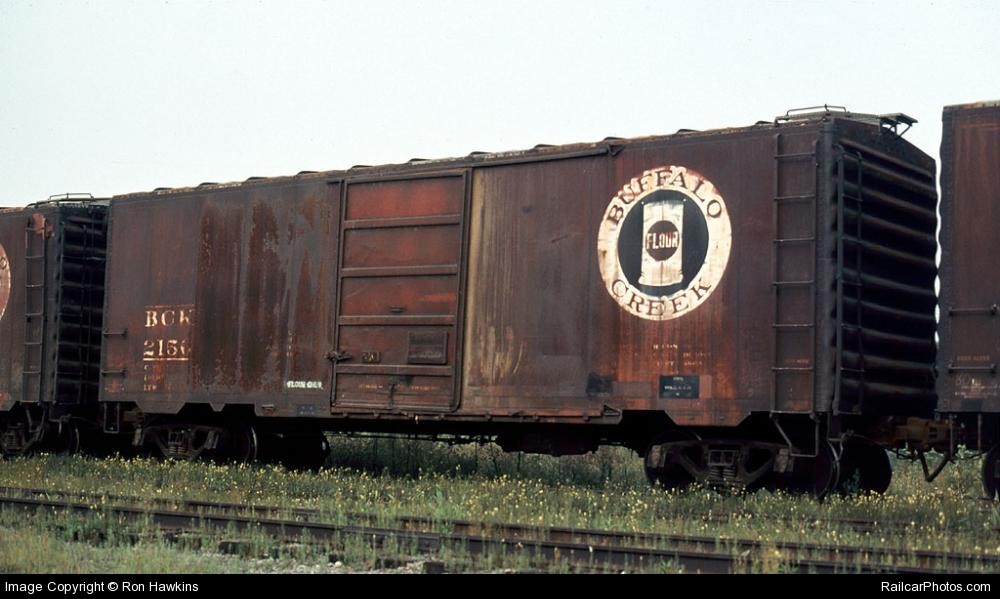
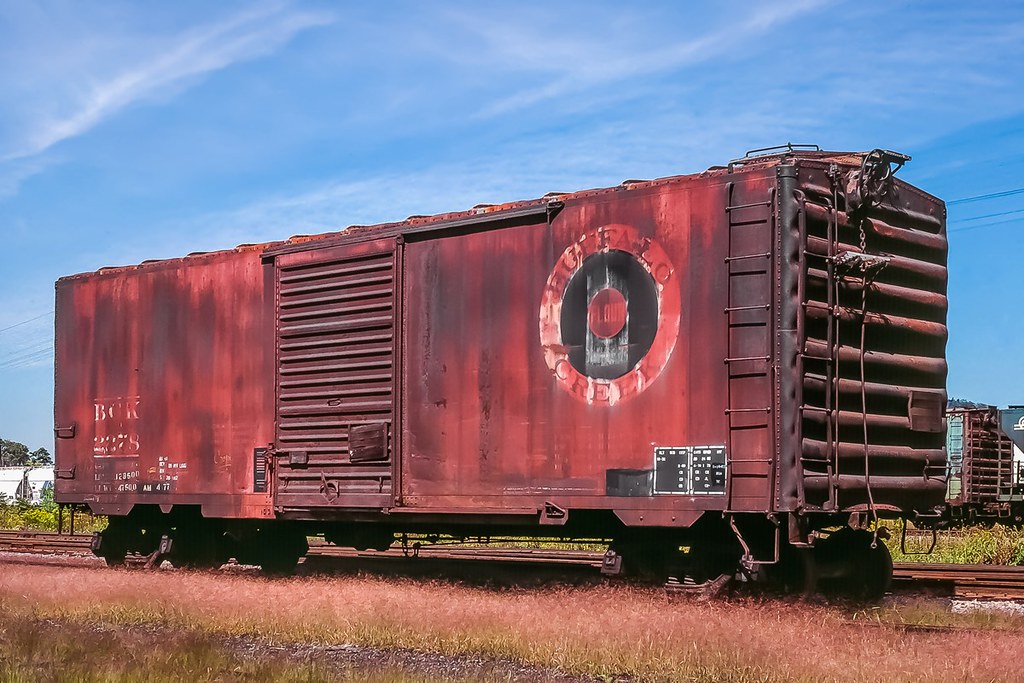
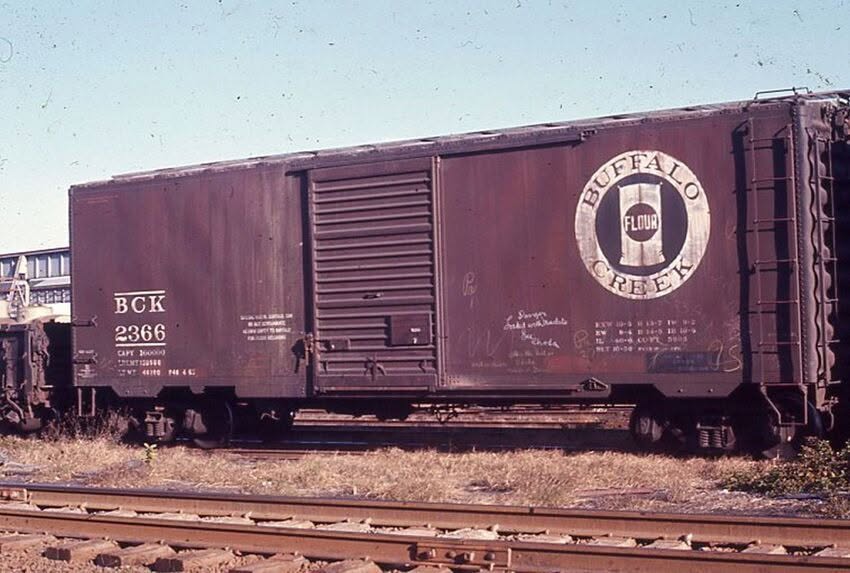
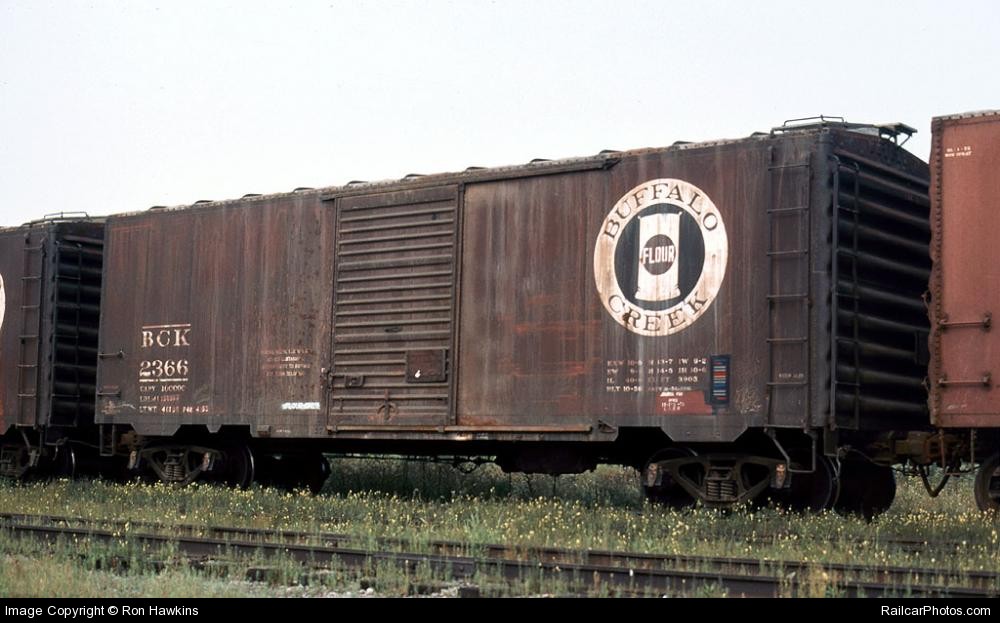
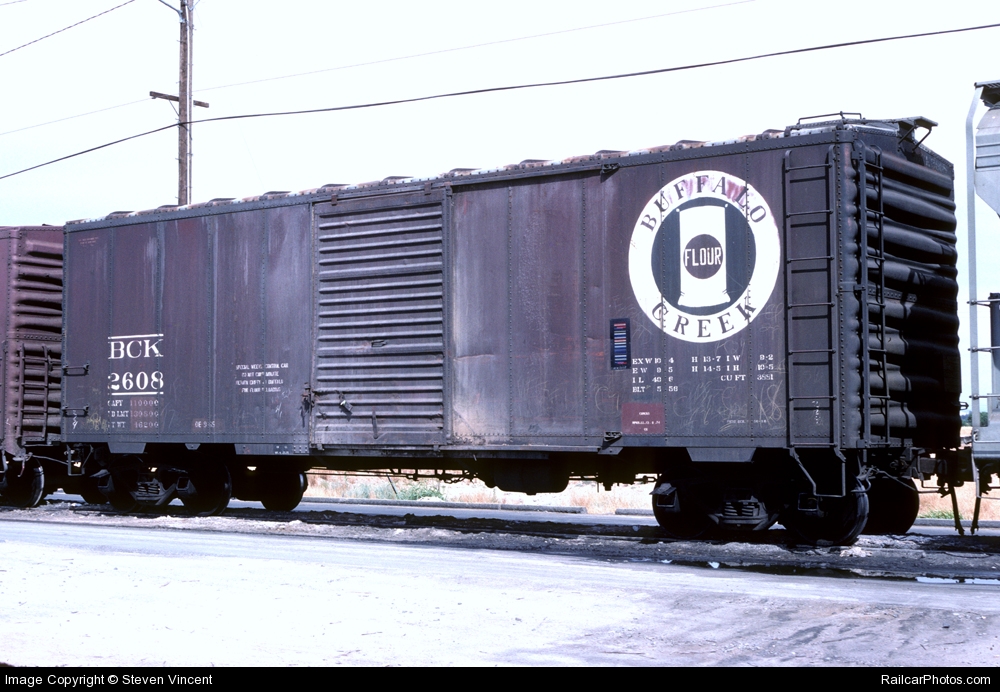
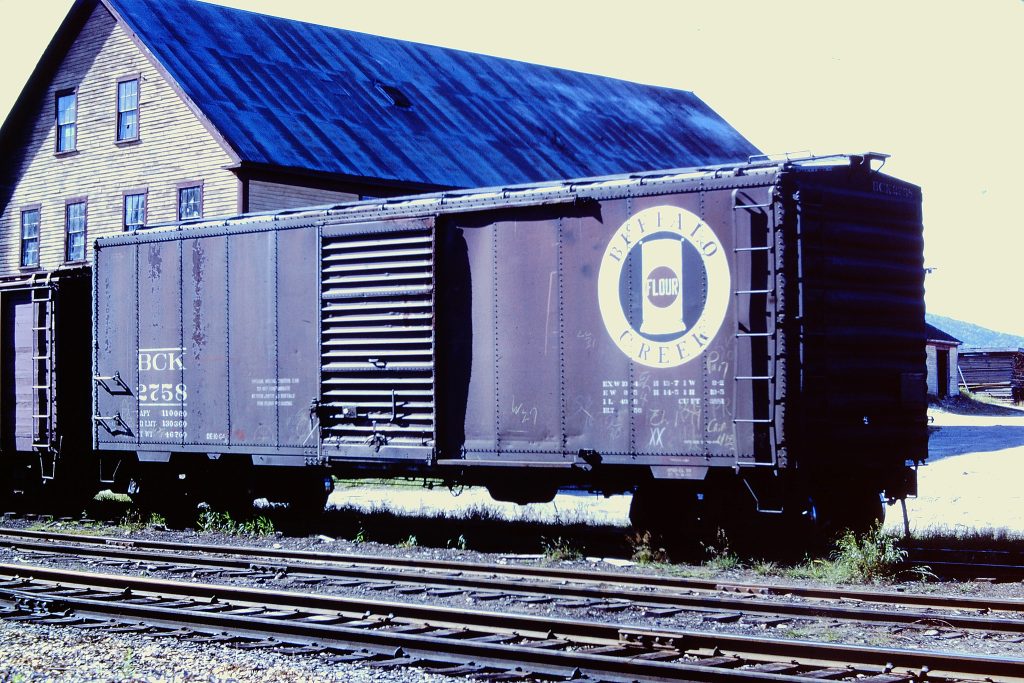
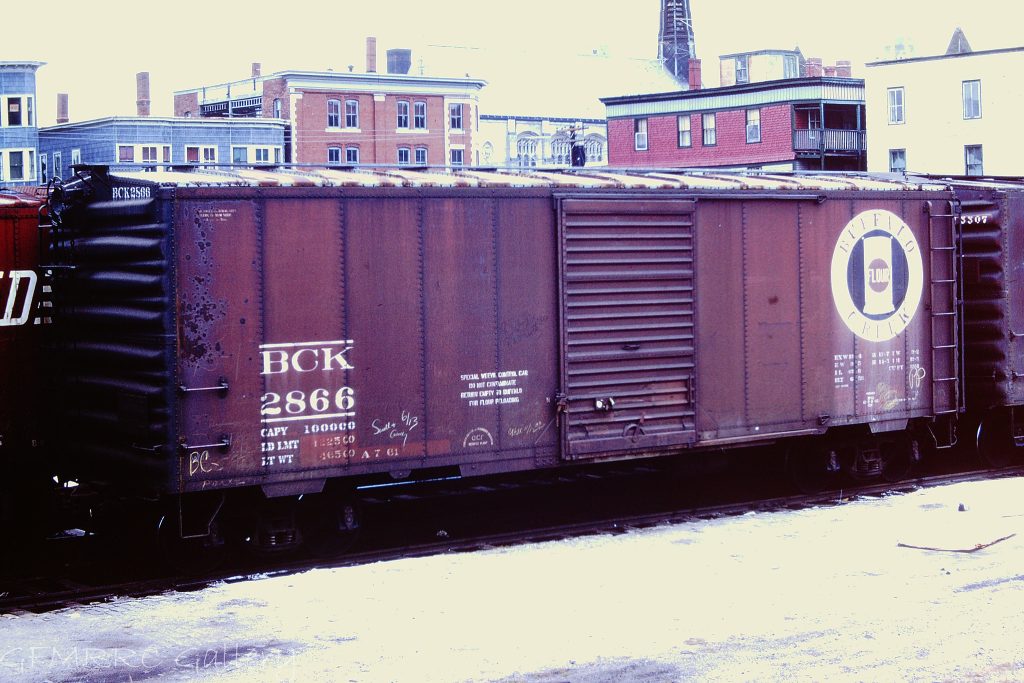
Buffalo Creek Railroad (BCK) 40-foot Pullman-Standard PS-1 boxcar No. 2156 stands in a freight yard at Buffalo, New York, on 26 August 1976. Built in October 1956 as part of a 500-car order (BCK 2000–2499, Pullman-Standard Lot 8292), the boxcar featured a 7-foot, five-panel Superior sliding door and a capacity of 3,902 cubic feet. Its distinctive Buffalo Creek Flour emblem remains prominent despite extensive weathering and rust across the car’s sides. Originally used to transport bagged flour from Buffalo’s milling industry to bakeries throughout the United States, these boxcars were familiar sights far beyond their home rails. By the time of this photograph, No. 2156 was approaching its twentieth year of service. © Ron Hawkins Buffalo Creek Railroad (BCK) 40-foot Pullman-Standard PS-1 boxcar No. 2272 stands among an assortment of freight cars at Southern Pacific’s Taylor Yard in Los Angeles, California, in 1962. Built in October 1956 as part of a 500-car order (BCK 2000–2499, Pullman-Standard Lot 8292), the 50-ton boxcar featured a 7-foot Youngstown YSD-2 sliding door and a capacity of 3,902 cubic feet. Its distinctive Buffalo Creek Flour emblem advertised the railroad’s association with Buffalo, New York’s flour-milling industry. These cars regularly carried bagged flour to bakeries throughout the United States, often travelling considerable distances from their home rails. Southern Pacific and Soo Line boxcars are also visible, illustrating the variety of railroad ownership represented in a major classification yard during the early 1960s. © Roy R. Platt Buffalo Creek Railroad (BCK) 40-foot Pullman-Standard PS-1 boxcar No. 2278 stands out of service on a siding at Binghamton, New York, on 2 September 1983. Built in October 1956 as part of a 500-car order (BCK 2000–2499, Pullman-Standard Lot 8292), the 50-ton boxcar featured a 7-foot Youngstown YSD-2 sliding door and a capacity of 3,902 cubic feet. Its once-distinctive Buffalo Creek Flour emblem is heavily faded, while extensive rust streaking and deteriorating paintwork reflect years of exposure to the elements. The car appears to be missing its draft gear, suggesting that it had been withdrawn from service and possibly awaiting scrapping. Originally used to transport bagged flour from Buffalo’s milling industry to destinations throughout the United States, these boxcars remained familiar sights long after the Buffalo Creek Railroad became part of Conrail on 1 April 1976. Photographed more than seven years after that merger, No. 2278 represents one of the surviving remnants of the railroad’s once-extensive flour-hauling fleet. © Doug Lilly Buffalo Creek Railroad (BCK) 40-foot Pullman-Standard PS-1 boxcar No. 2366 stands at the Boston & Maine Railroad’s West Cambridge Yard in Massachusetts, on an unrecorded date. Built in October 1956 as part of a 500-car order (BCK 2000–2499, Pullman-Standard Lot 8292), the 50-ton boxcar featured a 7-foot Youngstown YSD-2 sliding door and a capacity of 3,902 cubic feet. Its distinctive Buffalo Creek Flour emblem remains prominent against the weathered brown paintwork, while chalk markings on the car’s side provide evidence of routine freight handling and switching operations. Originally used to transport bagged flour from Buffalo, New York, to bakeries throughout the United States, these boxcars travelled widely beyond their home rails. The appearance of No. 2366 in a Boston & Maine yard illustrates the extensive reach of Buffalo Creek’s flour traffic into New England. © Michael Stamey Buffalo Creek Railroad (BCK) 40-foot Pullman-Standard PS-1 boxcar No. 2366 stands among other freight cars at Buffalo, New York, on 26 August 1976. Built in October 1956 as part of a 500-car order (BCK 2000–2499, Pullman-Standard Lot 8292), the 50-ton boxcar featured a 7-foot Youngstown YSD-2 sliding door and a capacity of 3,902 cubic feet. Its once-rich brown paintwork has faded considerably, with extensive rust streaking across the sides, although the distinctive circular Buffalo Creek Flour emblem remains clearly visible. Originally associated with the transportation of bagged flour from Buffalo’s milling industry to bakeries across the United States, these cars travelled widely over the national railroad network. Nearly twenty years after construction, No. 2366 retains its original lettering and distinctive appearance despite the effects of prolonged service. © Ron Hawkins Buffalo Creek Railroad (BCK) 40-foot Pullman-Standard PS-1 boxcar No. 2398 stands in the Delaware & Hudson Railway’s yard at Oneonta, New York, on 12 September 1976. Built in October 1956 as part of a 500-car order (BCK 2000–2499, Pullman-Standard Lot 8292), the 50-ton boxcar featured a 7-foot Youngstown YSD-2 sliding door and a capacity of 3,902 cubic feet. Its distinctive black ends contrast with the weathered brown sides, while the circular Buffalo Creek Flour emblem remains clearly recognisable despite fading and rust. The car also retains its original roofwalk, a feature increasingly uncommon on boxcars by the mid-1970s. Originally used to transport bagged flour from Buffalo’s milling industry to destinations throughout the United States, No. 2398 was photographed just over five months after the Buffalo Creek Railroad became part of Conrail on 1 April 1976, still carrying its original reporting marks and lettering. © Stanley Short Buffalo Creek Railroad (BCK) 40-foot boxcar No. 2511 stands among other freight cars at Paterson, New Jersey, in June 1980. Built by American Car & Foundry in May 1956 as part of a 500-car order (BCK 2500–2999, Lot 4670), the 50-ton boxcar featured a 7-foot Youngstown sliding door, distinctive 3/4 IDN ends and a capacity of approximately 3,880 cubic feet. Its sliding door stands partially open, revealing the dark interior, while the once-prominent Buffalo Creek Flour emblem has deteriorated considerably, leaving only fragments of its original white lettering and circular design. Extensive weathering and faded paintwork reflect nearly a quarter-century of service. Originally intended for transporting bagged flour from Buffalo’s milling industry, these cars travelled widely throughout the United States. Photographed more than four years after the Buffalo Creek Railroad became part of Conrail in April 1976, No. 2511 remained in its original reporting marks and lettering, illustrating the longevity of the railroad’s distinctive flour-hauling fleet. © George Berisso Buffalo Creek Railroad (BCK) 40-foot boxcar No. 2608 stands at Roseville, California, on 6 June 1976. Built by American Car & Foundry in May 1956 as part of a 500-car order (BCK 2500–2999, Lot 4670), the 50-ton boxcar featured a 7-foot Youngstown sliding door, distinctive 3/4 IDN ends and a capacity of 3,881 cubic feet. Its circular Buffalo Creek Flour emblem remains prominent against the weathered dark brown paintwork. Lettering beside the door identifies it as a “Special Weevil Control Car”, with instructions to return the car empty to Buffalo, New York, for flour loading. This designation reflected the importance of protecting bagged flour shipments from insect contamination. Photographed more than 2,000 miles from its home territory, No. 2608 illustrates the extensive geographical reach of Buffalo Creek’s flour traffic across the American railroad network. © Steven Vincent Buffalo Creek Railroad (BCK) 40-foot boxcar No. 2758 stands on a siding beside a large wooden building at Bethel, Maine, in August 1967. Built by American Car & Foundry in May 1956 as part of a 500-car order (BCK 2500–2999, Lot 4670), the 50-ton boxcar featured a 7-foot Youngstown sliding door, distinctive 3/4 IDN ends and a capacity of approximately 3,880 cubic feet. Its prominent circular Buffalo Creek Flour emblem remains clearly visible against the weathered brown paintwork, while chalk markings on the car’s side record routine freight handling and switching instructions. Lettering beside the door identifies it as a “Special Weevil Control Car”, with instructions to return the car empty to Buffalo for flour loading. These precautions helped ensure that the interior remained suitable for transporting bagged flour without contamination. Photographed more than a decade after construction, No. 2758 illustrates the widespread use of Buffalo Creek’s specialised flour-hauling fleet throughout New England. © Waldo H. Kingston Buffalo Creek Railroad (BCK) 40-foot boxcar No. 2866 stands among other freight cars at Lewiston, Maine, in October 1967. Built by American Car & Foundry in May 1956 as part of a 500-car order (BCK 2500–2999, Lot 4670), the 50-ton boxcar featured a 7-foot Youngstown sliding door, distinctive 3/4 IDN ends and a capacity of approximately 3,880 cubic feet. Its prominent circular Buffalo Creek Flour emblem remains clearly visible against the weathered brown paintwork. Lettering beside the door identifies it as a “Special Weevil Control Car”, with instructions not to contaminate the interior and to return the car empty to Buffalo for flour loading. These precautions helped protect bagged flour shipments from insect infestation and contamination. Photographed more than 500 miles from Buffalo, No. 2866 illustrates the widespread distribution of the railroad’s specialised flour-hauling fleet throughout the northeastern United States. © Waldo H. Kingston Nos. Type Details BCK 1000-1499 40′ Box Car; PS-1 PS (Lot 8038); 7/1952; 7′ Superior doors BCK 1500-1999 40′ Box Car ACF (Lot 3709); 3/1953; 7′ Youngstown YSD-2 doors BCK 2000-2199 40′ Box Car; PS-1 PS (Lot 8292); 10/1956; 7′ Superior doors BCK 2200-2499 40′ Box Car; PS-1 PS (Lot 8292); 10/1956; 7′ Youngstown YSD-2 doors BCK 2500-2999 40′ Box Car ACF (Lot 4670); 5/1956; 7′ Youngstown doors; 3/4 IDN ends BCK 3000-3424 40′ Box Car BCK 3519-3919 40′ Box Car BCK 4001-4497 40′ Box Car BCK 4500-4997 40′ Box Car