The first RS-11s were produced by Alco in early 1956. This locomotive, classified by Alco as model DL-701, was their replacement for the very popular RS-3 road-switcher. Featuring a V-12, 1,800hp 251B diesel engine, the RS-11 was Alco’s answer to EMD’s very successful GP9. The turbocharged RS-11 accelerated faster, had a higher tractive effort rating and typically used less fuel than the competition. It was also quite versatile and could be found in heavy haul freight as well as passenger service.
The largest owner of RS-11s was Norfolk & Western, which purchased a total of 99 units (an additional 35 were added to the fleet after the merger with Nickel Plate). Other major purchasers included Northern Pacific, Pennsylvania and Southern Pacific, all of whom placed repeat orders. With approximately 426 units built for the US and Mexico over 8 years of production, the RS-11 was successful for Alco in that it provided ongoing competition for EMD’s popular road-switchers. A few examples of this model are still in service today and can be found working for various shortlines in the US.
Maine Central
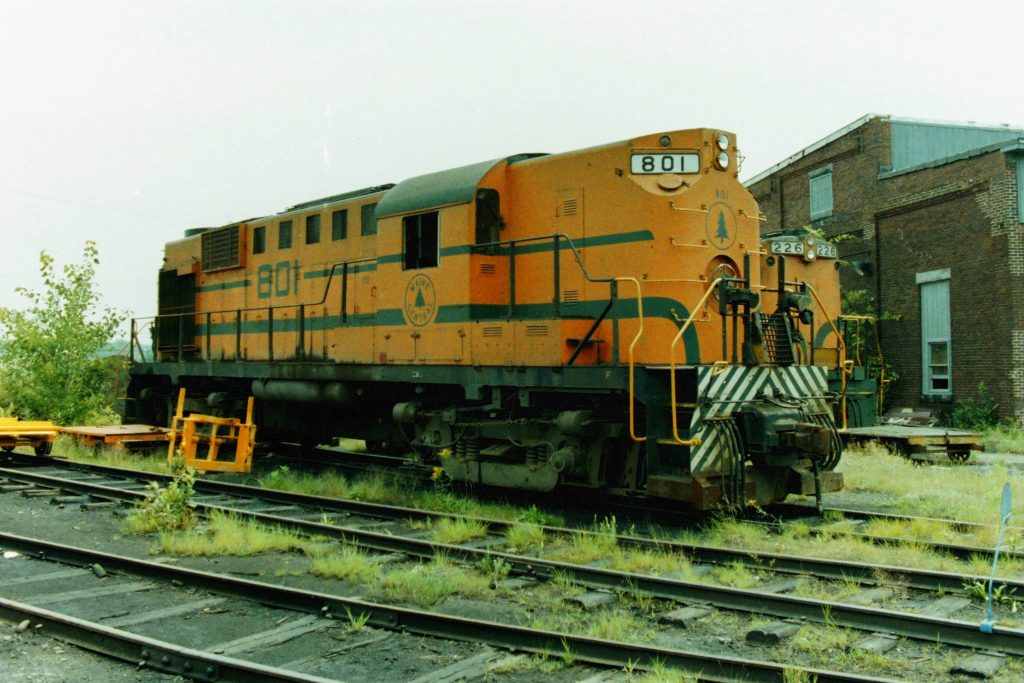
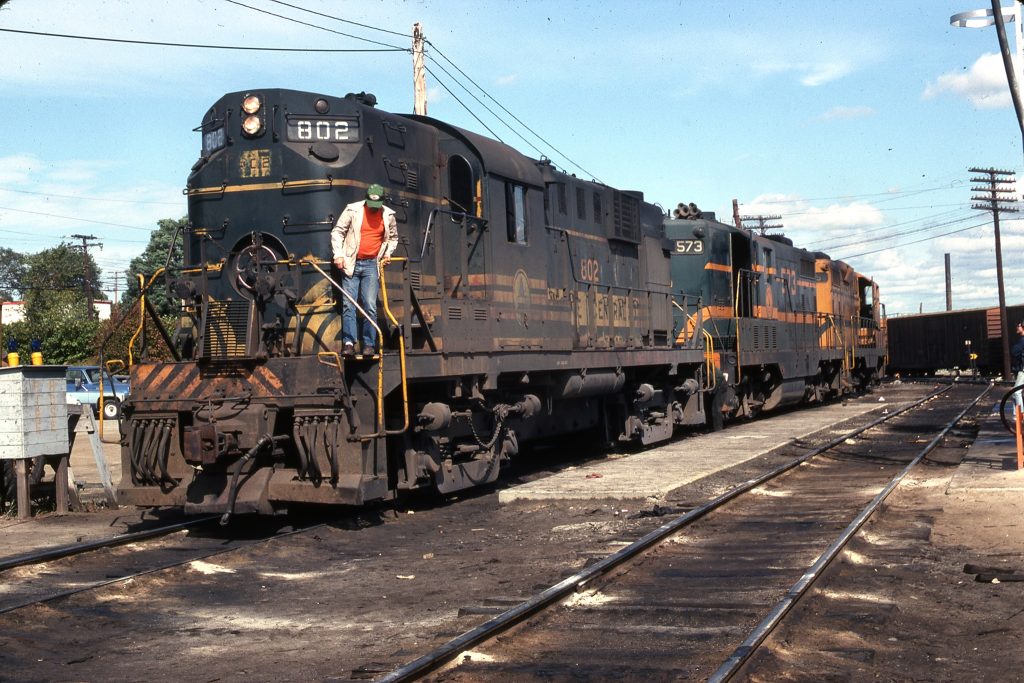
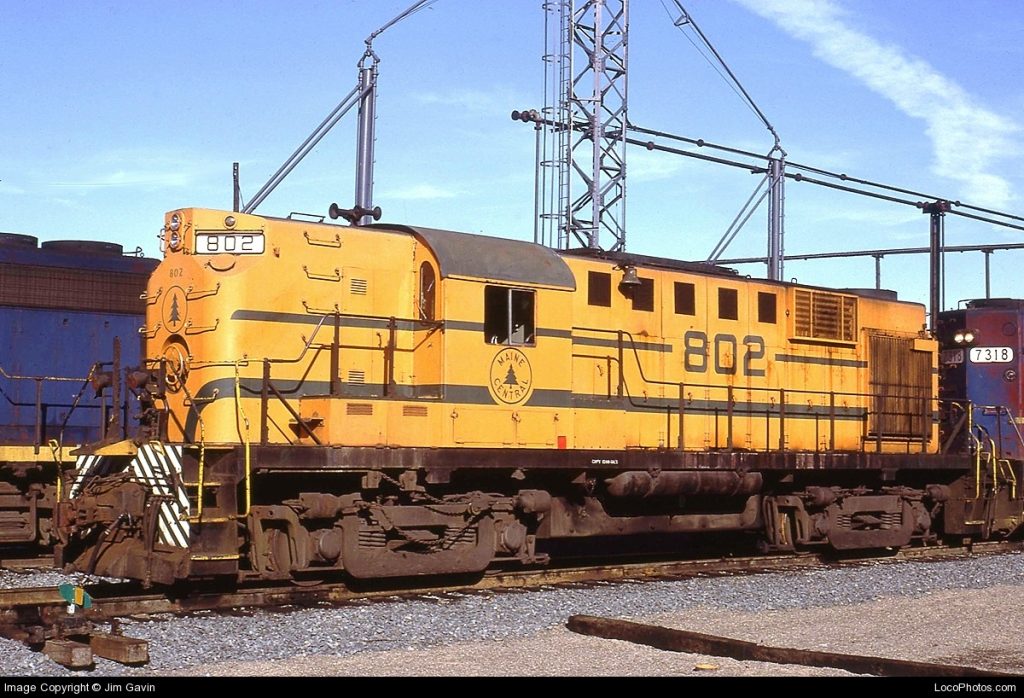
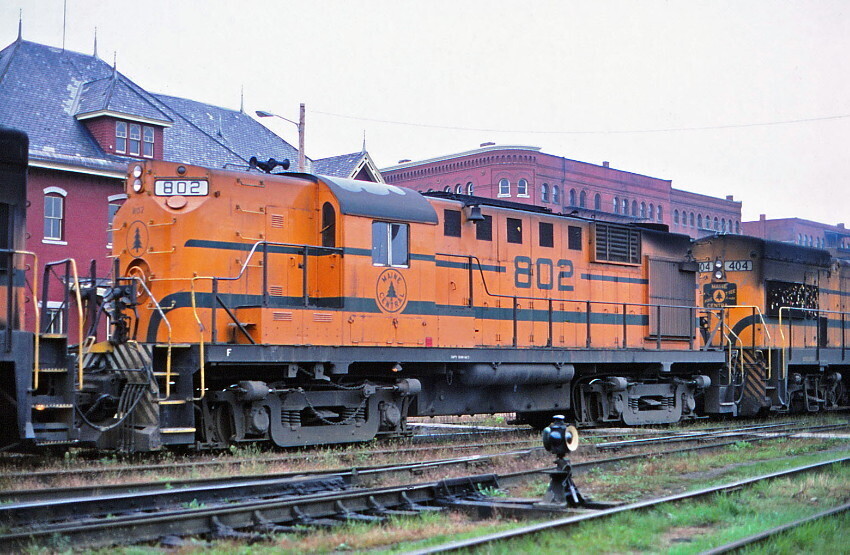
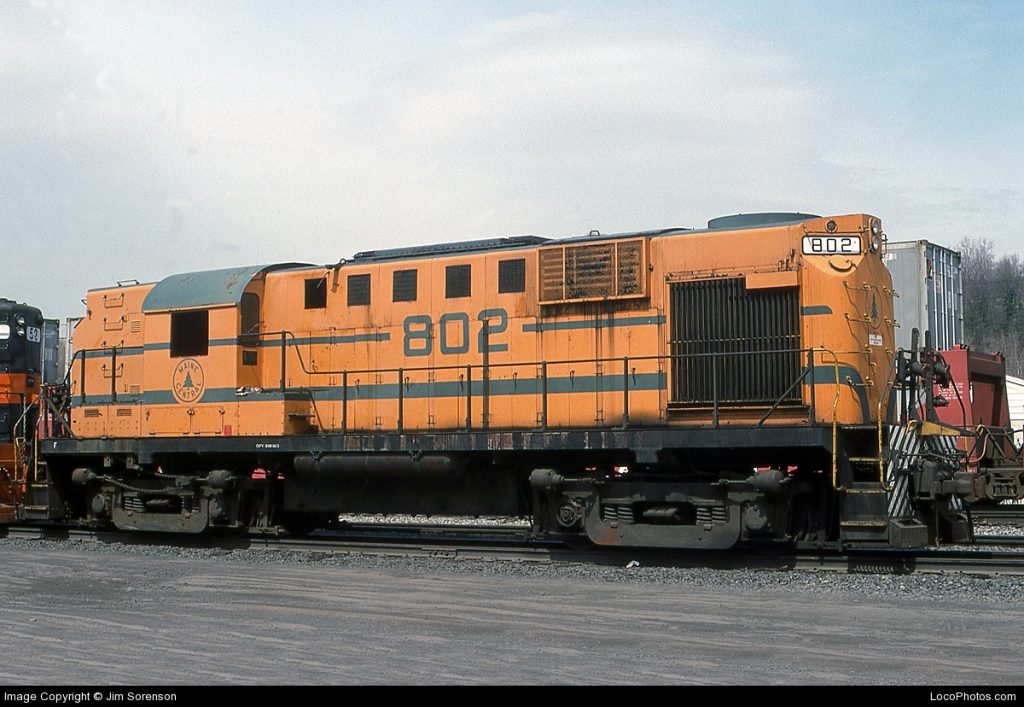
Maine Central RS11 No. 801 at Bangor, Maine, on 15 July 1975. © M. J. Batutis Maine Central RS11 at Calais, Maine, July 1981. MEC rostered just two RS11s. © Michael Shufelt Maine Central RS-11 No. 801 stands in a lightly overgrown yard at Bangor, Maine, in August 1983. The locomotive wears the road’s distinctive harvest gold and green scheme, already showing signs of weathering as traffic declined in the early 1980s. Industrial buildings and stored equipment frame the scene, capturing the worn, workaday atmosphere of the period. © Greg F. Brewer Maine Central RS11 No. 801 at Bangor, Maine, on 6 August 1983. © Michael Spearing, courtesy of the Don Ross Collection Maine Central ALCO RS11 No. 801 stands behind the Delaware & Hudson’s Colonie Shops during the winter of 1989–90, awaiting scrapping. One of just two RS11s operated by Maine Central, the locomotive had been withdrawn following a broken crankshaft. Built by ALCO in June 1956, No. 801 still wears its faded Harvest Gold and Pine Green livery as it awaits the torch, leaving sister locomotive No. 802 to briefly carry on alone before its own retirement and scrapping the following year. © Dan Raymond ALCO RS11s 802 and 801 stand with ALCO S4 No. 317 at the engine facility in Calais, Maine, on 2 September 1968. All three wear Maine Central’s classic Pine Green with gold lettering. © Barry Lennon Former Portland Terminal No. 1082, to Maine Central as 802 in November 1956, seen at Waterville. © Michael Shufelt Maine Central RS-11 No. 802 stands at South Portland, Maine, on 16 July 1976. Built by ALCO in June 1956 as Pittsburgh & Lake Erie No. 802 and later renumbered P&LE No. 5762, the locomotive joined the Maine Central fleet as No. 802 in 1974. It is seen here wearing the railroad’s green and gold paint scheme during the final years before the Guilford era. No. 802 remained in service until 1988, when it was retired and sold for scrap. © Warren Calloway Maine Central ALCO RS11 No. 802 leads GP7 No. 573 in Pine Green and another GP7 in Harvest Gold along the service tracks at Bangor, Maine, on 25 September 1980. Built by ALCO in June 1956 as Portland Terminal No. 1082, the locomotive was transferred to Maine Central as No. 802 in November 1956. © Dave Mohla Maine Central RS-11 No. 802 stands at Portland, Maine, on 12 June 1979. Built by ALCO in June 1956 as Portland Terminal Company No. 1082, the locomotive is seen in Maine Central’s striking Harvest Gold paint scheme, introduced during the 1970s. Following the acquisition of the Maine Central by Guilford Transportation Industries in 1981, No. 802 continued in service until its retirement in February 1988. It was sold for scrap later that year. © Jim Gavin Maine Central EMD GP7 No. 585 and ALCO RS11 No. 802 on train VB-2 at Olamon, Maine, on 6 October 1979, the only stretch between Lincoln and Milford where the tracks run beside US Route 2. © Dwight Mitchell Maine Central RS11s 801 and 802 work a string of tank cars in the yard at Bucksport on 9 May 1981. Both units wear the classic Harvest Gold scheme during their final years on home rails. © Chuck Schwesinger Both of Maine Central’s RS11s together at Bangor Yard, Bangor, Maine, May 1982. © Michael Shufelt Maine Central ALCO RS-11 no. 802, built in June 1956 as Portland Terminal no. 1082, stands at St. Johnsbury, Vermont , on 3 October 1982, coupled ahead of GE U18B no. 404 Kenneth Roberts. One of just two RS-11s on the roster, no. 802 worked alongside sister no. 801 in the final years of Mountain Division service, both locomotives representing the last of Maine Central’s ALCO road power before their withdrawal and scrapping in the mid-1980s. © Bruce Macdonald Maine Central ALCO RS-11 No. 802 passes Chester Depot, Vermont, during a trial on the Green Mountain Railroad in November 1983. Borrowed for evaluation during a period of increasing traffic, the locomotive made two round trips between Bellows Falls and Rutland hauling a consist of newly delivered Green Mountain Railroad 50-foot boxcars . Despite the successful trials, the two railroads were unable to reach an agreement on a sale, and No. 802 returned to Maine Central service. © Fred Bailey Maine Central Alco RS11 No. 802 stands at Buffalo, New York, on 28 May 1984, still wearing its well-weathered MEC harvest gold and green paint. Built for the Maine Central in 1956, No. 802 was one of the railroad’s distinctive fleet of ALCO road-switchers and served on the Delaware & Hudson during the Guilford era. © Alan S. Gaines Maine Central RS11 No. 802 stands at East Binghamton Yard on the Delaware & Hudson in September 1985, still wearing Maine Central’s Harvest Gold. © Doug Lilly Maine Central RS11 No. 802 on the Delaware & Hudson at BD, Binghamton, New York, 15 September 1985, with D&H caboose No. 35808 prominent. © Rich Taylor Maine Central RS11 No. 802 on the Delaware & Hudson at BD, Binghamton, New York, 15 September 1985. © Rich Taylor Maine Central RS-11 No. 802 stands at Conklin, New York, on 4 April 1988. Built by ALCO in June 1956 as Portland Terminal Company No. 1082, the locomotive is seen in its distinctive yellow and green Maine Central paint scheme shortly after retirement. By this date, Guilford Transportation Industries had controlled the Maine Central for several years, making the survival of the locomotive’s pre-Guilford colours particularly notable. No. 802 was sold to Midwest Steel & Alloy in March 1988 and was scrapped the following year. © Jim Sorenson Class DRS-1F
No. Built Serial Liveries Notes Photographs Modelling 801 Jun 1956 81916 Pine Green with Yellow Stripes until at least Jan 1976. Harvest Gold by March 1978 RRPA September 2005 Atlas Maine Central Pine Green Standard 42616 , DCC 42706. June 2007 Atlas Maine Central Harvest Gold Standard ***42647, DCC 42734***. 802 81917 Pine Green with Yellow Stripes until at least Jul 1976. Harvest Gold by June 1979 until at least April 1985. Purchased as Portland Terminal 1082, transferred to Maine Central in Nov 1956. Retired Feb 1988; to Midwest Steel & Alloy 14th Mar, scrapped Sep 1989. RRPA September 2005 Atlas Maine Central Pine Green Standard 42617, DCC 42707. June 2007 Atlas Maine Central Harvest Gold Standard 42648, DCC 42735 .
Maine Coast
Maine Central Harvest Yellow with Pine Green roof. MECR 367
Maine Coast Railroad ALCO RS11 No. 367 City of Rockland stands at Hardings, Maine, in the early 1990s. Originally built for the Norfolk & Western Railway and later operated by the Central Vermont, the locomotive was rebuilt by the Winchester & Western before joining the Maine Coast Railroad. Behind the locomotive is a mixed consist that includes both freight and passenger equipment, reflecting the varied traffic handled on the former Maine Central Rockland Branch. © Craig Sturgeon Maine Coast Railroad ALCO RS11 No. 367 City of Rockland stands at Newcastle, Maine, on 2 October 1992. Built for the Norfolk & Western Railway and later operated by the Central Vermont, the locomotive became the principal road engine of the Maine Coast Railroad, hauling cement, coal and general freight traffic along the former Rockland Branch. © Bill Gleason Former Norfolk & Western ALCO RS11 No. 367, operating on the Maine Coast Railroad, heads a freight train along the Sheepscot River at Wiscasset, Maine, on 2 October 1992. The consist includes empty coal hoppers returning from Dragon Cement’s Thomaston plant after delivering fuel for the kilns, together with covered hoppers loaded with cement for interchange with Guilford Rail System and onward shipment to customers in the Boston area. © Bill Gleason No. Name Notes Photographs 367 City of Rockland A Norfolk & Western unit was later owned by Central Vermont and eventually acquired by Maine Coast. RRPA
Portland Terminal
No. Built Serial No. Notes Photographs 1082 Jun 1956 81917 Transferred to Maine Central 802 Nov 1956
Modelling
Here are some details worth considering when refining an N scale RS11. The list focuses on features seen on the Maine Central units (801–802), which were equipped with dynamic brakes and screened carbody filters below the brake blister.
Add sand hoses to each wheelset.
Fit grab irons above the number boards.
Include an axle generator on one truck.
Represent truck inspection lights
Omit the roof grab irons, as the Maine Central units lacked them.
Replace the handrails with finer etched or wire versions if possible.
Check that the carbody filters are of the screened type, correct for the prototype.
whip antenna
More Information
Melvin, George F. Maine Central in Color Volume 3. Morning Sun Books , 2008, p.11.
Robertson, E. B. (1978). Maine Central Diesel Locomotives . Westbrook, USA: Edwin B. Robertson, pp. 66-69.