General Electric’s 44-ton switcher was the small diesel that did the unglamorous work well. Built from 1940 to 1956, a total of 386 were produced for light industrial and yard duties. The key figure was in the name. At 44 short tons the locomotive slipped under the unions’ “90,000-pound rule,” which required a fireman on diesels at or above 45 tons. The result was a compact B-B machine that railroads could run with a single crew member.
Power came from two small diesels rather than one large prime mover. Most had a pair of Caterpillar D17000 V8s. Others used Hercules DFXD or Buda 6DH1742 engines, and the last few had Caterpillar D342s. Four traction motors did the work, good for about 360 to 400 horsepower and a top speed around 35 mph. During the war a “drop cab” version with a lower roof was built for the services and for export, and many of those ended up scattered worldwide after 1945.
Aroostook Valley
Dark Green with black trucks.
| No. | Built | Serial No. | Notes | Photographs |
|---|---|---|---|---|
| 10 | 1945 | |||
| 11 | 1945 | |||
| 12 | 1949 | 30246 | RR Picture Archives |
Maine Central
Between Pearl Harbour Day on 7 December 1941 and May 1945, the Maine Central made no diesel purchases other than its first 44-tonners. No. 11 cost $32,900 and entered service at Augusta. Before long Augusta, Lewiston Lower and Livermore Falls were diesel-only servicing points. The class proved exactly what the 44-tonner was meant to be: simple, economical and available.
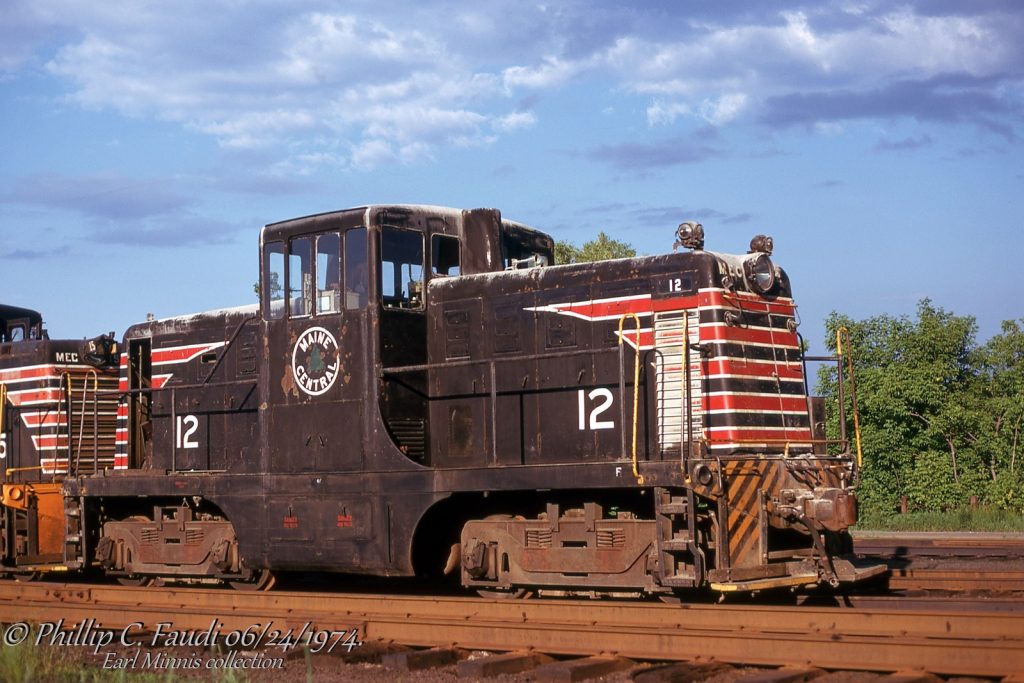
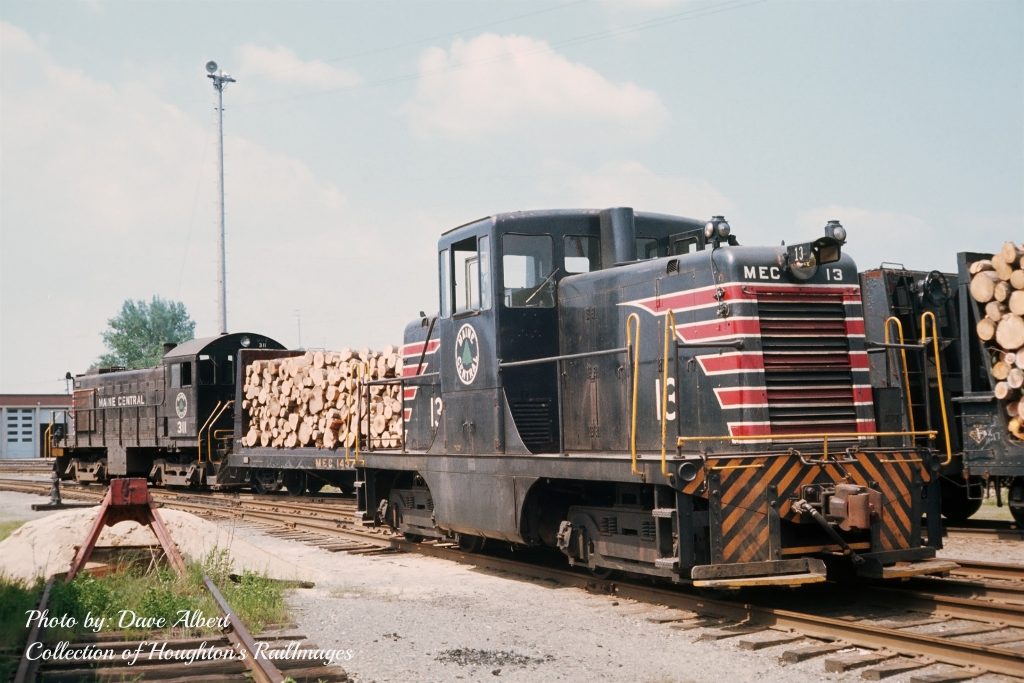

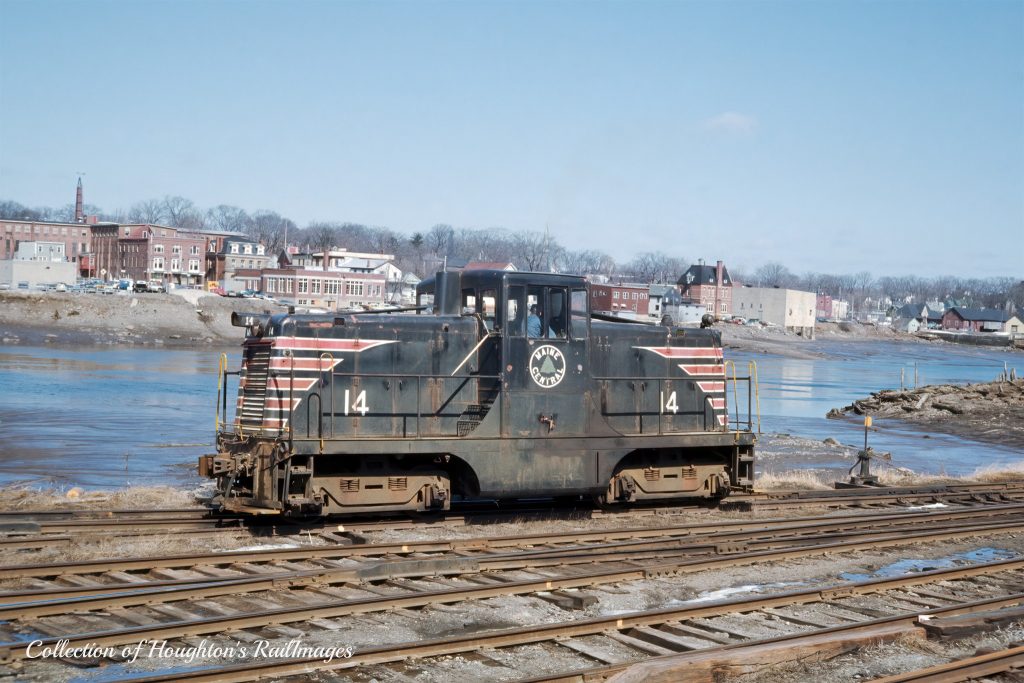
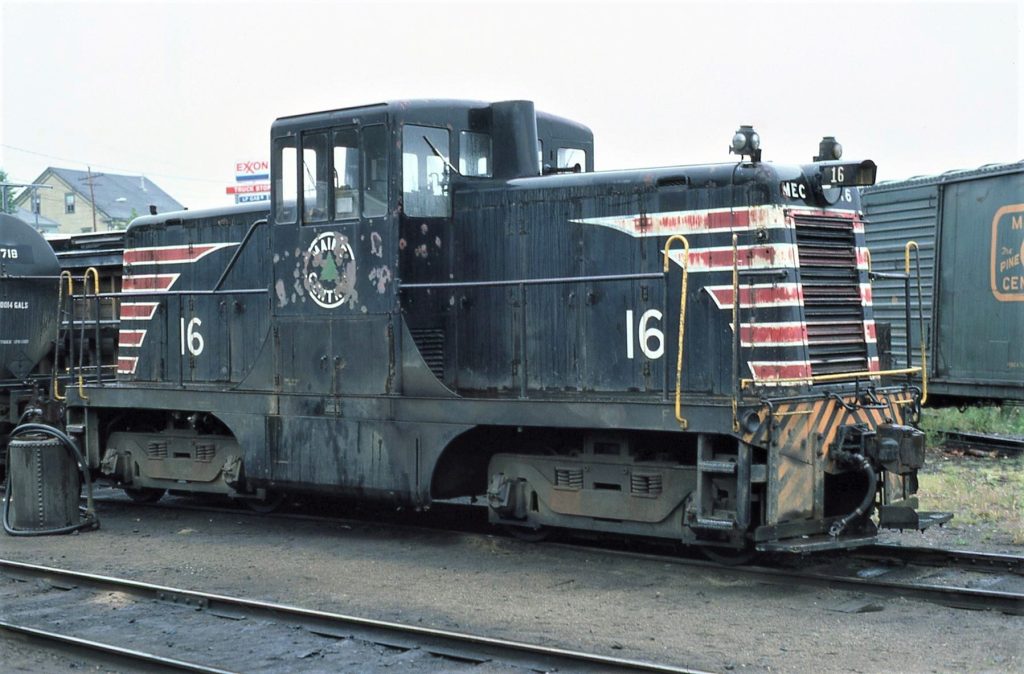
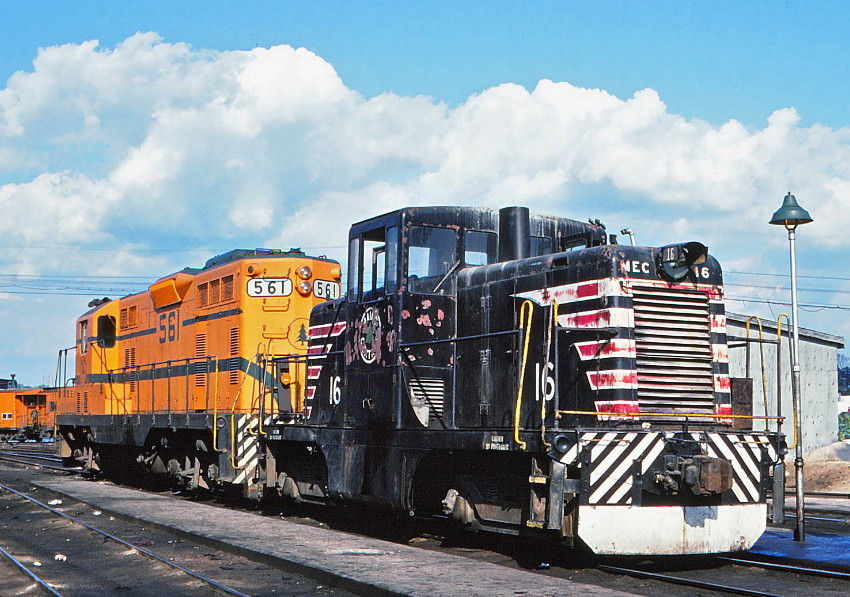
No. 16 lingered on in service longer than the others and was used as the Bangor shop switcher at least until 1981
| No. | Built | Serial No. | Livery | Notes | Photographs |
|---|---|---|---|---|---|
| 11 | Sep 1941 | 13095 | Delivered in Black with Red Stripes. Maine Central Pine Green by May 1965. | Sold Apr 1974. | RR Picture Archives |
| 12 | Aug 1942 | 15036 | Still black with red stripes when withdrawn. | Sold Nov 1975. | RRPA |
| 13 | May 1945 | 27973 | Still black with red stripes in Aug 1973. | Sold Apr 1974 | RR Picture Archives |
| 14 | May 1945 | 29974 | Retired Dec 1977 | RR Picture Archives | |
| 15 | May 1945 | 29975 | Sold. One time based on the Conway Scenic Railroad | ||
| 16 | May 1946 | 28488 | Still black with red stripes when withdrawn. | Acquired by Aroostook Valley Railroad (AVL), Maine in December 1986 for parts. | RR Picture Archives |
| 17 | May 1947 | 28348 | Still black with red stripes when withdrawn. | Sold Apr 1974 | RR Picture Archives |
Modelling
Boston & Maine No. 118 by Bachmann 81857 (Trovestar)
Sources
- Hayden, Bob. Model Railroader Cyclopedia Volume 2 Diesel Locomotives. Kalmbach Books, 1980, pp. 32-33.
- Melvin, George F. Maine Central in Color Volume 3. Morning Sun Books, 2008, p.8.
- Robertson, E. B. Maine Central Diesel Locomotives. Edwin B. Robertson, 1978, pp. 8-11.
Epilogue
The 44-tonners were never glamorous, but they were exactly what Maine Central needed in the 1940s: small, reliable, and cheap to run. They turned Augusta, Lewiston Lower, and Livermore Falls into diesel-only points years before the main line followed, and they proved that light power could transform everyday work.
From black with red stripes to late pine green, their liveries chart the railroad’s own changes, while Aroostook Valley’s acquisition of No. 16 kept the story going into the 1980s. For the historian they are a footnote; for the modeller, they offer a rare chance to capture the plain but purposeful side of New England railroading.