The U25B was General Electric’s first truly successful step into the American road-switcher market after it split from Alco. Announced in 1960 and rated at 2,500hp from its new FDL-16 prime mover, it was a bold, angular machine that came to be known as a “U-boat.” It was the highest-horsepower four-axle locomotive of its day, eclipsing EMD’s GP20, and it introduced several design innovations: a pressurised carbody, centralised air processing, and a rugged, industrial look that pointed to GE’s future dominance.
Between 1959 and 1966, 478 U25Bs rolled out of Erie. They were spread widely across the States, from Southern Pacific and Union Pacific to the New Haven and the Rock Island. Many lasted well into the 1980s, though by then most were second-hand wanderers or rebuilt experiments rather than front-line power. A few survive in preservation — Southern Pacific 3100 still runs at the Southern California Railway Museum — but the majority were cut up when their usefulness was spent.
Maine Central
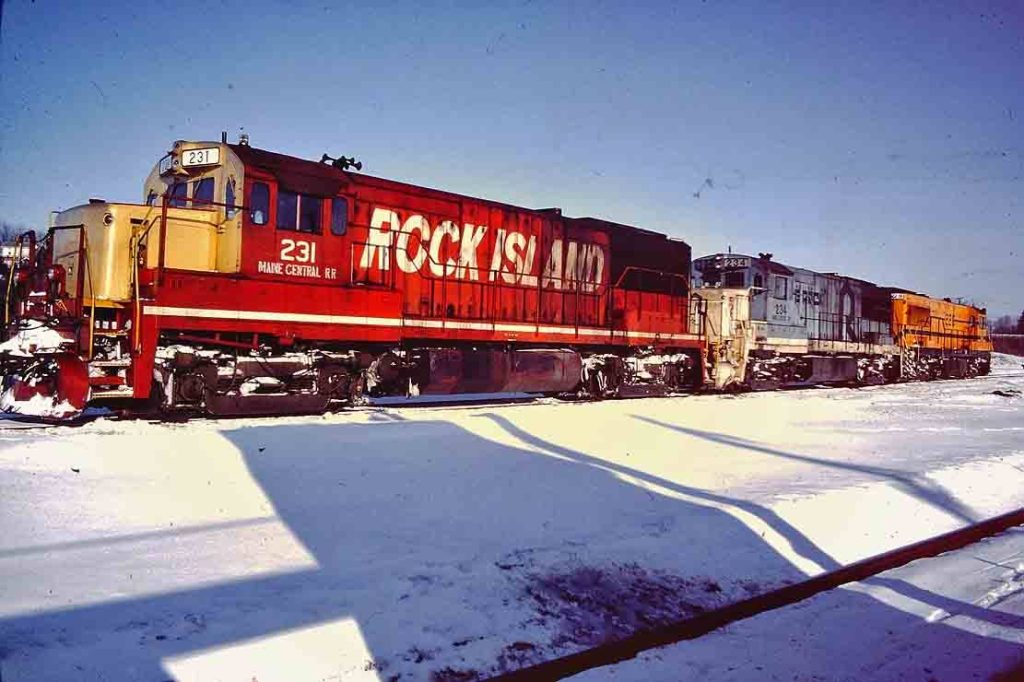
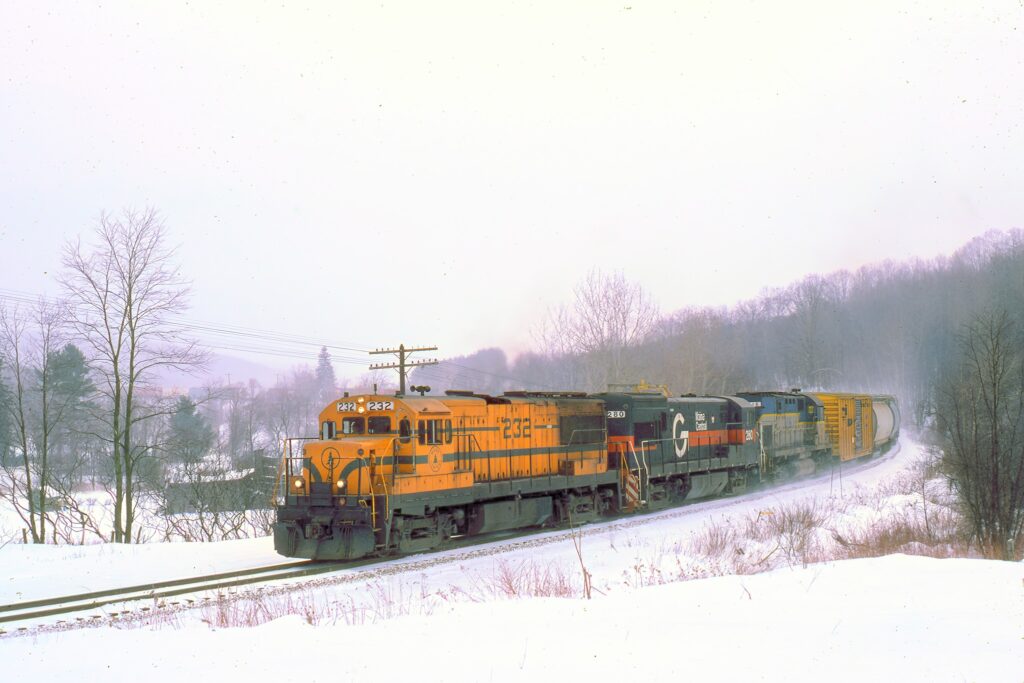
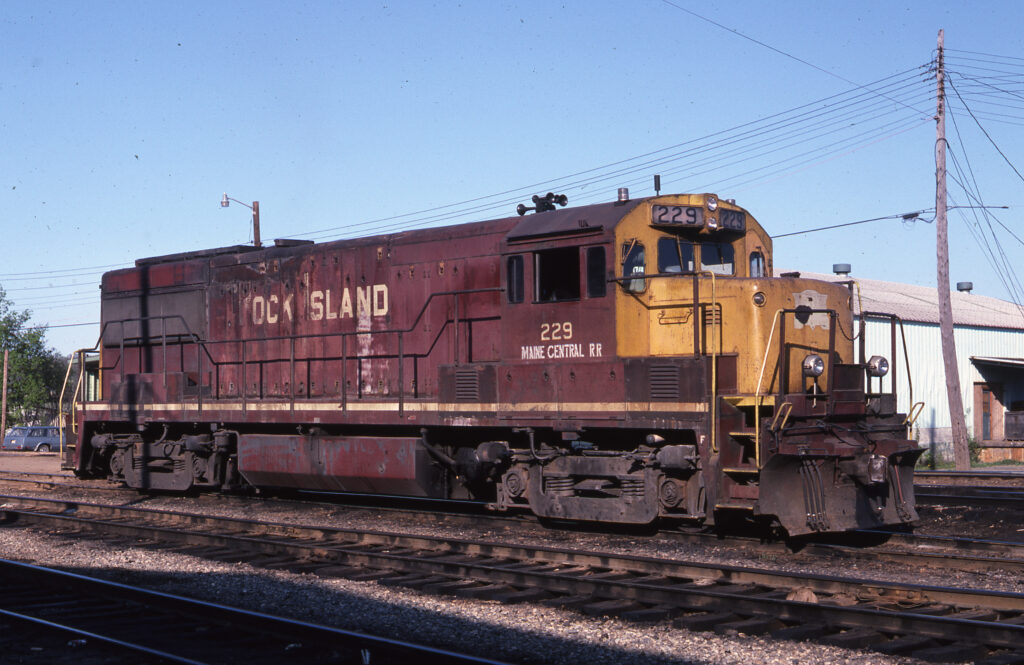
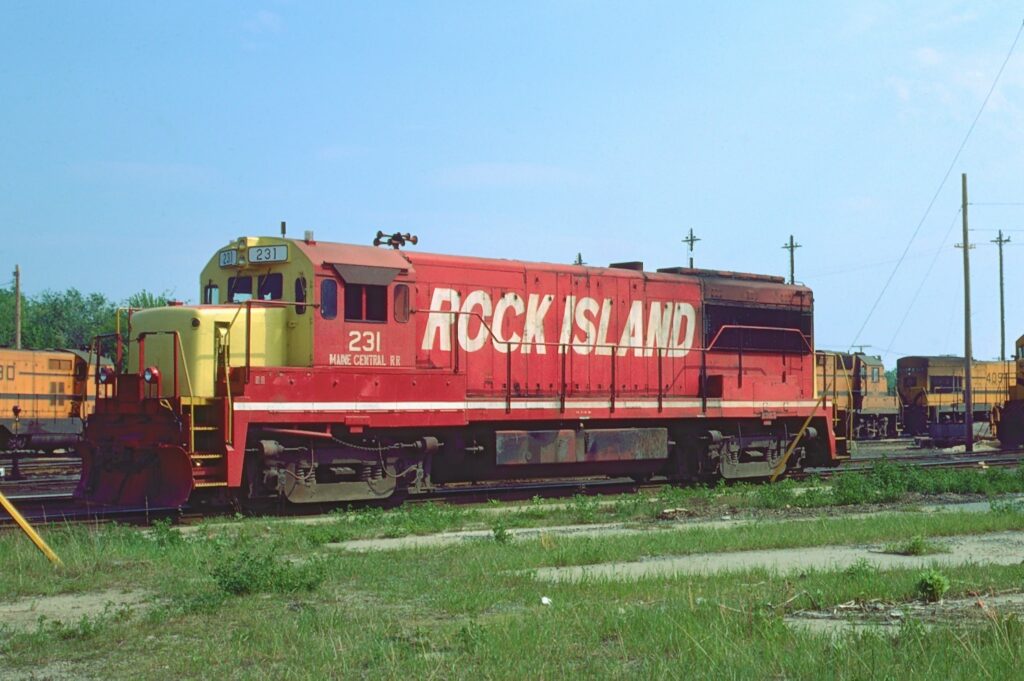
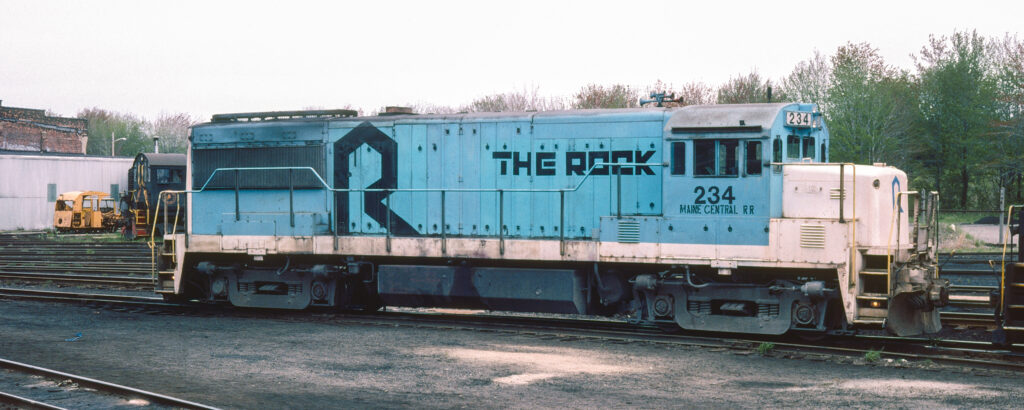
In 1980, the collapse of the Rock Island presented the Maine Central with an opportunity. Fourteen GE U25Bs, built in 1965, were picked up cheaply and added to the roster as 225–238. They arrived in a kaleidoscope of Rock Island finishes — red, maroon and the unlikely sky blue — and, for a brief time, Rigby Yard played host to this splash of Midwestern colour in a very New England setting.
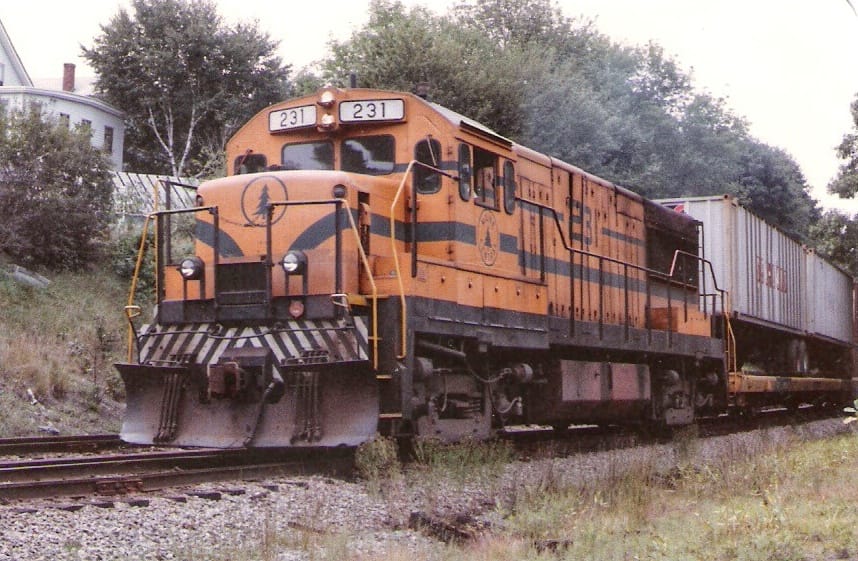
The engines came with quirks too: Rock Island’s “frog eye” cab lights, the forerunners of ditch lights, peered out incongruously from Yankee cabs. Within months, most had been dipped into MEC’s Harvest Gold, and later, after Guilford’s arrival, the cool steel-grey that gave the system a unified, purposeful look. Some went straight for parts, others soldiered on, but together they made a useful stopgap between the GE U18B “Baby Boats” and the later influx of GE U23Bs from the Delaware & Hudson. They were rare visitors to the Mountain Subdivision due to weight restrictions.
http://archive.atlasrr.com/NLoco/arc-nu25b.htm
| No. | Built | Serial | Livery | Notes | Modelling |
|---|---|---|---|---|---|
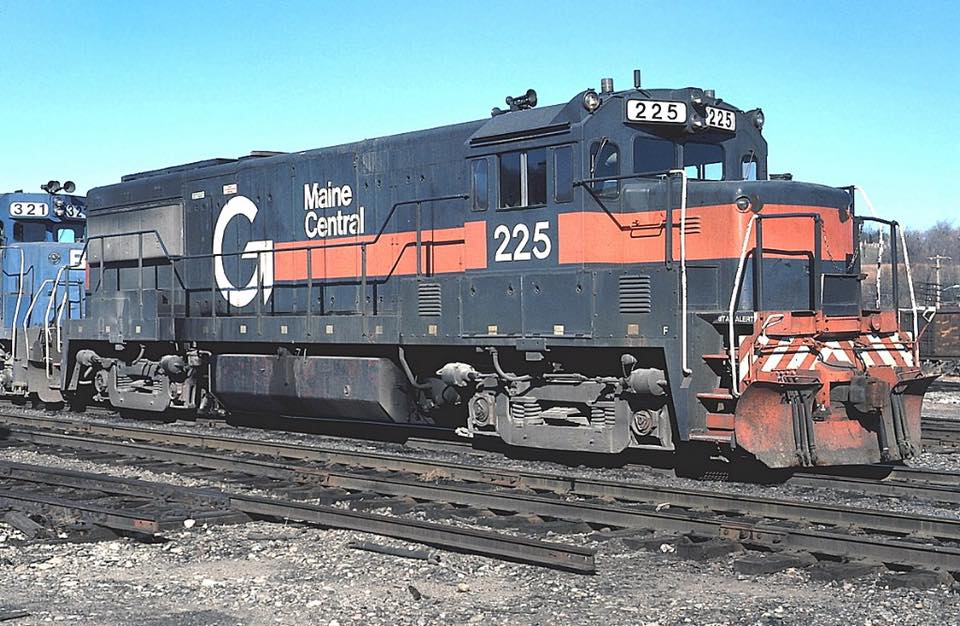
| 225 | Sep 1965 | 35701 | Rock Island Red until? Maine Central Harvest Gold by Oct 1981. Guilford Grey & Orange by Feb 1983. | Frog eye lights. I don’t believe this one ran in Rock Island Paint. Retired by Guilford Feb 1988; to Midwest Steel & Alloy 25th Mar 1988, scrapped. RRPA. | |
| 226 | Sep 1965 | 35702 | Maine Central Harvest Gold by Aug 1980, Guilford Grey & Orange by Jul 1984. | I don’t believe this one ran in Rock Island Paint. Modelled by Mike Confalone on his Allagash Railway. | |
| 227 | Sep 1965 | 35703 | Rock Island Red | It never ran on the Maine Central. Scrapped by Jun 1980. | |
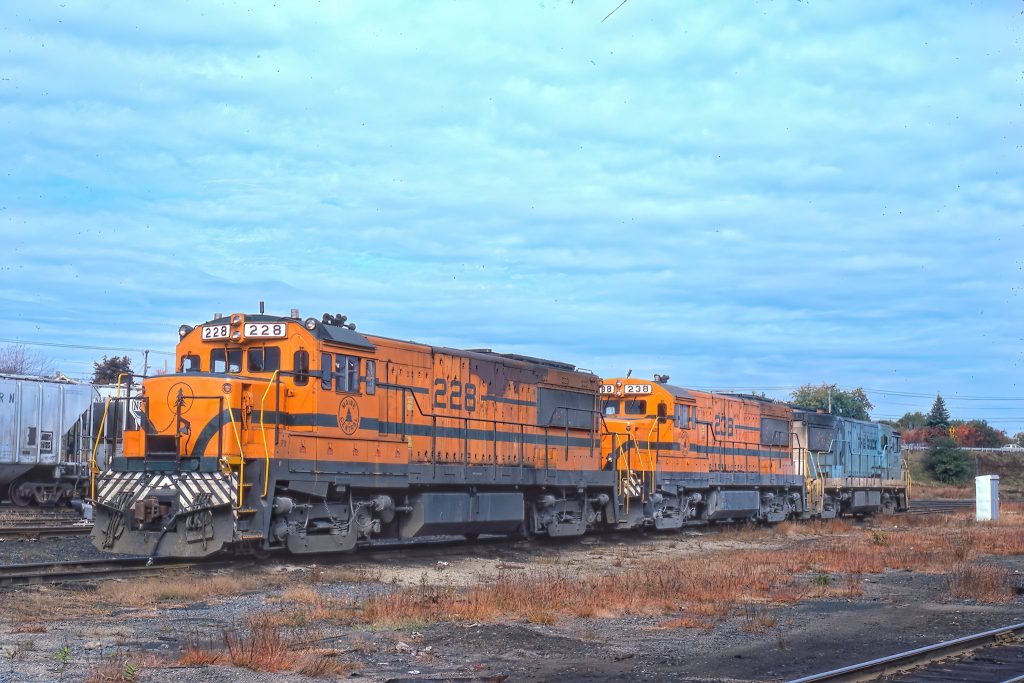
| 228 | Sep 1965 | 35704 | Maine Central Harvest Gold by Jan 1981 until at least Nov 1987. | I don’t believe this one ran in Rock Island Paint | |
| 229 | Sep 1965 | 35705 | Rock Island Red stencilled for MEC until at least Oct 1981—Maine Central Harvest Gold by Aug 1982 until at least Nov 1987. | Retired by Guilford Feb 1988; to Midwest Steel & Alloy 14th Mar 1988, scrapped. | Rock Island Red – Atlas 44581 (205) or Atlas 44582 (208) renumbered, stencilled and heavily weathered. |
| 230 | Oct 1965 | 35706 | Rock Island Red in May 1981. Maine Central Harvest Gold by Aug 1982 until at least Dec 1986. | I don’t believe this one ran in Rock Island Paint. Retired by Guilford Feb 1988, scrapped Jun 1988. | |
| 231 | Oct 1965 | 35707 | Rock Island Red until at least Feb 1982. Maine Central Harvest Gold until at least August 1986. | Ran in Rock Island Red. Wrecked; retired and scrapped Jan 1987. | Rock Island Red – Atlas 40 000 592 (209) or Altas 40 000 576 (211) renumbered, stencilled and weathered. |
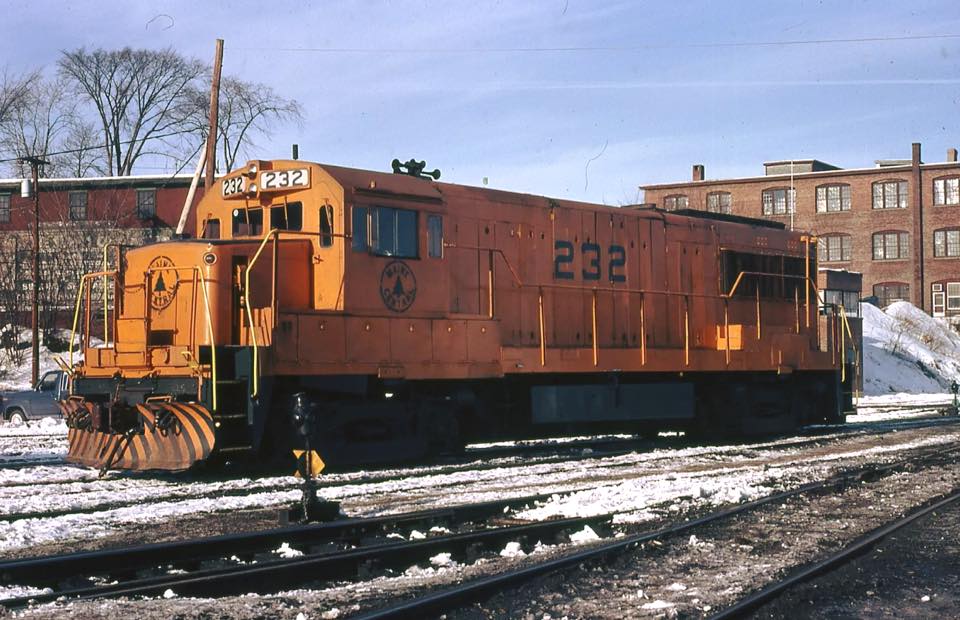
| 232 | Oct 1965 | 35708 | Maine Central Harvest Gold by Jun 1983 until at least Mar 1986. | I don’t believe this one ran in Rock Island Paint. | |
| 233 | Oct 1965 | 35709 | Rock Island Red in May 1981 | Never ran? | |
| 234 | Oct 1965 | 35710 | Rock Island Sky Blue until at least Aug 1982. Maine Central Harvest Gold by Jan 1983 until at least May 1986. | Retired Feb 1988; to Midwest Steel & Alloy 25th Mar 1988, scrapped. | ! |
| 235 | Oct 1965 | 35711 | Rock Island Red in May 1981 | Never ran | |
| 236 | Oct 1965 | 35712 | Rock Island Red | Never ran | |
| 237 | Oct 1965 | 35713 | Never ran | ||
| 238 | Oct 1965 | 35714 | Rock Island Maroon until March 1981. Maine Central Harvest Gold by Jan 1981 (!) until at least Aug 1985. | I don’t believe this one ran in Rock Island Paint. |
Epilogue
The U25Bs were never the stars of the show, but they earned their keep. Five went for scrap, the rest worked out their time before fading away in the late 1980s. Yet, for a handful of years, they lent the Maine Central a curious second-hand glamour: Midwestern hand-me-downs mixing with the Baby Boats, incongruous colours against the pines and snow.
For the modeller, they are a gift — battered paint, odd fittings, and the perfect excuse to marshal an unlikely lash-up at Rigby or Bangor. Just don’t send them up the Mountain Sub too often, unless you want the purists to raise an eyebrow. For the historian, they are a reminder that railroads thrive on adaptation, and that even a locomotive born for the prairies could find a second life in New England.