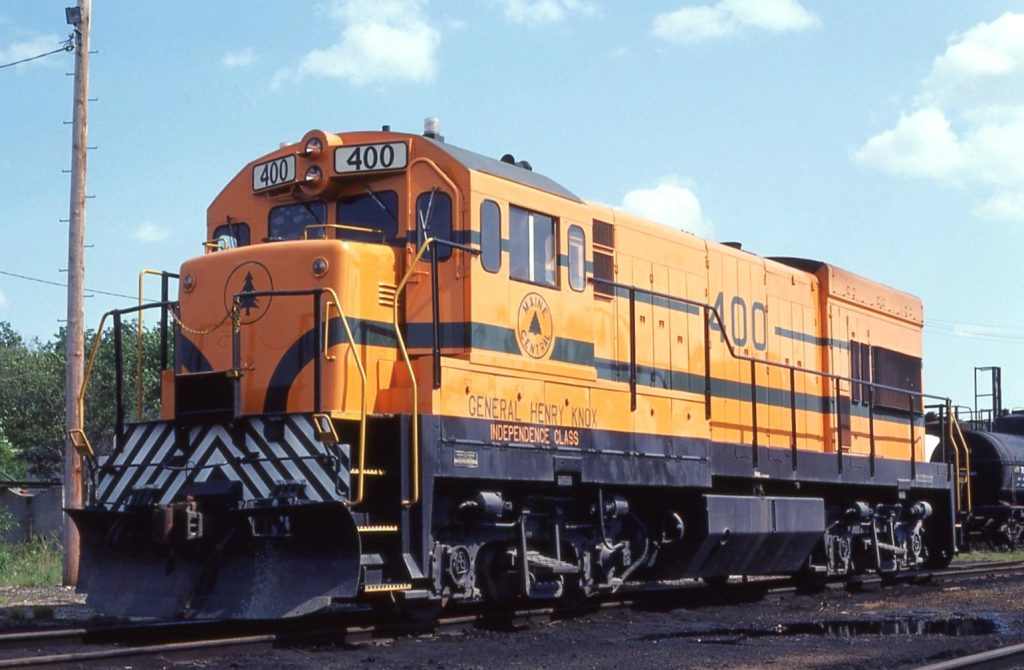
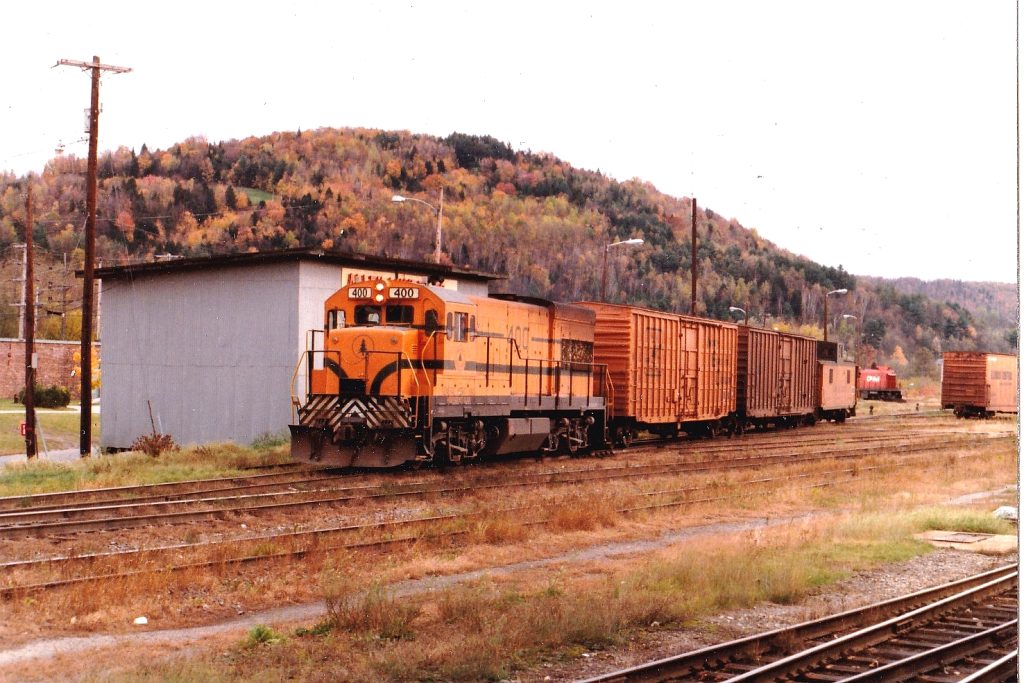
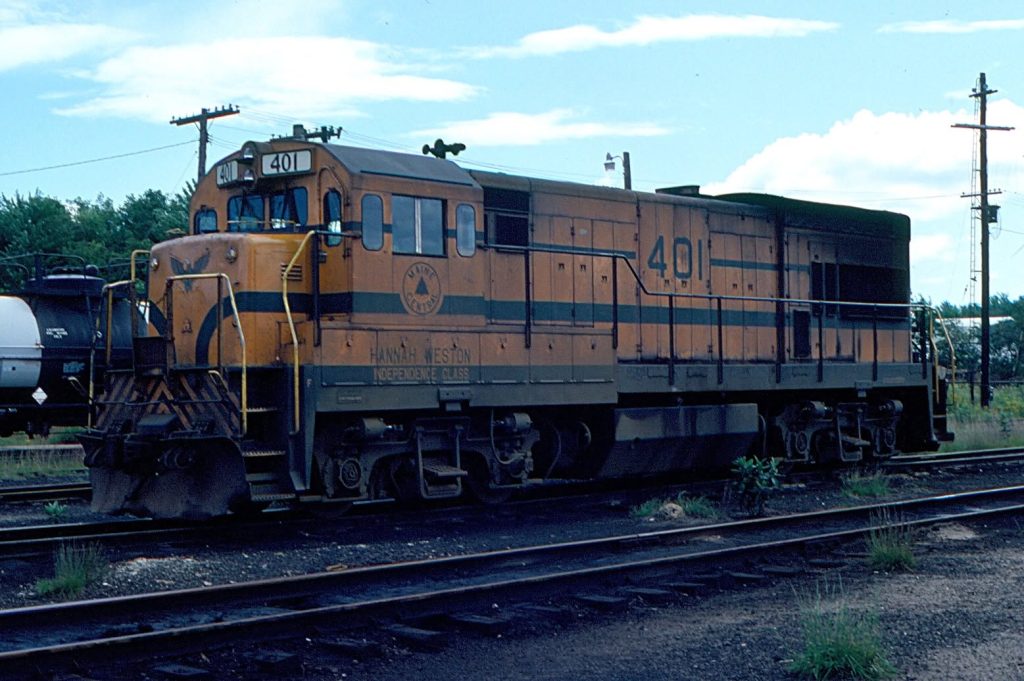
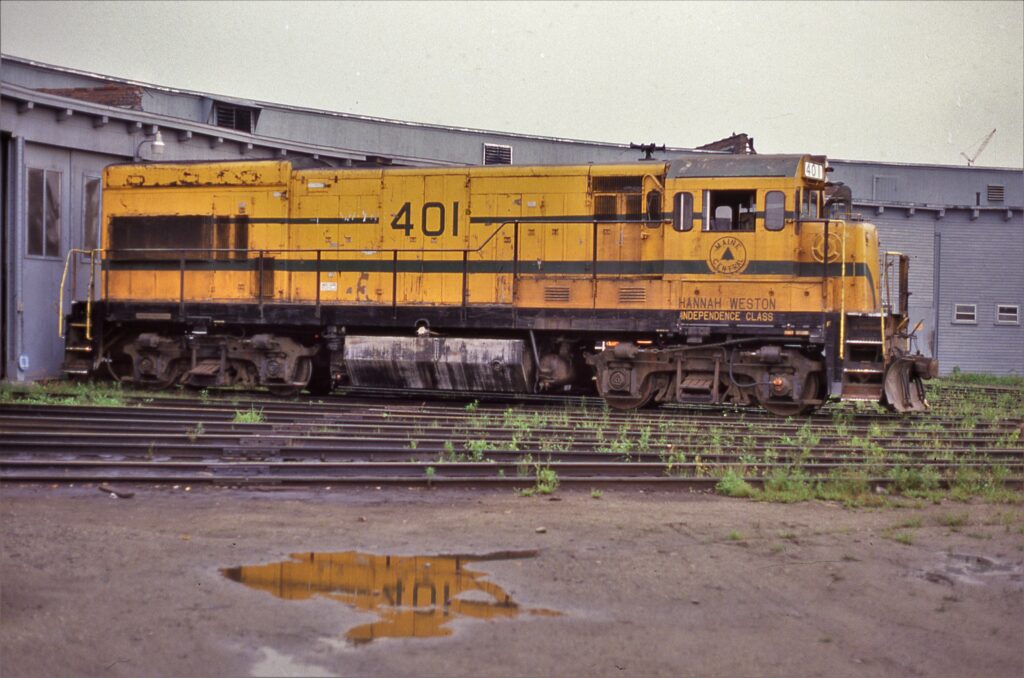
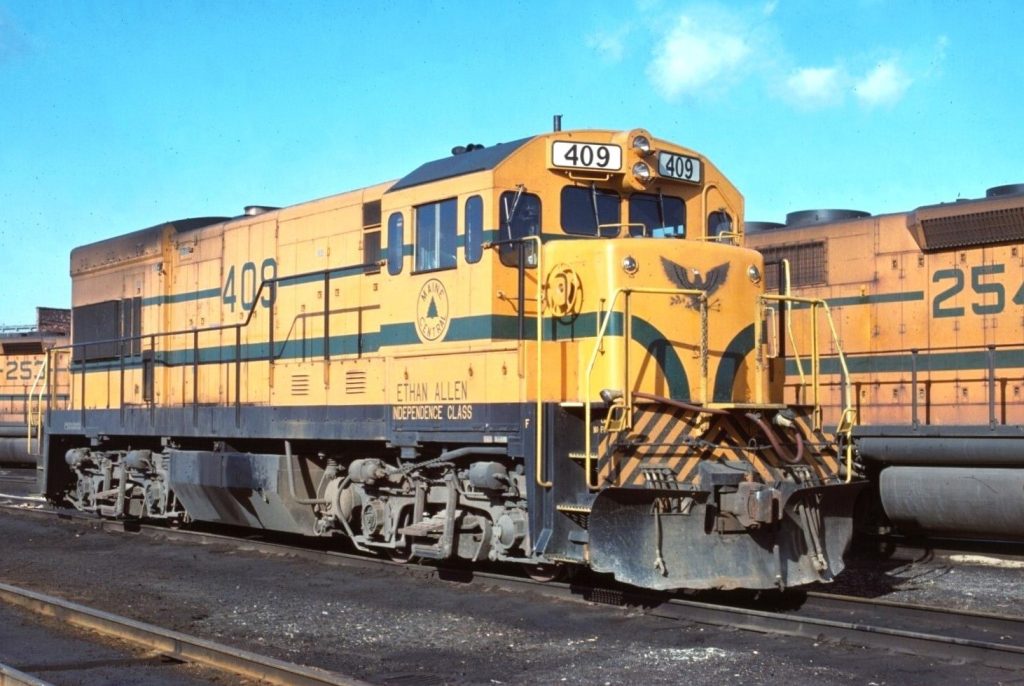
In 1973, General Electric unveiled the U18B, a compact, four-axle road-switcher rated at 1,800 horsepower. Nicknamed the “Baby Boat” to match GE’s “U-boat” series, the model was five feet shorter than GE’s other four-axle designs. Powered by the unique eight-cylinder 7FDL engine, it had a distinctive exhaust note and proportions that made it well-suited to branch lines and secondary main routes.
The U18B was instantly recognisable thanks to the four tall hood doors on each side, a convenient spotting feature. Most were delivered with GE’s floating bolster trucks to improve ride and cut maintenance costs, though some owners recycled trucks from earlier locomotives. Dimensions were modest: overall length 54 ft 8 in, with a 30 ft 8 in wheelbase.
Despite GE’s hopes for broad sales, only 163 units were built between 1973 and 1976. The Seaboard Coast Line bought the lion’s share, the Maine Central took ten, and the balance was spread across a few smaller orders.
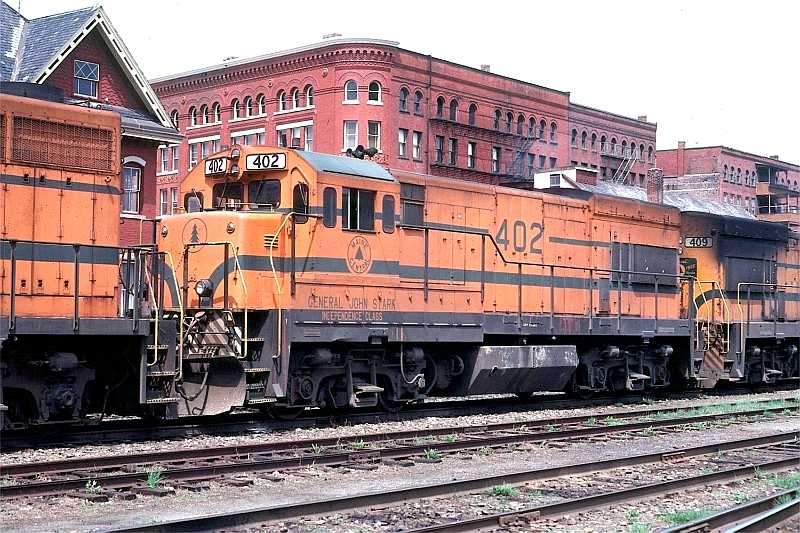
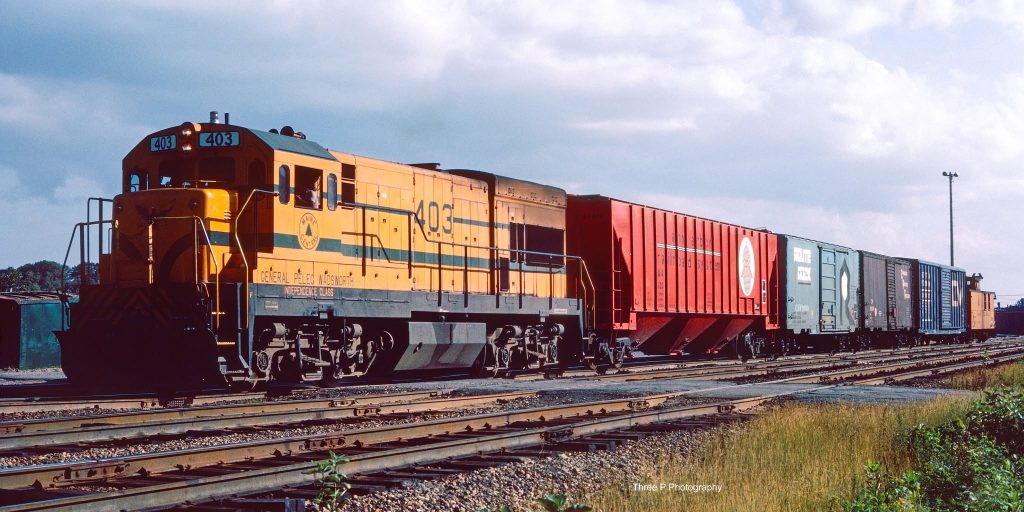
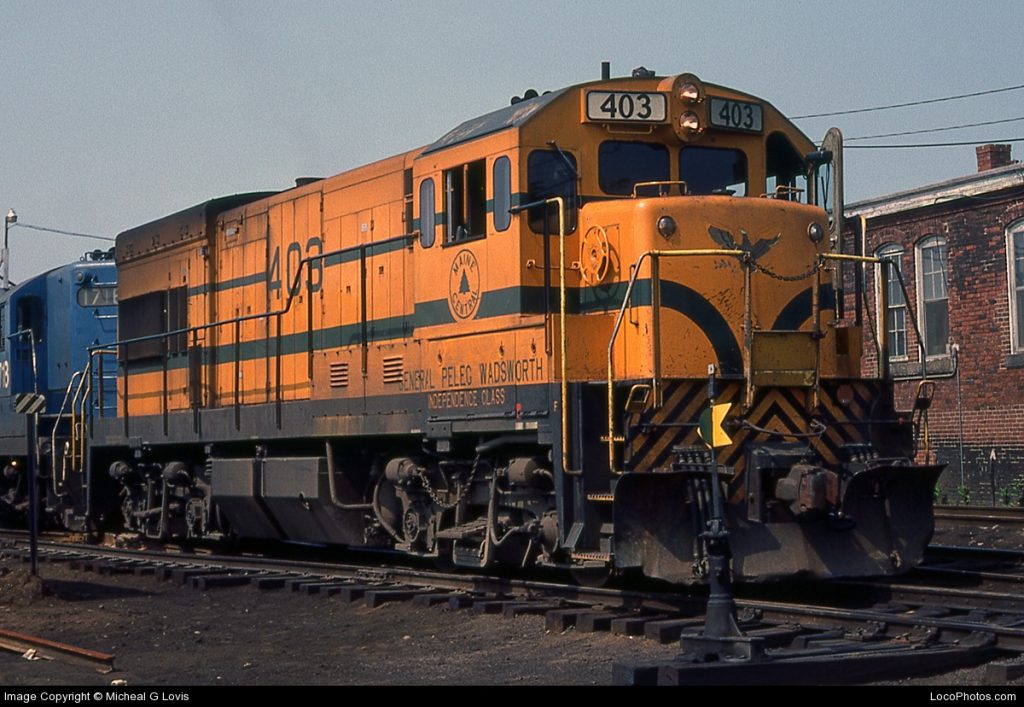
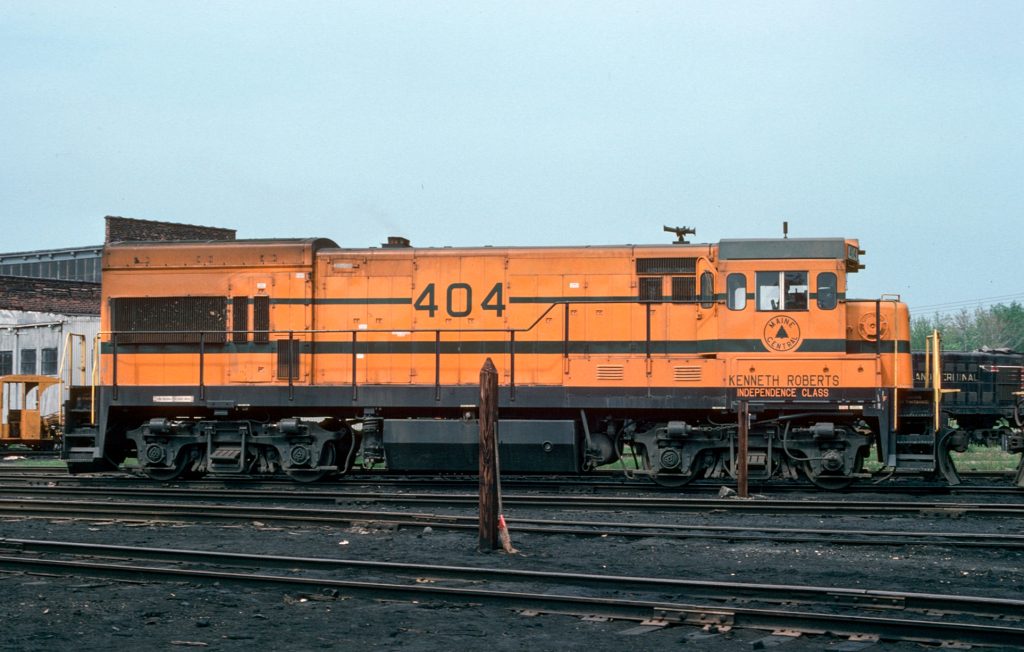
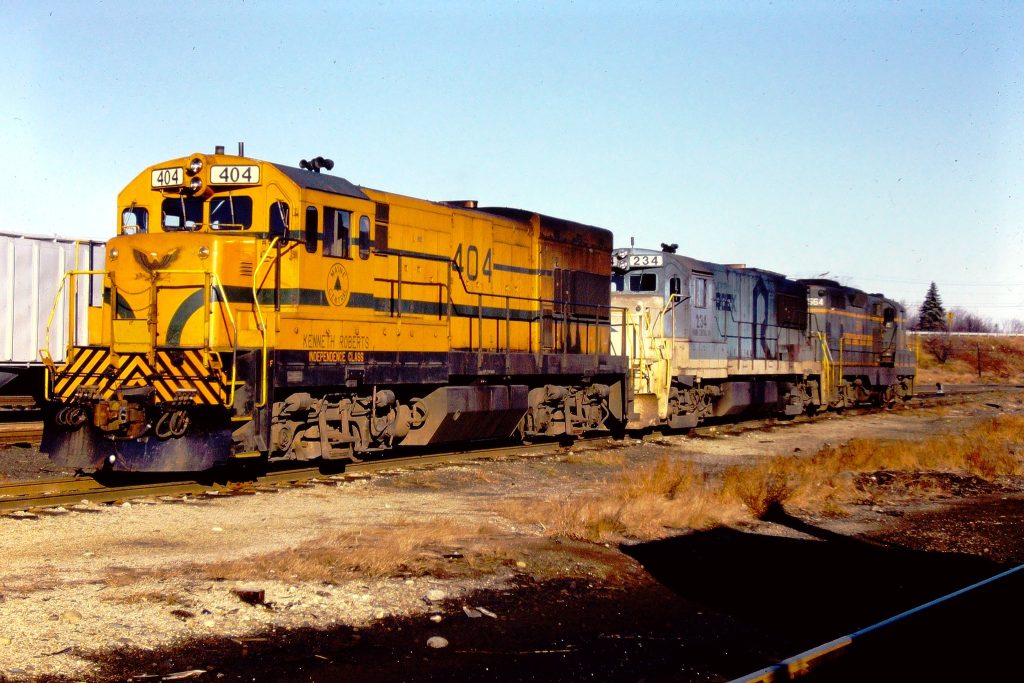
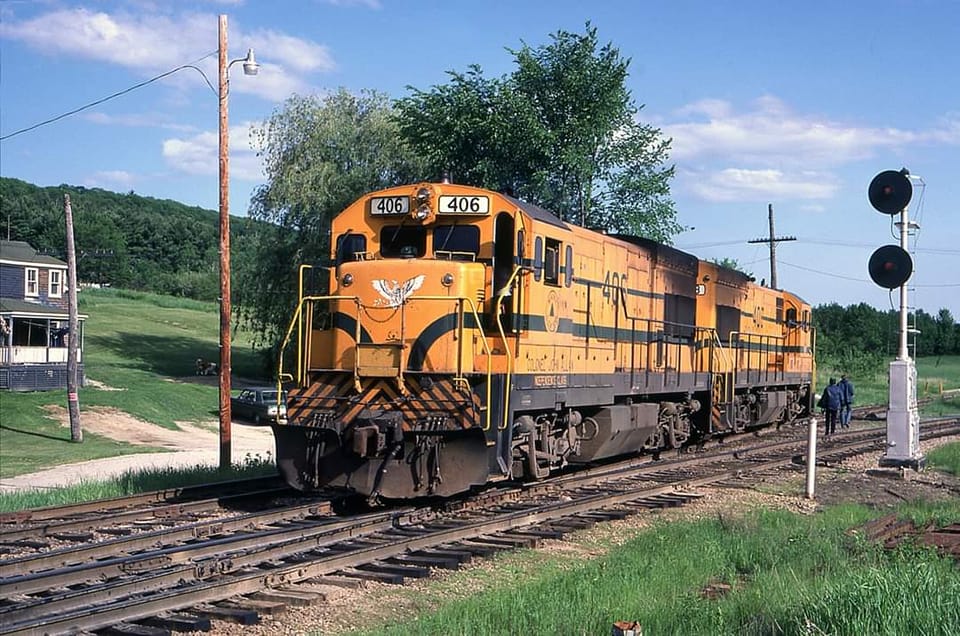
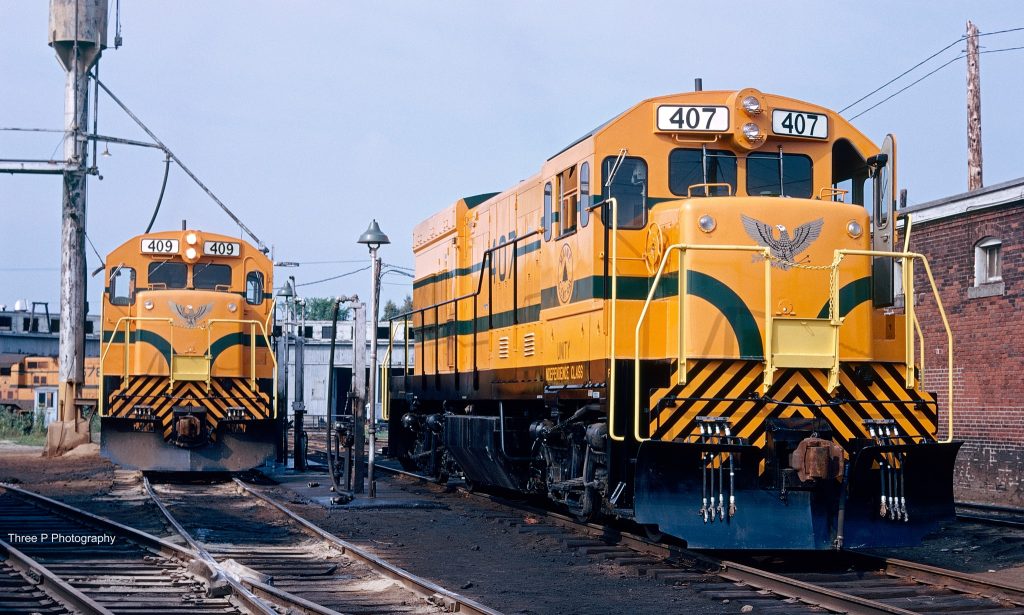
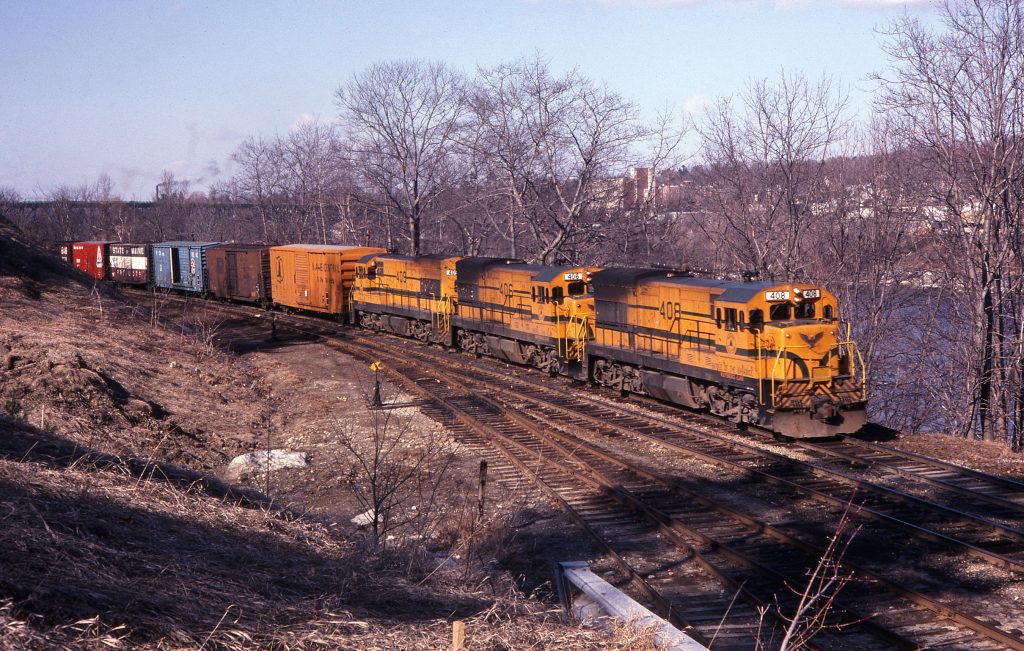
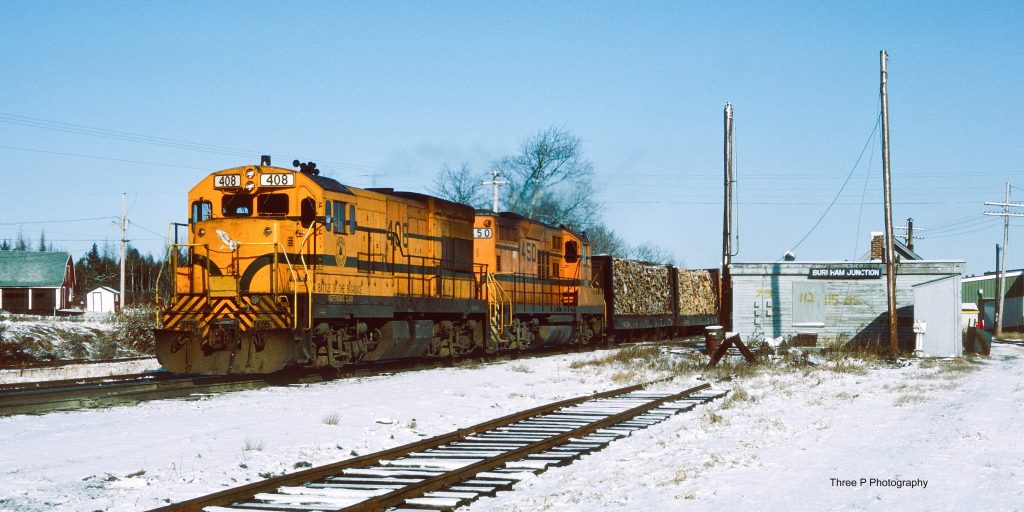
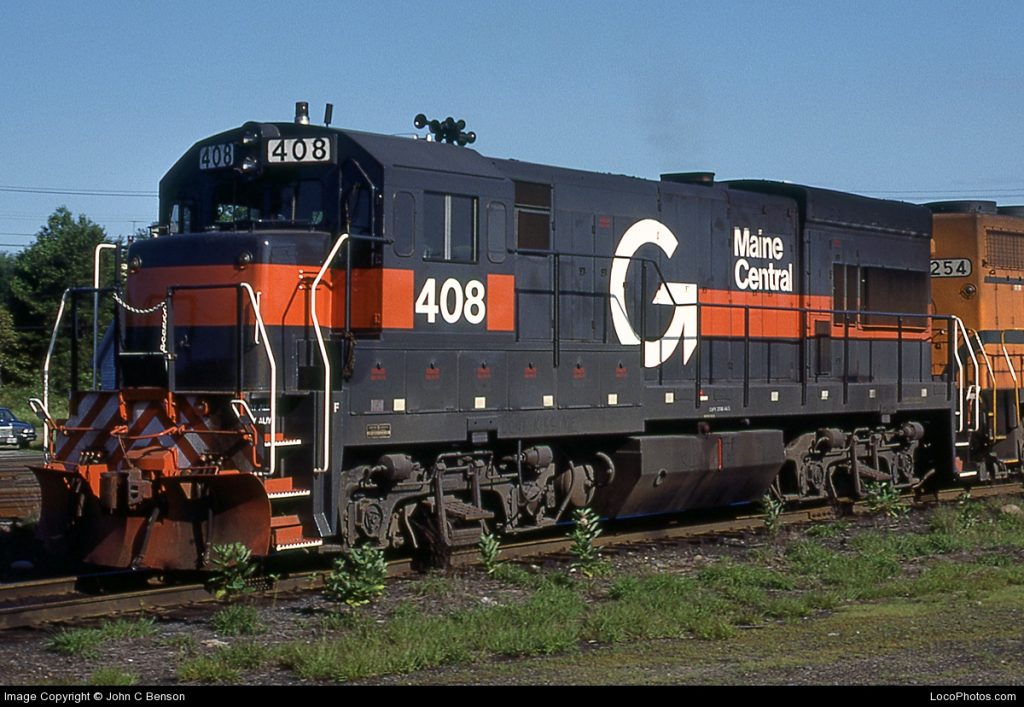
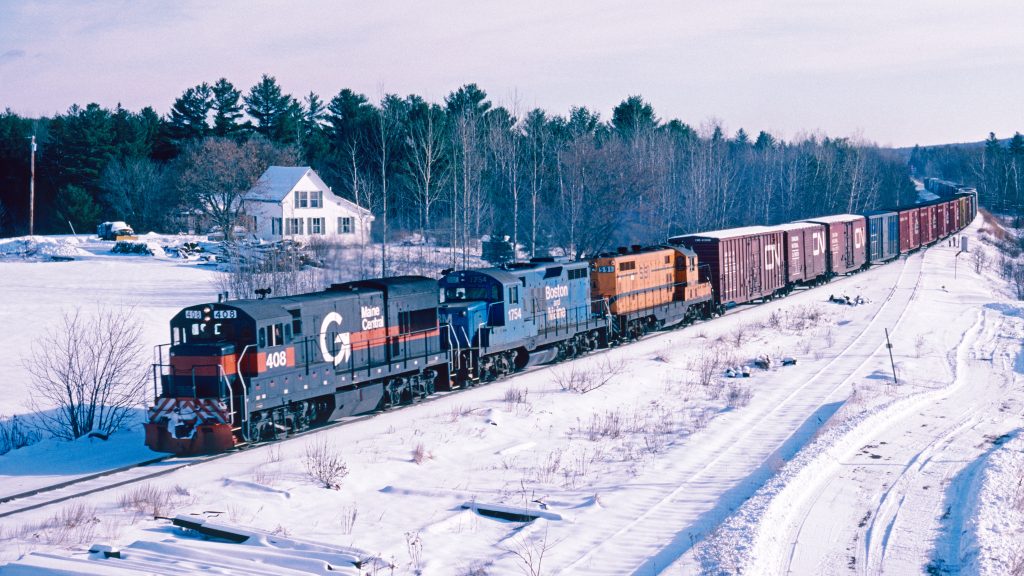
The Maine Central received ten U18Bs in June 1975, numbered 400–409. Built under serials 40720–40729, they were originally intended for a cancelled Seaboard Coast Line order.
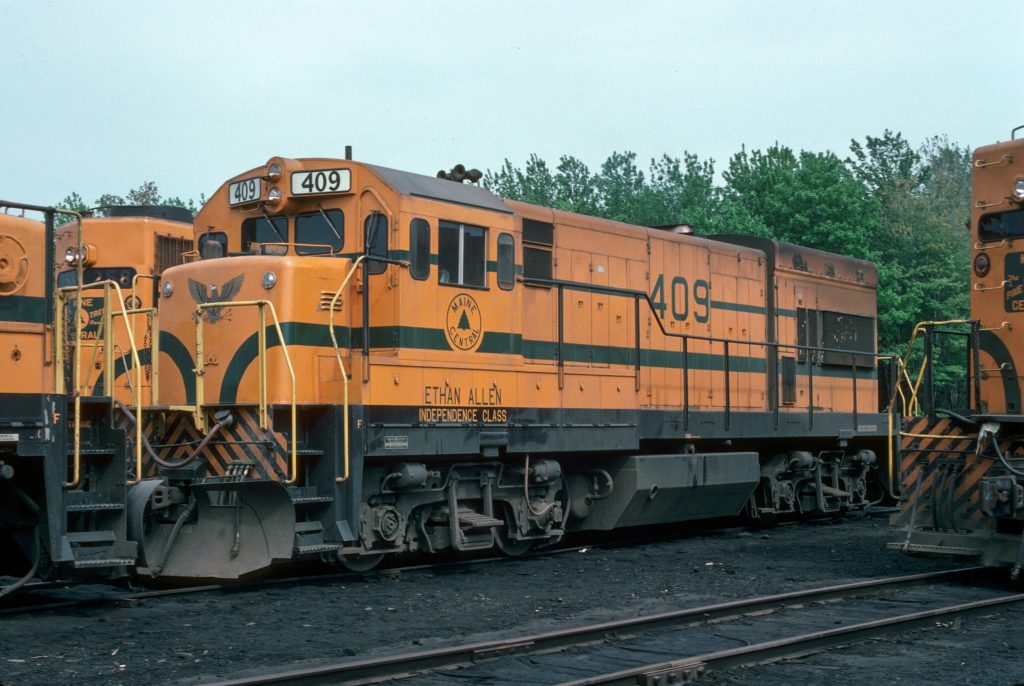
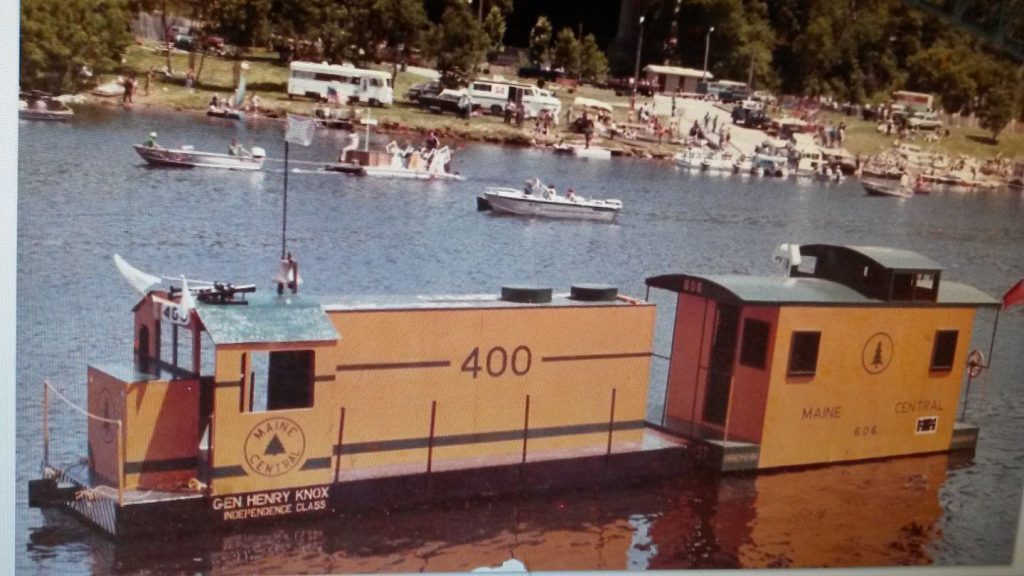
Maine Central christened the locomotives the Independence Class, each named for a figure, event, or story from the American Revolution with strong ties to Maine and New England. They were also the last brand-new locomotives the railroad ever purchased, marking the end of an era in its motive power policy.
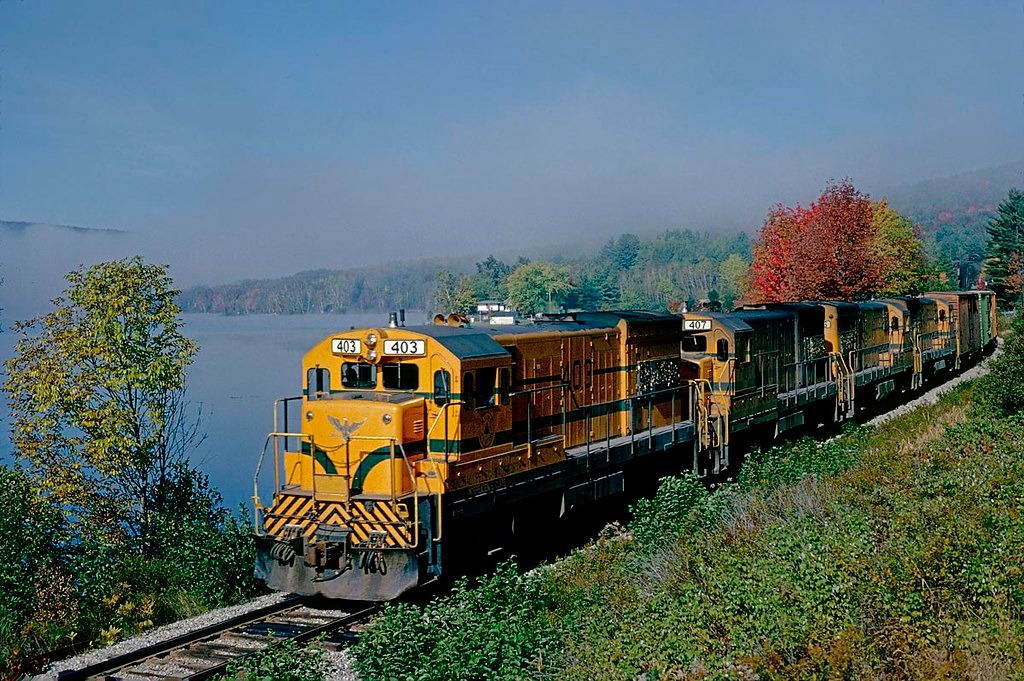
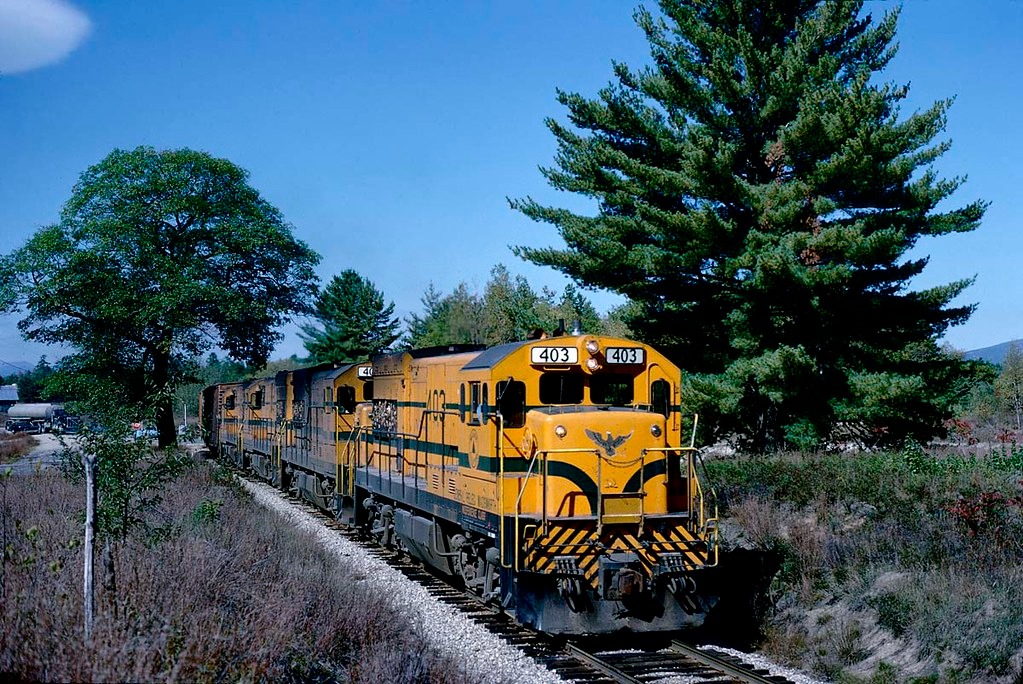
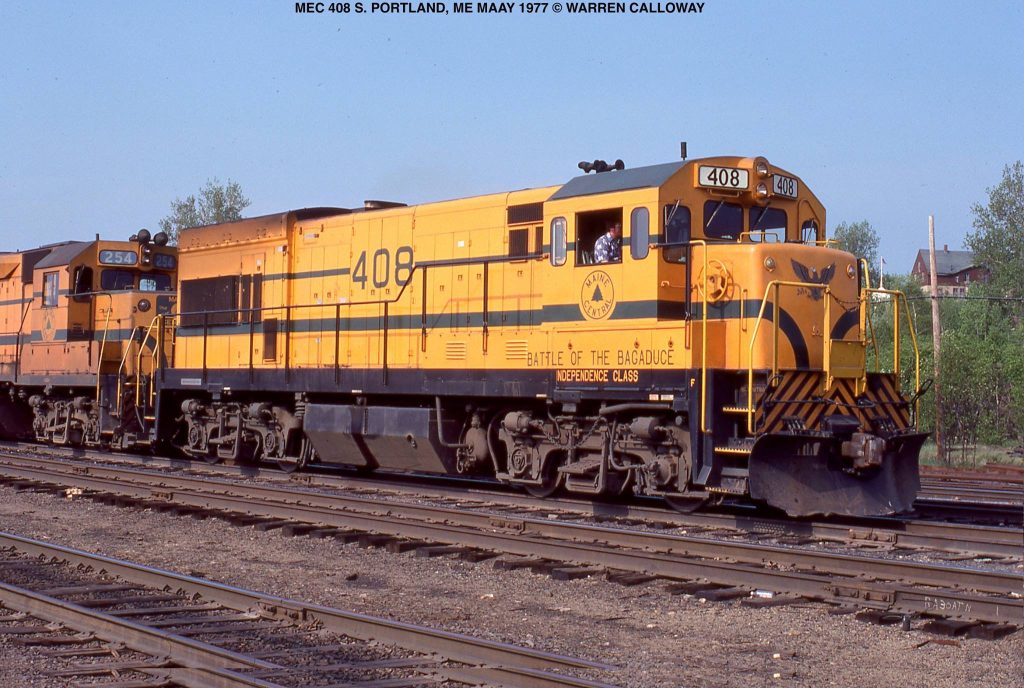
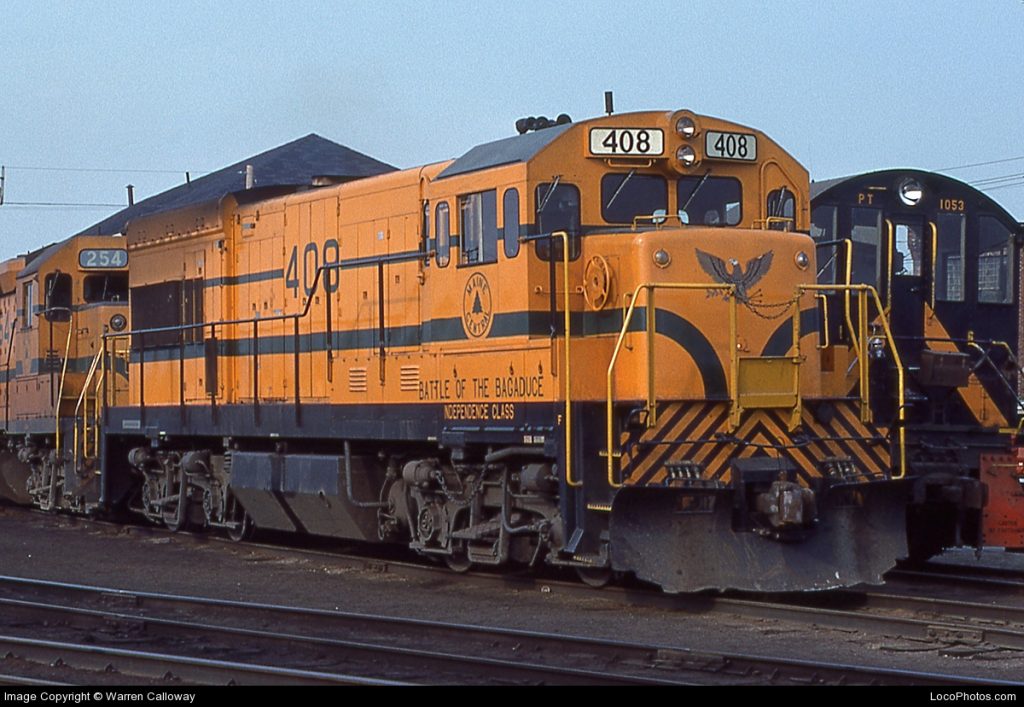
Delivered on recycled EMD Blomberg B trucks from traded-in units, the U18Bs also carried dynamic brakes, a practical necessity for the punishing grades of the Mountain Division. They wore the striking Harvest Gold scheme with a bold eagle emblem on the nose, one of the most distinctive liveries ever applied to a Maine Central diesel.
As delivered, the class carried Nathan M3RT1 horns with the characteristic upturned No. 1 bell, a detail inherited from the railroad’s Alco RS-series. These were gradually replaced by other types, most commonly the Nathan K5LA shared with the GP38s, though a few received Leslie S-5Ts during the Guilford era. Horn placement also varied, with some mounted on tall stanchions rather than directly on the cab roof.
Maine Central Harvest Gold until at least Jan 1989. Guilford Grey & Orange by Sep 1989.
Artillery commander in the Continental Army, later the first U.S. Secretary of War. Transported captured cannon from Fort Ticonderoga to Boston in 1775, a feat that helped drive out the British.
A teenager from Jonesboro, Maine, who carried powder and lead to Machias during the 1775 Battle of Machias, enabling the local militia to fight. Remembered as a Maine folk heroine.
From Duxbury, Massachusetts, they later settled in Maine. Commanded militia forces in eastern Massachusetts and Maine, defending the coast against British raids. Grandfather of poet Henry Wadsworth Longfellow. Withdrawn in Maine Central Harvest Gold? Retired 17th Nov 1993, scrapped July 1994 by Industrial Marine Service at Waterville, ME.
Maine Central Harvest Gold until at least May 1984. Guilford Grey by Mar 1985.
Novelist and historian from Kennebunk, Maine. His historical novels, such as Arundel and Rabble in Arms, popularised Revolutionary War history in New England. Replacement nose from a U25B. To Niagara & Western New York Railroad #404 in 2003. Rail Trusts Equipment Incorporated #404.
Maine Central Harvest Gold until at least Feb 1988.
Named for Roberts’ novel Arundel (1930), which told the story of Benedict Arnold’s expedition to Quebec through Maine’s wilderness. Also reflects the Maine town of Arundel. Withdrawn in Maine Central Harvest Gold?
Maine Central Harvest Gold. Guilford Grey & Orange by Apr 1984.
Nova Scotia-born officer who sided with the American cause. His diplomacy kept Native tribes in Maine from joining the British, shaping the U.S.–Canada border in Maine’s favour. 21/04/1995
Maine Central Harvest Gold until at least Sep 1990…….. Guilford Grey & Orange by Aug 1990?!
Sloop commanded by Jeremiah O’Brien at the Battle of Machias in June 1775. Its crew captured HMS Margaretta in what is considered the first naval battle of the Revolutionary War. To Niagara & Western New York Railroad 407 in 2003. Rail Trusts Equipment Incorporated 407.
Maine Central Harvest Gold until at least April 198_. Guilford Grey & Orange by Jun 1983.
Commemorates the failed 1779 Penobscot Expedition near Castine, Maine. The largest American naval expedition of the war, it ended in disaster and remained the worst U.S. naval defeat until Pearl Harbor. Retired 17th Nov 1993, scrapped Sep 1994 by Industrial Marine Service at Waterville, ME.
Leader of the Green Mountain Boys of Vermont. Captured Fort Ticonderoga in May 1775, providing artillery for the Continental Army. Later helped establish Vermont as an independent republic. Withdrawn in Maine Central Harvest Gold?
The U18Bs became synonymous with Maine Central’s Mountain Division, where their dynamic brakes and nimble size made them ideal. Although their careers under Guilford were less glamorous, the locomotives remain a favourite among enthusiasts. Their combination of compact GE styling, EMD trucks, and colourful paint made them unmistakable.
The General John Stark: U18B Revisited by Ron Bearden (N-Scale January / February 2015)
Fall 2007 issue of Railroad Explorer
Dec. 1991 and Jan. 1992 issues of Mainline Modeler
Modelling
My long-term modelling dream is to have all ten of the Independence Class lined up, each in Maine Central’s Harvest Gold. The one exception would be No. 408 in Guilford grey and orange, recognising its place as the first of the six to lose the gold. It’s a pity, really, because I’ve always liked the sound of Battle of the Bagaduce and the thinking behind it. In choosing that name, MEC showed they weren’t afraid to acknowledge not just victories and heroes, but also the ill-fated episodes that shaped Maine’s Revolutionary history. There’s a certain honesty in that — a touch of self-awareness that makes the class all the more interesting. Sadly, once the Guilford paint went on, the names themselves disappeared.
In HO scale, Intermountain produced a U18B, while kitbashers have used Kato’s C30-7 as a donor model. Mike Rose described a detailed kitbash of Guilford 404 in Model Railroad Hobbyist (2010).
In N scale, however, the U18B remains conspicuously absent from the market. Given the locomotive’s popularity with modellers of the Seaboard Coast Line and Maine Central, a faithful RTR offering would be warmly received.
Hayden, Bob. Model Railroader Cyclopedia – Volume 2: Diesel Locomotives. Kalmbach Books, 1980, p.133
Marre, Louis A. and Jerry A. Pinkepank. The Contemporary Diesel Spotter’s Guide: A Comprehensive Reference Manual To Locomotives Since 1972 Including Rebuilding, Upgrading, And Leasing Programs. Kalmbach Books, 1989, pp.110-111.
Robertson, Edwin B. Maine Central Diesel Locomotives. Robertson Books, 1978, pp. 28-33.
Rose, Mike. “Kitbashing a U-18B: GTI 404 – Part 1” Model Railroad Hobbyist Magazine, Jul/Aug 2010, pp. 54-90.
Rose, Mike. “Kitbashing a U-18B: GTI 404 – Part 2” Model Railroad Hobbyist Magazine, Sep/Oct 2010, pp. 89-98.
Epilogue
The Maine Central’s Independence Class were small locomotives with big personalities. Their names linked a 1970s diesel purchase to the struggles and stories of the American Revolution; a bold idea, and one that gave these “Baby Boats” a sense of identity far beyond their size. For me, they remain some of the most characterful diesels ever to work in New England.
But the story of the class is richer still, shaped by memories, photographs, and impressions from those who saw them in their prime, fragments of experience that keep their spirit alive long after the paint has faded.